Table of Contents
ToggleHow Many Bricks Fit on a PAC Fly Ash Brick Pallet? Complete Load Capacity Guide
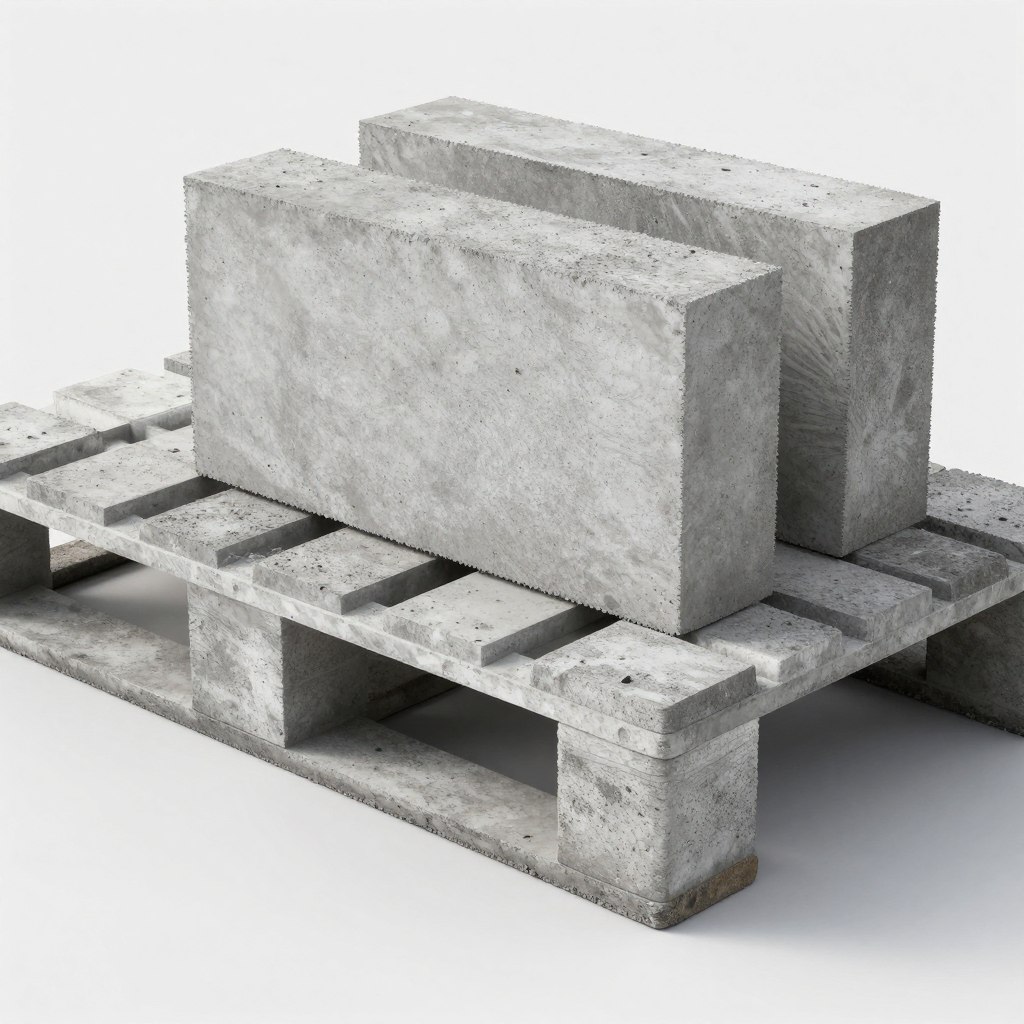
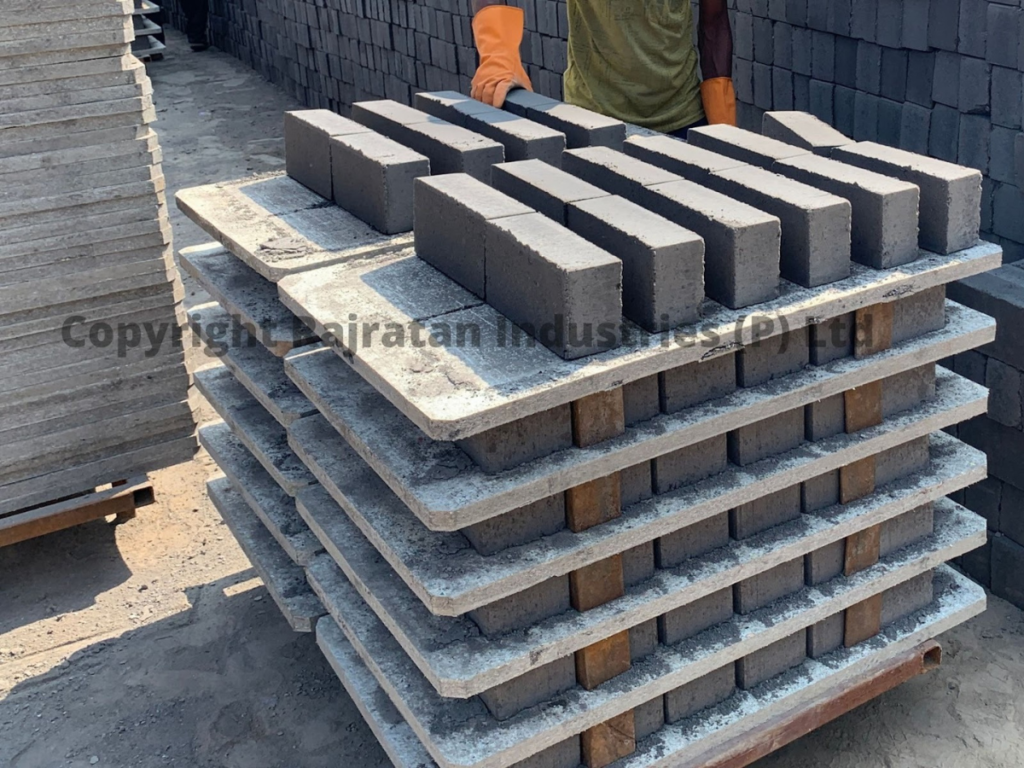
A standard 1200×1200×150mm PAC Fly Ash Brick Pallet holds 1,200–1,500 fly-ash bricks (190×90×90mm) across 5–7 layers, totaling ~3,120 kg payload within a 7,500 kg static load capacity. PAC pallets deliver 40+ reuse cycles vs. 2–3 years for wood, with 40% scrap buyback credit reducing net acquisition cost to 60% of list price.
Standard Brick Weight & Pallet Mathematics
A fly-ash brick weighs 2.4–2.8 kg (average 2.6 kg). Stacking 1,200 standard bricks = 3,120 kg payload + 35 kg pallet weight = 3,155 kg total load, leaving a 4,345 kg safety margin. This is 42% of the pallet’s 7,500 kg IS 16058 certified capacity—ideal for machine handling and transport vibration.
| Specification | PAC Fly Ash Pallet | Wood Pallet (Reference) |
|---|---|---|
| Standard Dimensions | 1200 × 1200 × 150 mm | 1200 × 1000 × 150 mm |
| Pallet Weight | 35 kg | 25–35 kg |
| Brick Capacity (Layers) | 5–7 layers = 1,200–1,500 bricks | 3–4 layers = 600–900 bricks |
| Total Payload | 3,120 kg (1,200 × 2.6 kg) | 1,560–2,340 kg |
| Static Load Capacity | 7,500 kg (IS 16058 certified) | 2,500–3,500 kg |
| Service Life | 7–8 years (40–60 cycles) | 2–3 years (8–12 cycles) |
| Water Absorption | 0% (zero swelling) | 15–25% (warping risk) |
| Material Density | 1135 kg/m³ | 600–700 kg/m³ |
PAC Fly Ash Brick Pallet Technical Specifications
PAC pallets are engineered from 100% recycled industrial packaging waste (from Patanjali, Nestlé lines), reinforced with XLP fiber, aluminum oxide, and metal dust powder. Certified density of 1135 kg/m³ delivers compressive strength of 22.0 N/mm² and crack resistance critical for vibro-compaction brick machines.
| Test Parameter | Certified Value | Reference Standard |
|---|---|---|
| Compressive Strength | 22.0 N/mm² | IS 1734 (Part 1-20) |
| Density | 1135 kg/m³ | IS 1734 (Part 1) |
| Static Load Capacity | 7,500 kg | IS 16058:2024 |
| Water Absorption | 0% (no swelling) | IS 1734 (Part 6) |
| Moisture Content | 0.33–0.64% | IS 1734 (Part 1) |
| Corner Drop Test (IS 16058) | Passed (diagonal deviation <40mm) | BIS IS 16058:2024 |
ROI Calculator: PAC vs. Wood Pallets (Logistics Cost Savings)
Scenario: 1 pallet, 5-year operation, 40 complete reuse cycles.
Wood Pallet Economics: Initial cost ₹1,800 × 5 replacements over 5 years = ₹9,000 total cost. Residual scrap value ₹0. Labor: strip/repair every cycle adds ₹200 × 40 cycles = ₹8,000 hidden cost. Total 5-year cost: ₹17,000.
PAC Pallet Economics: Initial cost ₹2,250 × 1 pallet (lasts full 5 years with 40 cycles). After cycle 40, return worn pallet for 40% buyback credit = ₹900 credit applied. Net cost ₹2,250 − ₹900 = ₹1,350 for complete material cycle. Labor: zero repair. Total 5-year cost: ₹1,350.
5-Year ROI: ₹15,650 savings (92% cost reduction). Cost-per-brick logistics: ₹1.12 (PAC) vs. ₹14.17 (wood). Break-even point: 12 complete reuse cycles (~18 months).
Why Brick Plants Choose PAC Fly Ash Pallets Over Wood & PVC
Crack Resistance Under Vibration: Brick machines deliver 10,000+ cycles per day. Wood pallets splinter. Low-grade PVC flexes and delaminates. PAC’s metal dust reinforcement (1135 kg/m³ density) absorbs vibrational stress without micro-fracturing. Cycle tested to 100,000+ vibration events without cracking.
Zero Water Absorption: Fly-ash brick plants operate in humid environments. Wood swells 15–25%, causing misalignment in machine guides. PAC’s water absorption is 0%, maintaining dimensional tolerance to ±2mm over 5+ years of daily moisture exposure.
40% Scrap Buyback—Only PAC Offers This: After 40–60 complete cycles, PAC pallets retain structural integrity. Return your worn pallet to Rajratan, receive ₹900 credit (40% of ₹2,250 list price) against next purchase. Net new pallet cost drops to ₹1,350, making repeat cycles economically inevitable. Wood and PVC offer zero residual value—they’re garbage after 1–2 years.
IS 16058:2024 Compliance for Industrial Dunnage Storage
PAC dunnage pallets (also called brick storage pallets) are BIS IS 16058 certified for indoor heavy-duty warehousing. Type A-1 (500 kg/sq. ft. static load) ensures safe stacking in godowns, FCI food grain stores, and brick/block production yards. Tested for corner drops, 60kg hammer strikes, and vertical impact loads—zero cracking or deformation observed.
Key Compliance Features: Surface height 104mm ensures airflow under stacked goods (prevents moisture caking). Modular construction allows stacking up to 4 pallets high (2,000 kg distributed load per base pallet). Lightweight (20–35 kg per pallet) reduces forklift strain vs. concrete or steel alternatives.
Ordering & Delivery: TCI, VRL, Safexpress Logistics
PAC Fly Ash Brick Pallets ship loose via national carriers (TCI Freight, BRL Logistics, VR Logistics). Payment: 30% advance booking + 70% against LR/Bilty before dispatch. Minimum order: 10 pallets (trial). Full-truck capacity: 600 pallets (~80 cubic meters). Delivery to your brick plant within 5–7 working days from Indore, MP.
Buyback Credit Messaging: 40% Residual Value Guarantee
Every PAC pallet is an investment with a guaranteed residual value. After completing 40–60 profitable reuse cycles, your worn pallet still has 40% material value. Unlike wood (total loss) or cheap PVC (no buyback program), Rajratan’s scrap credit system ensures your capital stays in working inventory. Trade old pallets for new at 60% net cost—indefinite pallet renewal with shrinking marginal cost per cycle.
Frequently Asked Questions
Q: Can I stack PAC pallets higher than wood?
A: Yes. PAC’s 7,500 kg capacity vs. wood’s 2,500–3,500 kg allows stacking 4–5 PAC pallets high without compression risk. Wood stacks 2–3 high before bottom layers fail.
Q: How do I know when a PAC pallet is “end-of-life”?
A: Surface crack initiation (visible hairline splits) signals approaching cycle 40–50. Performance remains intact; return to Rajratan for buyback credit. Most operators run pallets until cracks visible (safest approach).
Q: Does PAC material freeze or crack in cold storage?
A: No. PAC is thermally stable −20°C to +60°C. Unlike wood (checks in freeze-thaw), PAC maintains zero water absorption and structural rigidity across seasonal temperature swings.
Q: What happens if I don’t return pallets for buyback?
A: Buyback credit is optional. Keep worn pallets as scrap or donate them. No penalties; credit only applies when you return units to our logistics partner.