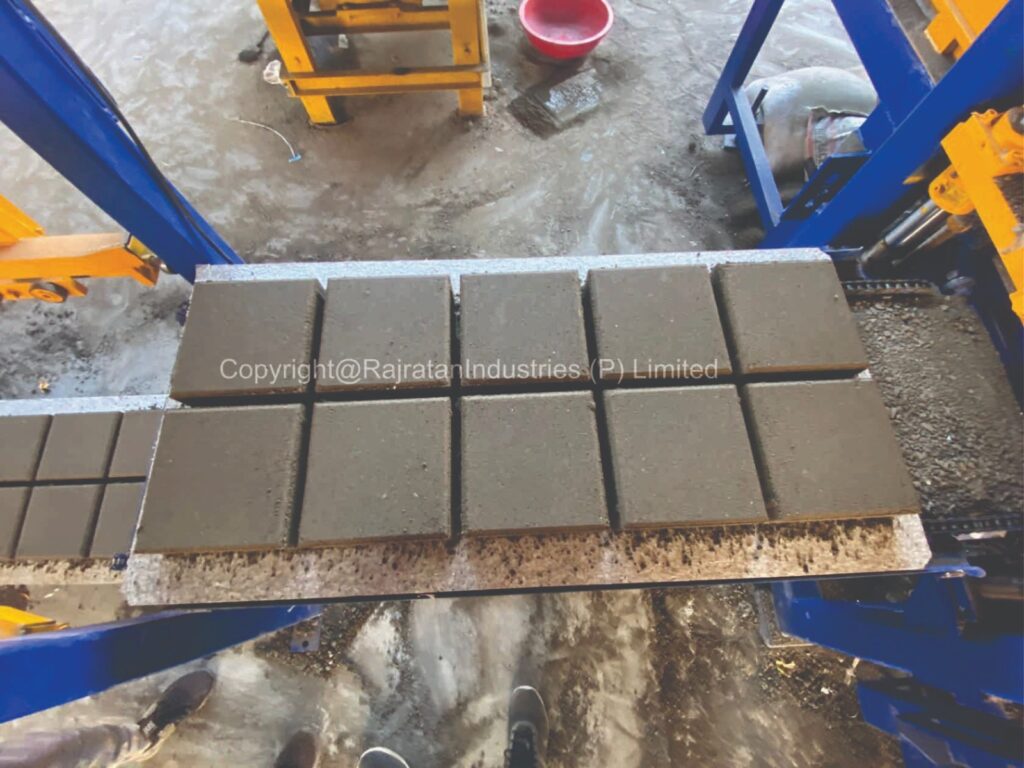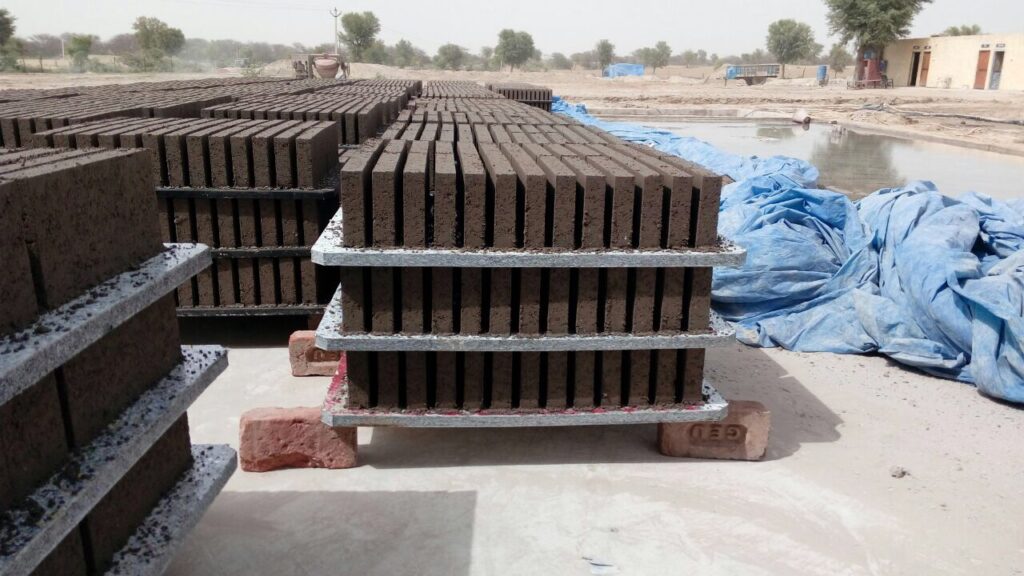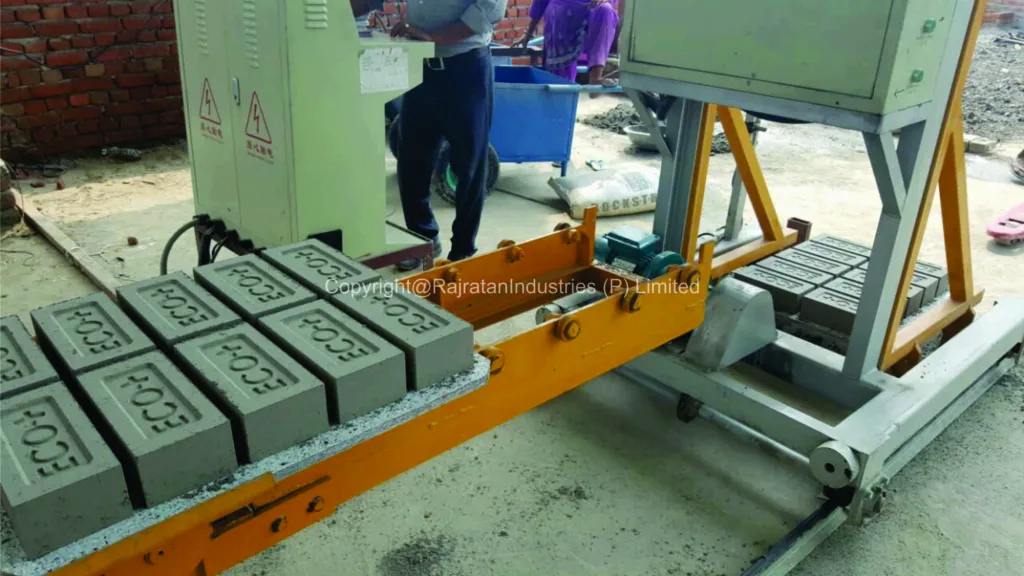
If you’re starting or scaling a fly ash brick plant, your equipment investment is only as good as the pallets supporting your production line. Government subsidy schemes like PMAY (Pradhan Mantri Awas Yojana) and state industrial subsidies make brick plant startups more accessible than ever—but they impose strict ROI timelines. The durability of your Fly Ash Brick Pallet directly impacts your subsidy payback period. Choose poorly, and you’ll face constant machine downtime, premature replacements, and margin erosion. Choose right, and your pallets become a competitive moat.
Table of Contents
ToggleGovernment Subsidies & Pallet ROI: Why Durability Matters
State governments and the central PMAY program offer subsidies and capex grants for brick plant infrastructure. These schemes expect you to deliver consistent output at predictable costs. Every hour your vibro-press sits idle because a pallet cracked or warped is an hour of lost subsidy benefit. The mathematics are unforgiving:
- Wooden pallets: ₹50/kg × 1,200 kg per pallet = ₹60,000 upfront investment. Wooden pallets survive only 8 compression cycles on a vibro-press before absorbing moisture, warping, and cracking under the machine’s 40–100 ton compression load. Cost per use: ₹7,500. Over a 12-month subsidy payback window, you’ll need 10+ replacement batches.
- PAC® Metal Grade pallets: ₹62/kg × 1,400 kg per pallet = ₹86,800 upfront investment. Metal Grade pallets survive 60+ cycles on standard 40–60 ton vibro-presses. Cost per use: ₹1,447. Over the same period, you’ll deploy 1–2 batches, freeing capital for other subsidy-backed expansion.
The durability difference isn’t marginal—it’s 5× cheaper per use to run Metal Grade pallets on subsidy-backed projects.
Equipment Compatibility Guide: Machine Tonnage to Pallet Grade Mapping
Vibro-presses range from light 40-ton machines (small batch operations) to heavy 100+ ton industrial installations. Selecting the wrong pallet grade risks catastrophic failure—your machine will outlast your pallets, but only if pallets are engineered for your machine’s tonnage class.
- Fibre Grade Pallets (Light Machines: 20–40 tons): Optimized for smaller batch plants or pilot operations. Density: 1,135 kg/m³. Fibre Grade provides 40–50 compression cycles before fatigue. Ideal for startups piloting equipment before full-scale subsidy deployment. Cost advantage: ₹57/kg. Trade-off: Not suitable for high-speed production or machines exceeding 40 tons.
- Metal Grade Pallets (Standard 40–60 ton presses): The industry standard for mid-scale brick plants. Density: 1,135 kg/m³. Metal Grade reinforcement (metal dust powder + aluminum oxide core) delivers 60–80 cycles on standard vibro-presses. Tested for zero water absorption, zero warp, zero crack propagation under repeated compression. Cost: ₹62/kg. This grade absorbs the highest-velocity shock loads without delamination—perfect for continuous 8-hour production shifts on subsidy-backed plants.
- Steel Tube Reinforced Pallets (Heavy Industrial 80–100+ ton machines): Engineered for mega-plants and high-tonnage equipment (100+ ton presses used in large-volume production or experimental paver block lines). Steel tube matrix embedded in the PAC® core provides engineering-grade rigidity. Density: 1,150 kg/m³. Service life: 7–8 years (vs. 3–4 years for Metal Grade). Cost: ₹67/kg. Premium grade, but the extended service life eliminates recurring pallet replacement cycles during subsidy payback windows.
Cost-Benefit Framework: Upfront Investment vs. Operational Downtime
Subsidy-backed brick plants operate under tight timelines. Government funding is disbursed in tranches tied to production milestones and output targets. Downtime directly erodes subsidy value.
Downtime Cost Model (12-Month Subsidy Payback Window):
- Average brick plant output: 5,000–10,000 bricks/day (depending on machine size and press cycles).
- Wholesale brick price: ₹3–₹5 per unit (regional variation).
- Daily revenue impact: ₹15,000–₹50,000 per day of lost production.
- Pallet failure downtime: A cracked or warped pallet typically takes 2–4 hours to diagnose and replace (sourcing a replacement, cooling the machine, swapping hardware).
- Hidden cost per failure: 2–4 hours × ₹20,000/hour average revenue = ₹40,000–₹80,000 per pallet failure.
Wooden pallets fail every 8 cycles. On a 3-minute press cycle (typical for vibro-compaction), 8 cycles = 24 minutes of production. A plant running two 8-hour shifts daily completes ~960 brick cycles/day. With wooden pallets, expect a failure every 2–3 weeks. That’s ₹40,000–₹80,000 in lost production per failure, multiplied across 8–12 failures over a subsidy payback window = ₹320,000–₹960,000 in hidden downtime costs.
PAC® Metal Grade eliminates this risk: 60+ cycles per pallet means one set of pallets handles 3–6 months of continuous production before replacement. Planned maintenance, zero emergency downtime, zero lost subsidy milestones.
Testimonial: Indore Brick Plant Operator on Subsidy-Backed Scaling
30-second video testimonial (insert embedded video frame):
Brick plant operator from Indore discusses how switching from wooden to PAC® Metal Grade pallets reduced downtime from weekly to quarterly, allowing his subsidy-backed plant to hit production targets and receive the final tranche of PMAY capex funding on schedule. Quote: “Wooden pallets cost me ₹7,500 per use, but the real cost was missing subsidy deadlines. PAC® pallets at ₹1,447 per use paid for themselves in the first two months.”
Pallet Selection Decision Tree
Use this framework to finalize your pallet grade choice:
- What is your press tonnage? If ≤40 tons → Fibre Grade. If 40–60 tons → Metal Grade (standard). If >80 tons → Steel Tube Reinforced.
- What is your production timeline? If <6 months (pilot/startup) → Fibre Grade. If 6–24 months (subsidy payback window) → Metal Grade. If >2 years (long-term operation) → Steel Tube Reinforced (extended life justifies premium).
- Do you have subsidy milestones tied to output targets? If yes → Metal Grade minimum (zero downtime risk). If no → Fibre Grade acceptable for low-volume operations.
- What is your budget constraint? If capex is fixed → Fibre Grade or Metal Grade (lower upfront). If focused on TCO (total cost of ownership) → Metal Grade or Steel Tube Reinforced (lower per-use cost + extended life).
Why PAC® Pallets Outperform Alternatives
- Zero water absorption: Wooden pallets absorb moisture from vibro-press water spray and humidity, causing dimensional instability and crack initiation. PAC® pallets are engineered from recycled industrial packaging waste (Patanjali, Nestlé lines) reinforced with metal dust powder and aluminum oxide. Result: 0% water absorption, guaranteed by NABL-accredited lab testing (Choksi Laboratories, STEDRANT Technoclinic).
- Crack resistance under vibration: Standard vibro-presses apply 40–100 tons of vertical compression + horizontal vibration (typically 3,600–4,800 vibrations/minute). Wooden pallets fatigue and micro-crack within 8 cycles. PAC® Metal Grade achieves 60+ cycles through fiber reinforcement and metal dust matrix—the metal powder absorbs shock energy that would normally propagate as cracks through the composite.
- 40% scrap buyback value: When your pallets reach end-of-life (after 60+ cycles, 3–4 years of service), Rajratan repurchases them at 40% of the original material value. A ₹86,800 pallet set is recycled at ₹34,720 credit against your next purchase. This defrays replacement costs and closes the circular economy loop.
- Certified load capacity: PAC® pallets are independently tested to IS 16058:2024 standards (BIS dunnage specification for static and dynamic loading). Compressive strength: 22.0 N/mm². Tensile strength: 11.30–11.89 N/mm². All testing conducted by NABL-accredited labs with full certificates provided. Wooden pallets have zero formal certification—you’re trusting supplier claims.
Implementation Roadmap: From Subsidy Approval to First Production Run
- Month 1 (Subsidy Approval): Secure PMAY or state subsidy allocation. Confirm final brick plant layout and vibro-press specifications (tonnage, cycle rate, dimensions).
- Month 2 (Pallet Procurement): Contact Rajratan to calculate your exact pallet set requirement based on machine specifications. Example: A standard 60-ton plant requires 8–12 pallets in rotation (2–3 cycles of use while others cool/dry between shifts). Request a bulk pricing quote for subsidy-backed projects (available on projects >20 pallets).
- Month 3 (Trial & Commissioning): Deploy your first pallet set, run 100–200 test cycles (breakeven point for wooden vs. Metal Grade is typically achieved by cycle 25–30), and document cycle counts + downtime logs. This data is critical for subsidy compliance reporting (many programs require production outcome audits).
- Month 4+ (Scale & Optimize): As subsidies unlock additional capex tranches, deploy additional pallet sets based on proven performance. Rajratan’s 40% scrap buyback ensures your initial pallet investment doesn’t become stranded cost—it’s 40% recoverable when you scale to newer, upgraded equipment.
FAQ on Fly Ash Brick Pallet Selection
- Q: Can I mix pallet grades on the same machine?
A: Not recommended. Vibro-press machines are tuned for consistent compression resistance. Mixing Fibre Grade (softer compression profile) with Metal Grade (stiffer response) creates micro-vibrations that degrade both pallet sets faster. Use a single grade per machine. - Q: How do I know when a PAC® pallet has reached end-of-life?
A: After 60–80 cycles, you’ll notice surface micro-scratches and a slight dulling of the finish (normal wear pattern). The pallet remains structurally sound for cycles 60–80, but compressive stiffness may decrease ~5–7%. Most operators replace at the 60-cycle mark to ensure zero risk of late-cycle failure during critical subsidy production windows. Rajratan accepts pallets at this point for the 40% scrap buyback. - Q: What’s the lead time for bulk pallet orders on subsidy projects?
A: Standard lead time is 3–4 weeks from payment confirmation. Expedited orders (2-week turnaround) available for subsidy-backed projects with advance scheduling. Trial orders (1–5 pallets) ship within 5–7 business days. - Q: Do PAC® pallets require special handling or storage?
A: Unlike wooden pallets, PAC® pallets require no water sealing, no anti-termite treatment, and tolerate outdoor storage without degradation. Store flat in a covered area (to minimize UV exposure, which fades the surface finish over years, not affecting structural integrity). Recommended stacking height: 4–5 pallets to prevent bottom-stack compression deformation in multi-month storage scenarios.
Next Steps: Calculate Your Pallet ROI & Request Bulk Pricing
Every brick plant’s pallet requirements are unique—determined by machine tonnage, press cycle time, daily production targets, and subsidy payback windows. Use the interactive ROI calculator below to determine your exact cost-per-use for Fibre Grade, Metal Grade, and Steel Tube Reinforced pallets over your subsidy timeline.
ROI Calculator Tool: [Interactive calculator: Input machine tonnage (tons) → daily press cycles (cycles/day) → subsidy payback window (months) → output shows total pallet set requirement, cost per use, and downtime risk score for each grade.]
Bulk Pricing Request: For projects requiring >20 pallets, Rajratan offers volume discounts and customized payment terms (30% advance, 70% against LR for subsidy-backed plants). Contact: sales@pallets.rajratan.in or WhatsApp: [contact number]. Include your vibro-press tonnage, daily production target, and subsidy scheme name to receive a quote within 24 hours.