Table of Contents
ToggleIntroduction
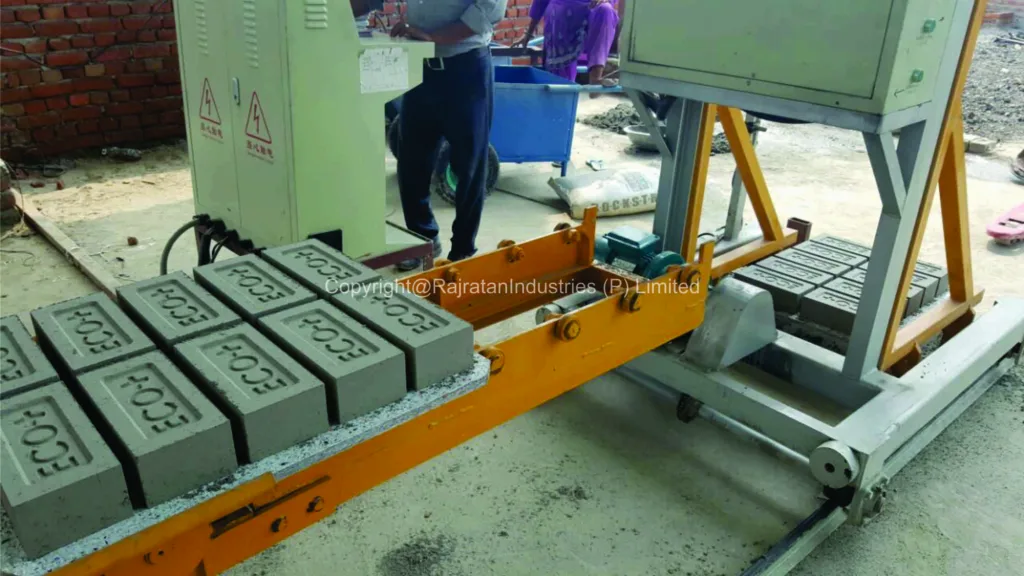
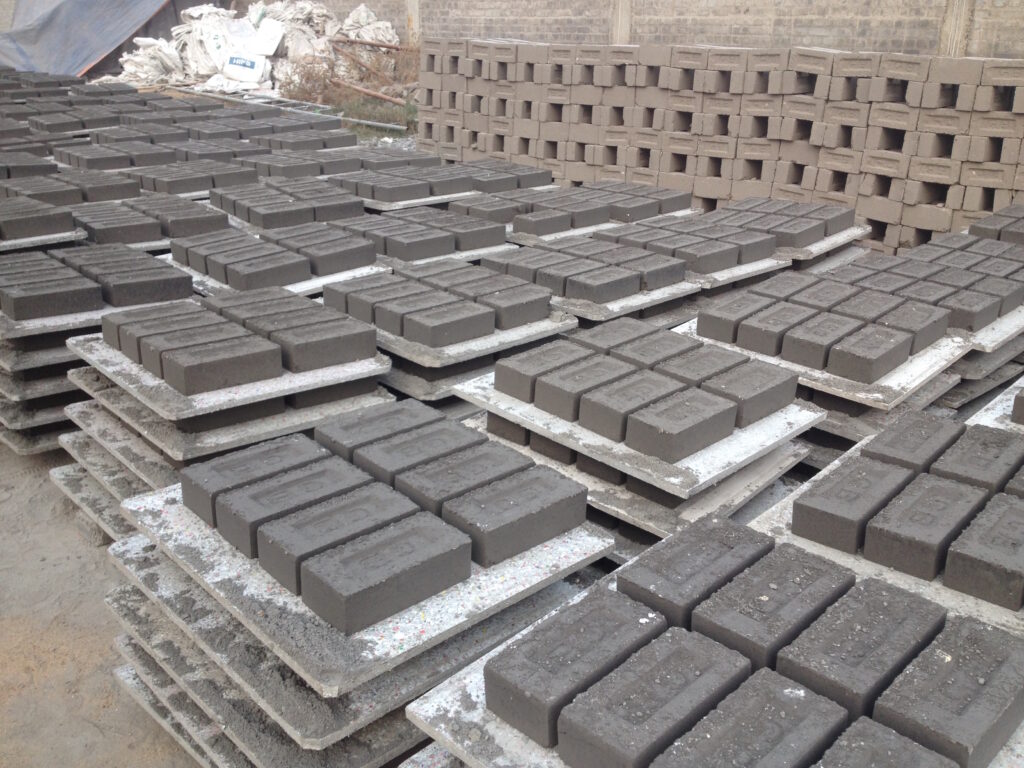
Fly ash brick and concrete block manufacturing plants operate in demanding conditions. Pallets are repeatedly exposed to moisture, mechanical pressure, vibration, outdoor weather, and frequent handling.
Traditional wooden pallets can deteriorate when exposed to moisture and may be vulnerable to termite damage. Standard plastic boards can also vary in their ability to withstand outdoor exposure and mechanical stress.
For manufacturers, selecting the right pallet means looking beyond the initial purchase price. Material composition, reinforcement, machine compatibility, and expected service life all play an important role.
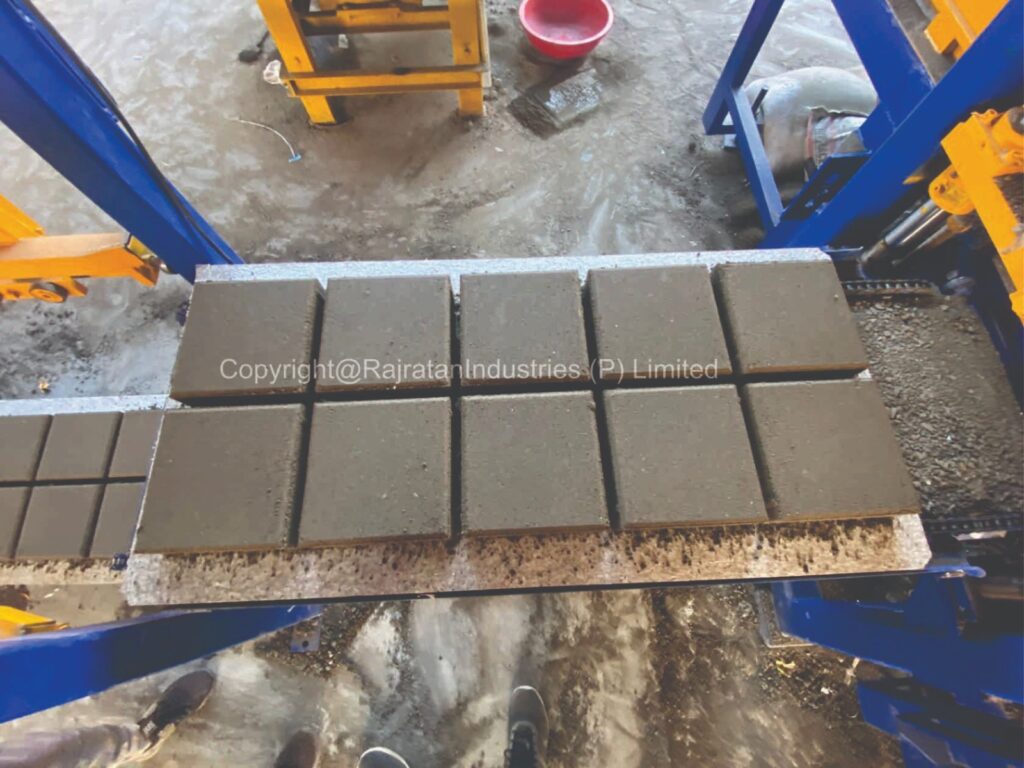
Rajratan Industries Private Limited manufactures PAC® (Plastic Aluminium Composite) Pallets for industrial applications, including fly ash brick manufacturing.
In this guide, we explain what termite resistance and UV resistance mean for plastic composite pallets, what manufacturers should know about fire safety, and how to choose the appropriate PAC® Pallet grade for their production requirements.
What Does Termite Resistance Mean for a PAC® Brick Pallet?
Termites feed primarily on cellulose-containing materials, including wood. This makes wooden pallets vulnerable to termite damage under suitable environmental conditions.
PAC® Pallets use polymer-based composite materials rather than conventional wood-based construction. Because their primary structure does not rely on wood, they are not susceptible to termite feeding in the same way as wooden pallets.
This can be an advantage for brick manufacturers who store pallets in outdoor yards, warehouses, or areas exposed to damp conditions.
How Does This Benefit Brick Manufacturers?
- Reduced termite concerns: Polymer-based construction avoids the cellulose material that termites typically consume in wood.
- No wood-related rotting: Plastic composite construction does not rot like untreated timber.
- Suitable for demanding environments: The selected grade can be evaluated for use in wet production and storage areas.
- Alternative to wooden boards: Manufacturers can consider composite pallets where repeated moisture exposure is a concern.
However, termite resistance does not mean that a pallet is immune to every type of environmental or mechanical damage. Proper storage, handling, and inspection remain important.
Understanding UV Resistance in Outdoor Brick Manufacturing Yards
Fly ash brick and paver plants often store and handle pallets outdoors. In these environments, prolonged exposure to sunlight can affect certain polymer materials.
Ultraviolet (UV) radiation can contribute to polymer degradation, which may result in changes such as fading, embrittlement, surface deterioration, or reduced mechanical performance.
The extent of these effects depends on the polymer formulation, stabilisers, reinforcement, temperature, and duration of exposure.
Why Should Brick Manufacturers Consider UV Resistance?
Outdoor production environments expose pallets to changing temperatures and weather conditions. A pallet’s suitability for these conditions should be assessed alongside its structural properties.
When selecting a PAC® Pallet, manufacturers should consider:
- The expected duration of outdoor exposure.
- The material formulation and any documented UV stabilisation.
- The required board thickness and reinforcement.
- The expected loading and handling conditions.
- The manufacturer’s recommendations for outdoor use.
PAC® Pallets are intended for industrial applications, but specific claims about UV resistance should be confirmed against the technical specifications or test data for the selected grade.
This is particularly important for plants that operate in regions with intense sunlight and high summer temperatures.
Fire Resistance: What Should You Know About Plastic Composite Pallets?
Fire safety is an important consideration in industrial facilities, including brick manufacturing plants, warehouses, and production sheds.
However, fire resistance and being fireproof are not the same thing.
Plastic composite materials may behave differently depending on their polymer formulation, mineral fillers, reinforcement, and any fire-retardant additives. Some formulations can slow ignition or flame spread, while others remain combustible.
The presence of aluminium oxide or metal reinforcement alone does not establish that a board is fire-resistant or self-extinguishing.
What Should Manufacturers Check?
Before using a PAC® Pallet in an area where fire exposure is a concern, ask the manufacturer for relevant documentation covering:
- Fire performance or flammability test results, if available.
- Any applicable fire-safety classification.
- Recommended operating and storage conditions.
- Precautions for use near heat sources or electrical equipment.
No plastic composite pallet should be assumed to be fireproof without supporting test evidence.
Manufacturers should also maintain suitable electrical safety measures, fire detection systems, emergency access, and fire-control arrangements throughout their facilities.
PAC® Pallets vs Wooden Plywood and Standard PVC Boards
Different pallet materials offer different advantages depending on their construction, quality, and intended application.
Feature | Wooden Plywood | Standard PVC Board | PAC® Pallet |
Termite vulnerability | Can be vulnerable to termite attack | Not normally a food source for termites | Polymer-based construction avoids wood-related termite feeding |
Moisture performance | Can swell or delaminate | Depends on formulation and construction | Designed for water-resistant industrial applications |
Outdoor exposure | Depends on wood quality and protection | Depends on UV stabilisation and formulation | Confirm grade-specific outdoor-use specifications |
Structural reinforcement | Depends on plywood construction | Product-dependent | Fibre, metal, or steel-reinforced options |
Service life | Depends on moisture, handling, and usage | Depends on quality and operating conditions | Grade-dependent |
Fire performance | Combustible | Depends on formulation | Requires product-specific verification |
Buyback programme | Depends on supplier | Depends on supplier | Eligible products may qualify under Rajratan’s applicable programme |
The important point is to compare documented product specifications rather than assuming that every product within a material category performs identically.
Rajratan PAC® Pallet Grades and Technical Specifications
Rajratan offers three PAC® Pallet grades with different reinforcement configurations. Each is intended for particular machine types and production requirements.
Specification | Fibre-Reinforced Grade | Metal-Reinforced Grade | Steel-Reinforced Grade |
Material composition | 65% mixed plastic, 20% aluminium oxide, 15% cotton fibre | 62% mixed plastic, 23% aluminium oxide, 15% XLP metals | Metal-grade formulation with internal steel tube frame |
Specified density | 1.08 g/cm³ | 1.13 g/cm³ | 1.13 g/cm³ |
Available thickness | 12, 18, 21 mm | 18, 21, 25 mm | 25, 30 mm |
Indicative service life | 3–4 years | 5–6 years | 7–8 years, up to 10 years with proper handling |
Intended application | Suitable top-press hydro machines and vibrating tables | Compatible imported vibro and hydro-vibro machines | Compatible heavy-duty multi-product vibro machines |
Specifications and service-life figures should be confirmed with Rajratan before purchase. Actual performance depends on the machine, loading, handling, and working environment.
1. Fibre-Reinforced PAC® Pallet
The fibre-reinforced grade combines mixed industrial plastics, aluminium oxide, and cotton fibre reinforcement.
- Density: 1.08 g/cm³.
- Thickness options: 12 mm, 18 mm, and 21 mm.
- Indicative service life: 3–4 years.
It is intended for suitable top-press hydraulic machines and vibrating table systems producing fly ash bricks, reflective pavers, and parking tiles.
2. Metal-Reinforced PAC® Pallet
The metal-reinforced grade incorporates mixed industrial plastics, aluminium oxide, and XLP metal reinforcement.
- Density: 1.13 g/cm³.
- Thickness options: 18 mm, 21 mm, and 25 mm.
- Indicative service life: 5–6 years.
It is intended for compatible imported vibro machines and hydro-vibro systems used in applications such as fly ash bricks and hollow concrete blocks.
3. Steel-Reinforced PAC® Pallet
The steel-reinforced grade incorporates the metal-grade composite formulation with an internal steel tube frame.
- Density: 1.13 g/cm³ as specified for the grade.
- Thickness options: 25 mm and 30 mm.
- Indicative service life: 7–8 years, potentially up to 10 years with proper handling.
It is intended for compatible heavy-duty, multi-product vibro machines producing solid concrete blocks, kerb stones, and large paver products.
The correct grade should be selected according to the machine manufacturer’s requirements and the actual operating conditions.
How the 40% Buyback Programme Supports Replacement Planning
Pallet replacement is a recurring consideration for brick manufacturing businesses. When comparing different products, manufacturers should account for expected service life and the terms governing the replacement of used boards.
Rajratan offers a 40% buyback replacement programme for eligible PAC® Pallets, subject to the applicable terms and conditions.
Under the programme described in the supplied product information, eligible used pallets can be returned for a value adjustment against a new purchase.
Before ordering, confirm the following in writing:
- Which grades and conditions qualify.
- How the buyback value is calculated.
- Whether the value is based on scrap value or another specified calculation.
- The return and transportation arrangements.
- How the credit is applied to the replacement order.
A clearly documented replacement arrangement can help manufacturers plan future pallet purchases more effectively.
How to Choose the Right PAC® Pallet for Your Plant
The best pallet depends on the conditions in which it will be used, not simply on its material name.
Follow these steps before placing an order.
Step 1: Identify your machine type.
Determine whether your plant uses a top-press hydraulic machine, vibrating table, hydro-vibro system, or heavy-duty vibro-press.
Step 2: Confirm the required thickness and reinforcement.
Discuss the required board dimensions, thickness, and reinforcement grade with the manufacturer.
Step 3: Assess the working environment.
Consider moisture exposure, outdoor sunlight, temperature variations, storage conditions, and handling practices.
Step 4: Request technical documentation.
Ask for product specifications and any relevant test data, particularly if UV performance or fire behaviour is important for your application.
Step 5: Evaluate a trial batch.
Where available, test a small batch under your actual production conditions before committing to a larger order.
Step 6: Compare total ownership costs.
Consider the initial purchase price, expected service life, replacement requirements, transport, and applicable buyback benefits.
These checks can help you choose a pallet that meets your operational needs while avoiding unsupported performance assumptions.
Frequently Asked Questions
1. Are PAC® Plastic Pallets resistant to termites?
PAC® Pallets use polymer-based composite construction rather than conventional wood-based construction. This avoids the cellulose material that termites typically consume in wooden pallets.
2. Can PAC® Pallets be stored outdoors?
Suitability depends on the selected grade, formulation, and exposure conditions. Confirm the manufacturer’s recommendations for prolonged sunlight and outdoor storage before purchase.
3. Are PAC® Pallets completely fireproof?
Fireproof performance should not be assumed. Plastic composite materials can be combustible, and fire behaviour depends on the formulation and test results. Request relevant fire-performance documentation if this is a requirement for your facility.
4. Which PAC® Pallet grade should I choose?
The fibre-, metal-, and steel-reinforced grades have different specifications and intended applications. Select a grade based on your machine type, loading requirements, required thickness, and working conditions.
5. How long can a PAC® Pallet last?
The supplied specifications indicate approximately 3–4 years for the fibre-reinforced grade, 5–6 years for the metal-reinforced grade, and 7–8 years for the steel-reinforced grade, potentially up to 10 years with proper handling. Actual service life varies with use.
6. Does Rajratan offer a 40% buyback programme?
Rajratan offers a 40% buyback replacement programme for eligible PAC® Pallets, subject to applicable terms and conditions. Contact the company to confirm the current calculation and eligibility requirements.
7. Where can I enquire about Rajratan PAC® Pallets?
Visit the official Rajratan PAC Pallet website or email info@rajratan.in to discuss product specifications and machine requirements.
Conclusion
Choosing an industrial pallet requires careful consideration of material composition, reinforcement, machine compatibility, and the environment in which it will operate.
PAC® Pallets offer polymer-based composite construction with fibre-, metal-, and steel-reinforced options for different brick and concrete product manufacturing applications.
For manufacturers, the right approach is to verify the specifications, assess the intended working environment, and request supporting test data for performance requirements such as UV resistance and fire safety.
Looking for the right PAC® Pallet for your brick manufacturing plant?
Contact Rajratan Industries Private Limited to discuss your machine requirements, explore the available grades, and learn about the applicable 40% buyback replacement programme.
Explore the product range: https://pallets.rajratan.in
Email: info@rajratan.in
Rajratan PAC® — Designed for demanding industrial applications.
Recommended Internal Links
- Rajratan PAC® Pallets: https://pallets.rajratan.in
- PAC® Shuttering Boards: https://shutteringboard.rajratan.in
- Contact Rajratan: Link to the official contact page.