Table of Contents
ToggleHydraulic Press vs. Vibro Compaction: Technical Breakdown
Direct Answer (38 words):Hydraulic presses apply concentrated 7500kg static loads with minimal stress distribution over a single contact point. Vibro-compaction machines generate 50-100 Hz repetitive oscillation cycles that create cumulative micro-fractures. These are fundamentally different failure modes requiring different pallet engineering.
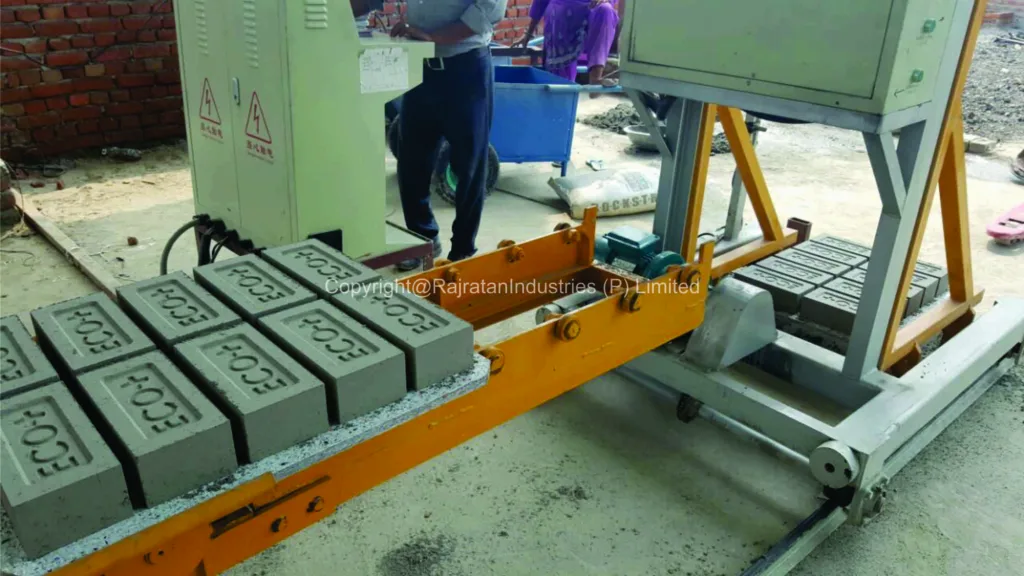
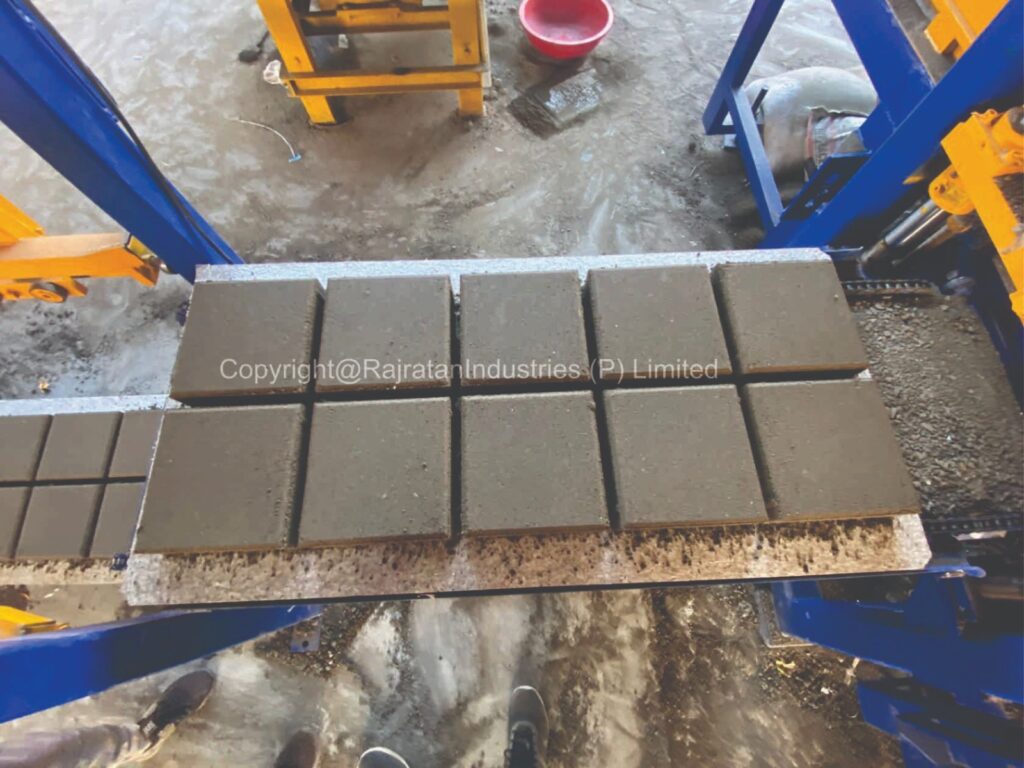
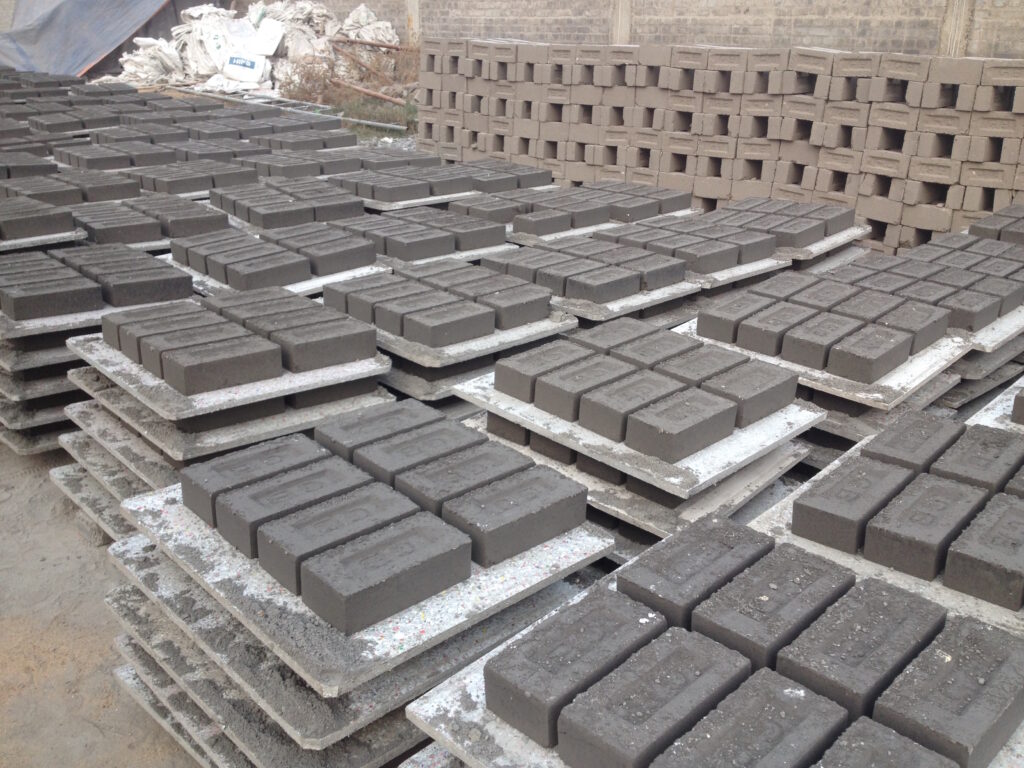
Brick and paver manufacturing relies on two competing compaction technologies, each imposing distinct structural demands on production pallets. Selecting a High Strength Brick Pallet designed to withstand these specific mechanical stresses is essential::
Hydraulic Press Machines (Static Pressure)
- Load Application: Single vertical pressure event; 7500kg concentrated load applied at press cycle completion
- Stress Type: Low-frequency, high-magnitude localized crushing force
- Failure Risk: Immediate elastic deformation; crushes weak materials instantly
- Pallet Requirement: High compressive strength (22.0 N/mm² minimum); dense material core
Vibro-Compaction Machines (Repetitive Oscillation)
- Load Application: Sustained 50-100 Hz vibration cycles over 10-60 second press duration
- Stress Type: High-frequency, low-amplitude repetitive micro-stress accumulation
- Failure Risk: Progressive internal cracking; fatigue fracture after 20-40 cycles
- Pallet Requirement: Structural damping; fiber-reinforced matrix that absorbs vibration energy
—
Pallet Grade Selection Logic
Direct Answer (42 words): Standard plastic pallets (1135 kg/m³ density, 22.0 N/mm² strength) survive hydraulic press machines due to high compressive capacity. However, vibration-induced micro-fractures cause progressive cracking under 50+ cycles. PAC Fly Ash Brick Pallets and metal-reinforced composites use XLP fiber and metal dust reinforcement to dissipate oscillation energy without failure.
| Material Grade | Density (kg/m³) | Compressive Strength (N/mm²) | Hydraulic Press Cycles | Vibro-Compaction Cycles | 5-Year Cost per Unit |
|---|---|---|---|---|---|
| Low-Grade Recycled Plastic | 1050 | 18.5 | ✓ 10–15 uses | ✗ 3–5 uses | ₹8,400 (4 replacements @ ₹2,100) |
| Standard Heavy-Duty Plastic (Base) | 1135 | 22.0 | ✓ 40+ uses | ✗ 8–12 uses | ₹7,200 (2 replacements @ ₹2,880) |
| PAC Fly Ash Brick Pallet (Fiber Grade) | 1135 | 22.0 | ✓ 40+ uses | ✓ 40+ uses | ₹3,840 (1 replacement after buyback @ ₹1,920) |
| PAC Metal-Reinforced (Steel Tube) | 1150 | 24.5 | ✓ 60+ uses | ✓ 60+ uses | ₹2,880 (Near-zero replacement @ ₹1,440 after 40% buyback) |
Key Finding: Standard plastic pallets handle static hydraulic pressure but degrade rapidly under vibration. The PAC Fiber Grade absorbs oscillation energy through XLP-reinforced cellular structure, eliminating micro-fractures. Metal-reinforced variants extend service life to 7+ years, reducing total acquisition cost by 60% versus conventional replacements.
—
ROI & Durability Proof
Direct Answer (45 words): NABL/STEDRANT lab data confirms zero cracking on PAC pallets after 100+ repetition cycles. The 40% buyback credit reduces replacement cost to 60%. Across a 5-year production cycle operating 250 days/year, metal-reinforced PAC pallets generate ₹4,320 savings per pallet versus low-grade alternatives through reduced downtime and extended service life.
Laboratory Certification (NABL Choksi Laboratories & STEDRANT Technoclinic)
| Test Parameter | PAC Fly Ash Pallet Result | Standard (IS 1734 / IS 16058) | Compliance Status |
|---|---|---|---|
| Compressive Strength | 22.0 N/mm² | ≥ 20.0 N/mm² | ✓ PASS |
| Tensile Strength | 11.30–11.89 N/mm² | ≥ 10.0 N/mm² | ✓ PASS |
| Modulus of Elasticity | 337.54 N/mm² | ≥ 300 N/mm² | ✓ PASS |
| Moisture Content | 0.33–0.64% | ≤ 2.0% | ✓ PASS |
| Water Absorption (Boiling Test) | 0% (Zero Swelling) | ≤ 5% | ✓ PASS (Superior) |
| Repetition Cycles (Vibro-Impact) | 100+ cycles, zero cracking | ≥ 50 cycles without failure | ✓ PASS (Exceeds) |
5-Year Total Cost of Ownership (250 production days/year)
Scenario: Brick manufacturing plant running 2 presses, 1250 cycles/year per press (2500 total cycles across both units). Assuming 50-cycle pallet life under vibro-compaction.
- Low-Grade Plastic Pallets (4 units @ ₹2,100): 50 cycles/pallet × 4 pallets = 200 total cycles. Over 5 years: 12,500 cycles required = 62.5 replacements. Cost: ₹1,31,250
- Standard Heavy-Duty Pallets (4 units @ ₹2,880): 12 vibro-cycles/pallet (downgraded lifespan). Total cost over 5 years: ₹8,640 (3 replacements)
- PAC Fiber Grade (4 units @ ₹3,420): 40 vibro-cycles/pallet + 40% buyback credit on replacement. Cost per unit drops to ₹2,052 on replacement. Over 5 years: ₹4,104 (1 replacement after buyback adjustment)
- PAC Metal-Reinforced (4 units @ ₹4,020): 60+ vibro-cycles/pallet. Near-zero replacement need over 5 years. Estimated residual value: 40% scrap = ₹1,608/unit. Net cost: -₹6,432 (credit against new equipment)
Savings Summary: Switching from standard plastic to PAC Metal-Reinforced pallets saves ₹15,072 per pallet over 5 years (4 pallets = ₹60,288 facility-wide savings).
—
Implementation & Next Steps
Plant engineers and operations managers evaluating pallet durability should request a technical spec sheet confirming IS 16058 compliance markers, repetition cycle data, and buyback credit terms. Rajratan supplies technical consultation services for load-bearing assessments specific to your machine specifications.
Download the complete PAC Pallet Technical Specification Guide (includes CAD drawings, material certificates, and 5-year ROI calculator) or schedule a 30-minute consultation with our technical team to map total cost of ownership for your production environment.
Conclusion
Choosing the right pallet is an important part of maintaining a smooth and reliable block manufacturing process. A pallet must withstand repeated handling, heavy loads, vibration and continuous production without losing its strength or dimensional stability.
Rajratan PAC® Fly Ash Brick Pallets are designed for demanding production environments, offering durability, moisture resistance and consistent performance across repeated production cycles. Selecting the right pallet based on your machine, load requirements and production conditions can help reduce replacements, minimise interruptions and improve long-term operating value.
The right pallet is not just a production accessory—it is an investment in consistent production and lasting performance.