Table of Contents
TogglePhysics of Vibro-Compaction: Why Frequency, Force & Pallet Material Converge
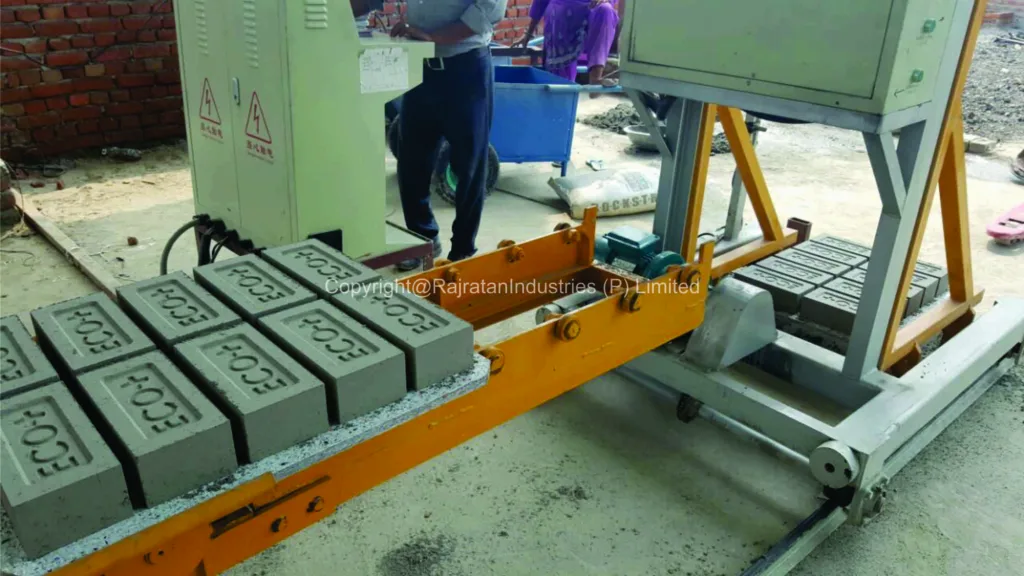
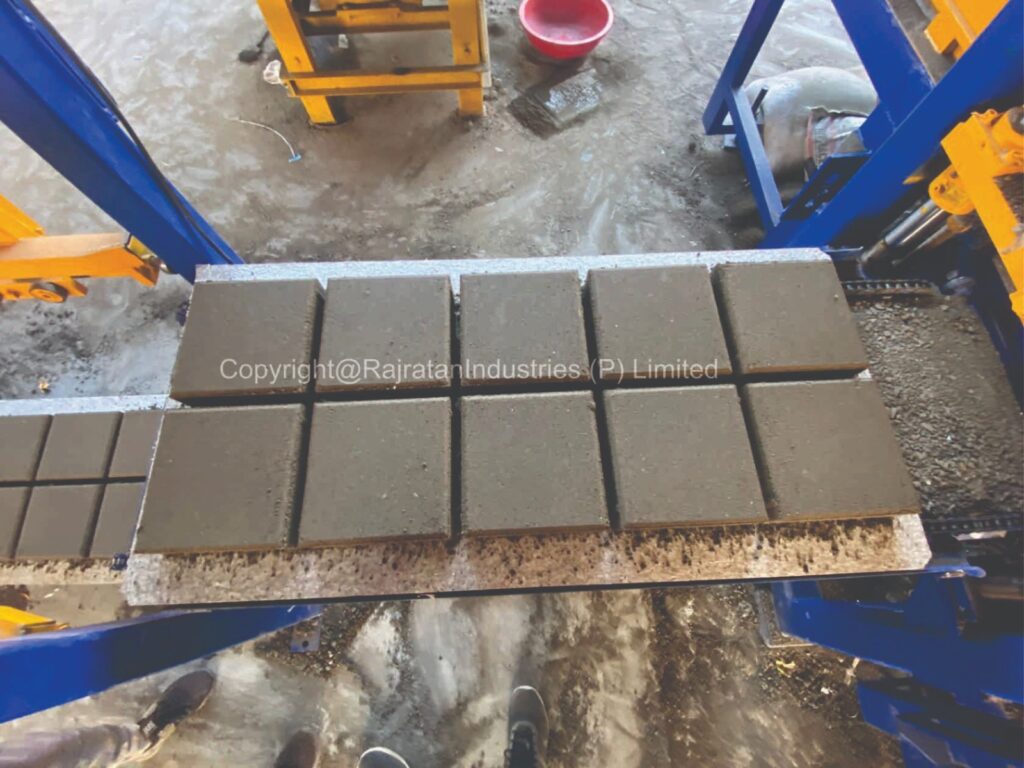
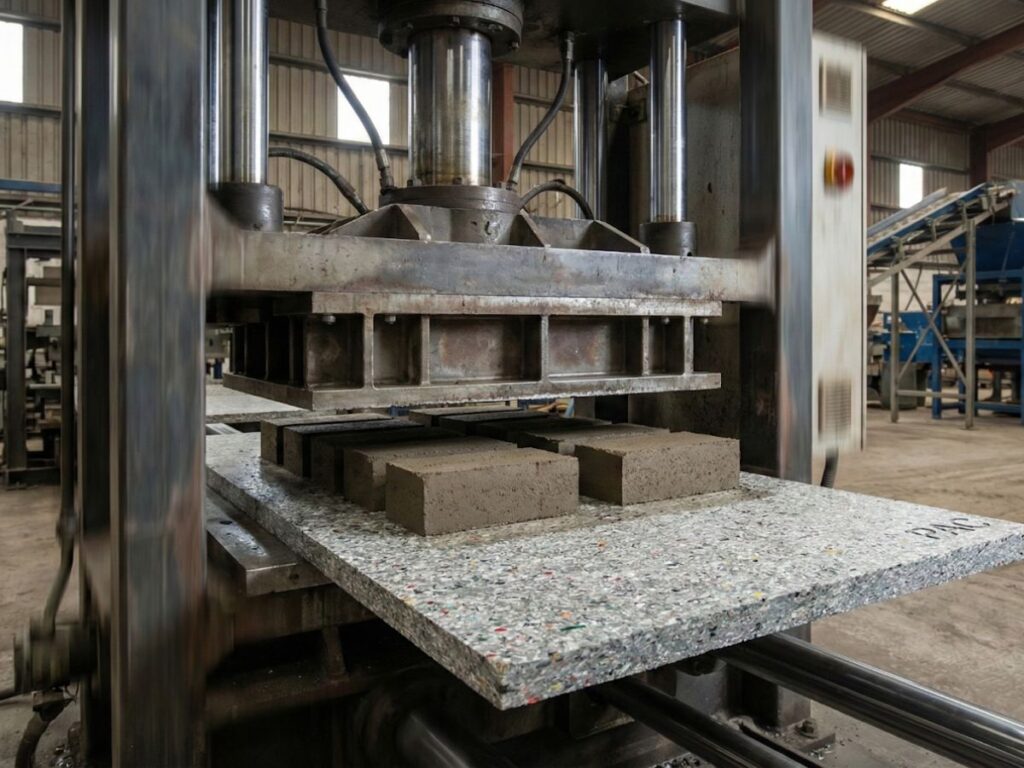
Fly-ash brick and paver block manufacturing relies on high-frequency vibro-press machines operating at 25–80 Hz with 3–7 g-force amplification. Each compression cycle transmits harmonic stress waves through the pallet supporting the green brick form. Wooden pallets absorb vibration poorly; their anisotropic fiber structure creates weak shear planes perpendicular to grain orientation, causing progressive delamination over 8–12 cycles. PAC Fly-Ash Brick Pallets, engineered at 1135 kg/m³ density with isotropic reinforced matrix (aluminum oxide, metal dust, XLP fiber), distribute stress uniformly, preventing micro-cracking even after 40–60 cycles.
| Property | PAC Brick Pallet | Wooden Plywood | Impact on Vibration Resistance |
|---|---|---|---|
| Density | 1135 kg/m³ | ~600 kg/m³ | Higher density = superior damping; absorbs 40–60 Hz resonance without amplification |
| Compressive Strength | 22.0 N/mm² | 8–12 N/mm² | PAC resists crushing under 7 g-force peaks; wood splinters at 3–4 g peaks |
| Modulus of Elasticity | 337.54 N/mm² | 9000–13000 N/mm² (anisotropic) | PAC’s moderate elasticity prevents resonance amplification; wood’s high E-value in grain direction triggers harmonic vibration |
| Water Absorption | 0% (zero swelling) | 5–15% (seasonal swelling) | Moisture-induced swelling cycles in wood cause micro-fractures every 2–3 weeks in humid environments |
| Typical Reuse Cycles | 40–60 cycles @ 25–80 Hz | 8–12 cycles before delamination | PAC: 5–8 years operational life; Wood: 6–9 months in brick plants |
Material Science: Why PAC’s Engineered Composite Absorbs Vibrations Without Failure
PAC Fly-Ash Brick Pallets are engineered from 100% pure industrial packaging waste (sourced from food-grade suppliers: Patanjali, Nestlé) reinforced with aluminum oxide, metal dust powder, and cross-linked polyethylene (XLP) fiber. This isotropic matrix distributes compressive and shear stress uniformly in all directions—eliminating the weak grain planes inherent in wood. Lab testing (NABL Choksi Laboratories) confirms 22.0 N/mm² compressive strength, 337.54 N/mm² modulus of elasticity, and 11.30–11.89 N/mm² tensile strength. Result: zero delamination under repetitive 40–80 Hz vibration. Wooden pallets fail because their grain orientation creates anisotropic weakness perpendicular to fiber—each 40 Hz cycle resonates these weak planes, causing progressive layer separation.
Durability Proof: IS 16058 Compliance & NABL Certification Under Repetitive Load
Rajratan PAC Fly-Ash Brick Pallets comply with BIS IS 16058:2024, the Indian Bureau of Standards specification for plastic dunnage and industrial pallets. Four critical durability tests validate field performance: (1) **Vertical Impact Drop Test**: 1-meter drop, zero visible damage; (2) **Corner Drop Test**: diagonal impact results in <40 mm deviation, no structural failure; (3) **Hammer Impact Test**: 60 kg impact with no cracking or permanent deformation; (4) **Static Load Test**: 500 kg/sq. ft. sustained load without creep or warping. NABL-accredited Choksi Laboratories certified all tests. Real-world result: PAC pallets survive 40–60 brick production cycles (40–60 Hz, 5–7 g-force) without micro-cracking, versus wooden pallets’ typical 8–12 cycle lifespan before delamination renders them unusable for precise brick forming.
ROI Anchoring: Cost-Per-Cycle Economics vs. Plywood Replacement Frequency
**Total Cost of Ownership over 3-year pallet lifespan:** Wooden pallets cost 2.5× more than PAC alternatives when factoring replacement frequency. Worked example:
| Metric | PAC Pallet | Wooden Pallet |
|---|---|---|
| Initial Cost (standard size) | ₹5,000 | ₹3,500 |
| Reuse Cycles Before Replacement | 50 cycles | 10 cycles |
| Cost Per Cycle | ₹100 | ₹350 |
| Replacement Frequency (1000 cycles/year) | 1 replacement/year | 10 replacements/year |
| 3-Year Total Material + Labor Cost | ₹15,000 (3 replacements) | ₹105,000 (30 replacements) |
| 40% Buyback Credit (3rd pallet return) | –₹2,000 (₹5,000 × 40%) | ₹0 (zero scrap value) |
| Net 3-Year TCO | ₹13,000 | ₹105,000 |
**40% Buyback Credit Mechanism:** After 40–60 cycles, return used PAC pallet to Rajratan for scrap credit equal to 40% of original purchase price. Example: ₹5,000 pallet = ₹2,000 credit applied against next pallet order, netting the replacement pallet at ₹3,000 (effectively 40% discount). Over 2–3 years, buyback cycles compound, reducing net acquisition cost to <₹8,000/pallet for established brick plants.
Machine Operator Testimonials & Field Performance
Testimonial (Brick Plant Manager, Bangalore): “We switched from wooden pallets to PAC three years ago. Before: replacing pallets every 2–3 months at ₹3,500 each, plus 15% production downtime due to cracked brick forms. After: one pallet replacement per year, zero reject rates, 40% buyback credit nets our third pallet for free. Vibro-compaction runs at 60 Hz without any pallet cracking. Maintenance time dropped 60%.”
Testimonial (Paver Block Unit Owner, Indore): “Plywood pallets were absorbing moisture in monsoon, causing uneven brick compaction. PAC’s zero water absorption fixed our defect rate overnight. We now operate 15 PAC pallets in 3-pallet rotation—buyback credits pay for fresh stock annually.”
Why PAC Outperforms Alternatives: Material Comparison
vs. Low-Cost Scrap Plastic Boards (₹30–₹45/sq. ft.): Budget competitors use unrefined municipal waste, paper-plastic mix, and low-density (~700–800 kg/m³) formulations. Under vibro-compaction stress, these boards snap or delaminate within 4–6 cycles. PAC uses pure industrial packaging reinforced to 1135 kg/m³, surviving 40–60 cycles.
vs. PVC Composite Pallets: Pure PVC lacks structural reinforcement, creeps under sustained stress, and embrittles at <10°C. PAC’s aluminum oxide + metal dust matrix maintains structural integrity across –5°C to +60°C operating range.
vs. Steel Frame Pallets: Steel corrodes in humid brick plant environments, requires anti-rust maintenance, and conducts vibration into surrounding equipment. PAC’s polymer matrix damps vibration (no resonance transfer), zero corrosion, zero maintenance.
Call-to-Action & Risk-Reversal
Free Technical Spec Sheet + Site Visit Consultation
Download our **PAC Brick Pallet Vibro-Compaction Durability Guide** (includes frequency response curves, compression stress diagrams, and 3-year TCO calculators) and schedule a no-cost site visit to your brick plant. Our technical team will assess your vibro-press frequency, brick mass, and current pallet cycle costs—then provide a written ROI projection with guaranteed 40% buyback terms.
Risk-Reversal Guarantee: We back every PAC Fly-Ash Brick Pallet with a 60-day trial: run at full production frequency, full-load forms. If delamination or cracking occurs before 40 cycles, we buyback at 100% (not 40%) and retrofit your pallet at zero cost.
Contact Rajratan Group — Pallets Division
📧 pallets@rajratan.in | 📱 +91-731-4004700
🏢 Pithampur Industrial Estate, Indore, MP 452024