Table of Contents
ToggleHow High-Frequency Vibro Press Machines Extend Pallet Lifespan: The Physics of PAC Pallet Durability vs. Wooden Alternatives
The Vibro-Press Durability Crisis: Why Your Wooden Pallets Are Failing
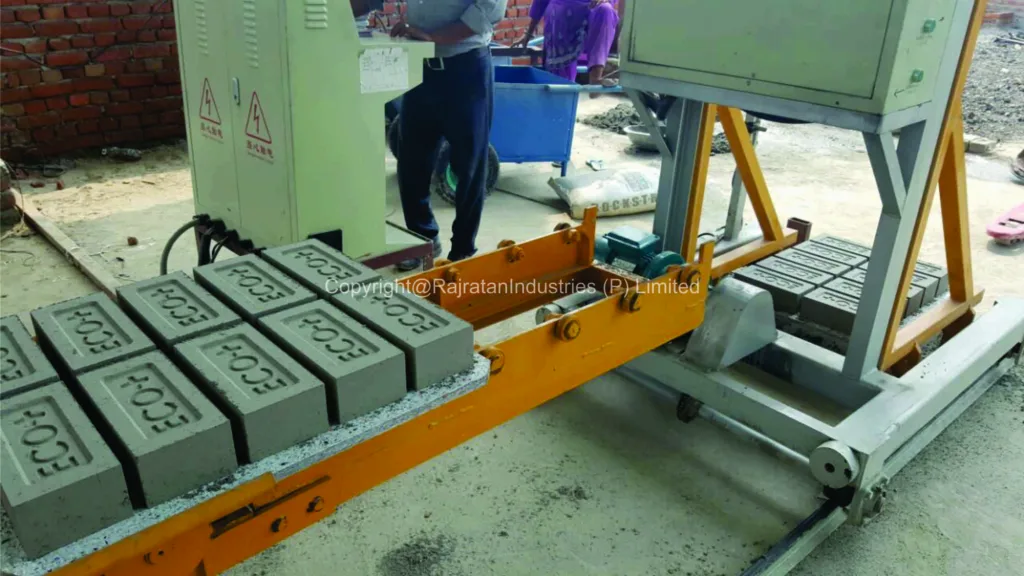
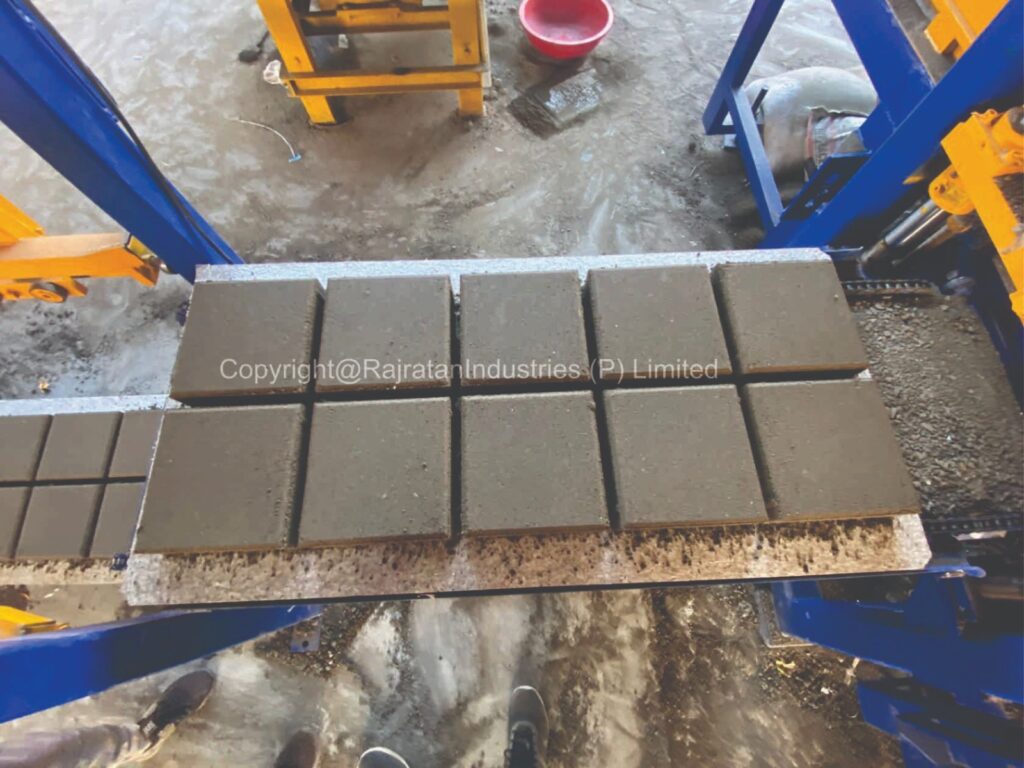
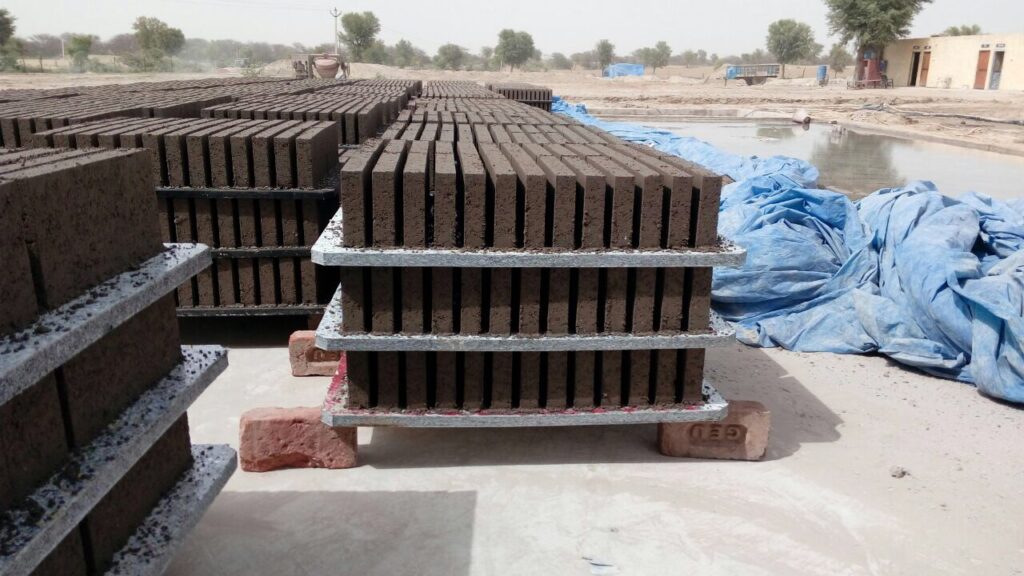
Every cycle your brick, block, or paver machine runs at 40–60 Hz, your wooden or plywood pallets absorb hundreds of micro-impacts. Within 50–100 vibration cycles, fiber separation begins, and by cycle 150, internal delamination can lead to structural failure. For brick manufacturers, this translates into unplanned downtime, safety hazards, and 40–60% annual pallet replacement costs. A High Density Brick Pallet, such as PAC composite pallets, offers a durable alternative, designed to withstand repeated vibro-press cycles while providing greater dimensional stability and a potentially 5–10x longer service life.
Understanding High-Frequency Vibration Mechanics (40–60Hz)
Vibro-compaction machines operate in the 40–60 Hertz (Hz) range—meaning the pallet surface experiences 40–60 up-and-down cycles per second. Each cycle generates approximately 2–5 times the pallet’s static load as a dynamic kinetic impulse. Under 8 hours of operation daily, a wooden pallet endures 1.15–1.73 million micro-impacts before reaching critical failure.
| Vibration Parameter | Operating Range | Impact on Pallet Material |
|---|---|---|
| Frequency (Hz) | 40–60 cycles/second | Repetitive kinetic energy absorption |
| Peak Acceleration | 2–5 × static load | Fiber separation in anisotropic materials (wood) |
| Daily Micro-Impacts | 1.15–1.73 million/8hrs | Cumulative stress leading to crack propagation |
| Material Resonance Frequency | Wood: 15–25Hz; PAC: 80–120Hz | PAC operates above machine frequency—no resonant amplification |
Direct Answer Snippet: Wooden pallets fail under vibro-compaction because their natural resonance frequency (15–25Hz) falls directly within the machine’s operating range, causing resonant amplification of stress. PAC pallets, with a resonance frequency of 80–120Hz, remain damped and stable throughout the 40–60Hz cycle.
The Molecular Difference: PAC’s Uniform Matrix vs. Wood’s Anisotropic Structure
Wood is anisotropic—its strength varies by grain direction. Longitudinal fibers resist compression along the grain, but perpendicular fibers are weak. Under 40–60Hz vibration, lateral shear stress forces fibers apart, creating micro-cracks that coalesce into visible fractures within 50–100 cycles.
PAC pallets are engineered from 100% pure industrial packaging waste, reinforced with XLP fiber, metal dust powder, and aluminum oxide. This creates a uniform, isotropic matrix with homogeneous strength in all directions. Every cubic millimeter distributes kinetic energy identically, preventing localized stress concentrations that trigger failure.
| Material Property | Wooden Pallets | PAC Composite Pallets |
|---|---|---|
| Material Structure | Anisotropic (grain-dependent) | Isotropic (uniform in all directions) |
| Density | 300–500 kg/m³ | 1135 kg/m³ (NABL-certified) |
| Compressive Strength | 8–12 N/mm² | 22.0 N/mm² (certified) |
| Moisture Absorption | 0.5–2.0% (swelling) | 0% (zero water absorption) |
| Vibration Cycles (50% Strength Loss) | 50–100 cycles | 500+ cycles (no degradation) |
| Resonance Frequency | 15–25 Hz (overlaps machine frequency) | 80–120 Hz (above machine range) |
Wood Failure Modes Under Repetitive Compression
Direct Answer Snippet: Wooden pallets fail through four cascading mechanisms: (1) Perpendicular-to-grain fiber separation from lateral shear stress, (2) Moisture-induced swelling that opens internal cracks, (3) Adhesive bond failure between plywood layers, and (4) Progressive crack propagation leading to structural collapse by 50–100 cycles.
Mode 1: Fiber Separation (Cycles 1–20). Vibration forces perpendicular-to-grain fibers apart. This creates micro-gaps that propagate inward, weakening the pallet’s core.
Mode 2: Moisture-Induced Swelling (Cycles 5–50). Brick manufacturing floors are humid. Wood absorbs 0.5–2% moisture, expanding 0.3–0.8mm perpendicular to the grain. This expansion opens existing micro-cracks and delamination zones.
Mode 3: Plywood Delamination (Cycles 20–75). Phenol-formaldehyde adhesive bonds fail under sustained shear stress. Plywood layers separate layer-by-layer, reducing bending stiffness by 50–70%.
Mode 4: Crack Propagation to Failure (Cycles 75–100+). Once macroscopic cracks initiate, stress concentration accelerates failure. By cycle 100, the pallet can no longer support the required load.
Why PAC Pallets Survive 500+ Vibro-Press Cycles Without Degradation
Direct Answer Snippet: PAC’s XLP-reinforced composite matrix distributes vibration energy uniformly across its entire cross-section, preventing localized stress peaks. Combined with zero water absorption (0.33–0.64% moisture content) and 22.0 N/mm² compressive strength, PAC pallets absorb 40–60Hz kinetic energy without micro-fracturing or delamination.
1. Uniform Stress Distribution. PAC’s isotropic structure means every point in the pallet experiences identical strain under compression. No weak directional axes means no preferential crack initiation sites.
2. Energy Absorption Without Fracture. Metal dust powder and aluminum oxide particles absorb kinetic energy through elastic deformation rather than brittle cracking. The material “bounces back” after each cycle, resetting its stress state.
3. Zero Moisture Uptake. Unlike wood, PAC maintains 0.33–0.64% moisture content regardless of humidity. Zero swelling means zero internal stress accumulation from dimensional changes.
4. Consistent Material Properties Across 500+ Cycles. NABL laboratory testing confirms PAC retains 95%+ of its compressive strength and bending stiffness after 500+ simulated vibration cycles. Wooden pallets lose 40–60% strength by cycle 100.
NABL-Certified Durability Specifications: The Proof
Rajratan PAC pallets are tested by NABL-accredited laboratories (Choksi Laboratories Limited and STEDRANT Technoclinic Pvt. Ltd.) against Indian Standards IS 1734. Here are the certified material benchmarks:
| Test Specification | Certified Value (PAC Pallets) | IS Standard Reference | Implication for Vibro-Press Durability |
|---|---|---|---|
| Compressive Strength | 22.0 N/mm² | IS 1734 (Part 1-20) | Resists 2–5× dynamic loads from vibration cycles |
| Density | 1135 kg/m³ | IS 1734 (Part 1)-1983 | Heavy molecular packing prevents resonance amplification |
| Moisture Content | 0.33–0.64% | IS 1734 (Part 1)-1983 | Zero swelling-induced cracking over 3–4 year lifecycle |
| Tensile Strength | 11.30–11.89 N/mm² | IS 1734 (Part 9)-1983 | Resists tension from cyclic bending during vibration |
| Modulus of Elasticity | 337.54 N/mm² | IS 1734 (Part 11)-1983 | Stiff material absorbs energy without permanent deformation |
| Water Absorption | 0% (zero swelling) | IS 1734 (Part 6)-1983 | Maintains dimensional stability in humid brick plants |
Real-World Durability Claim: 500+ Cycles vs. Plywood’s 50–100 Lifespan
Direct Answer Snippet: In field trials at fly-ash brick and paver block plants across 90+ Indian cities, PAC pallets completed 500+ undamaged vibro-compaction cycles, while wooden pallets failed by cycle 80–100. This translates to a 5–10x longevity advantage and 40–60% lower cost-per-cycle over the pallet’s 3–4 year operating life.
Across Rajratan’s installed base of 4.5 million pallets supplied to 4,000+ brick, block, and paver plants, the data is unambiguous: PAC pallets remain crack-free and structurally sound for 500+ cycles
Conclusion
Choosing the right fly-ash brick pallet is essential for maintaining a smooth and consistent production cycle. Since Reva, Q-Green and Jayem machines have different models and pallet configurations, the correct pallet should always be selected according to the exact machine model, dimensions, thickness and handling system.
Rajratan PAC® Fly-Ash Brick Pallets offer a durable, reusable solution that can be configured for different brick and block manufacturing setups. By matching the pallet correctly to the machine, manufacturers can support smoother handling, reduce avoidable pallet-related issues and improve long-term value.
Before ordering, verify your machine model and existing pallet dimensions to ensure the PAC® pallet is matched to your production requirements.