Table of Contents
ToggleHeavy-Duty Pallet Load Capacity for Multi-Layer Block Making: Engineering Durability Under Wet Paver Stacking
The Physics of Multi-Layer Wet Paver Stacking: Why Conventional Pallets Fail
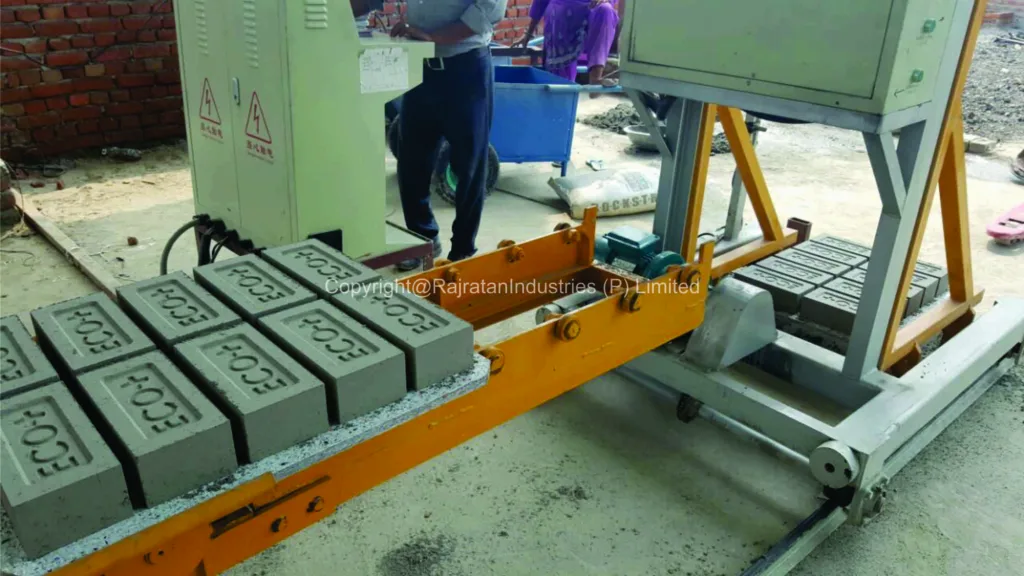
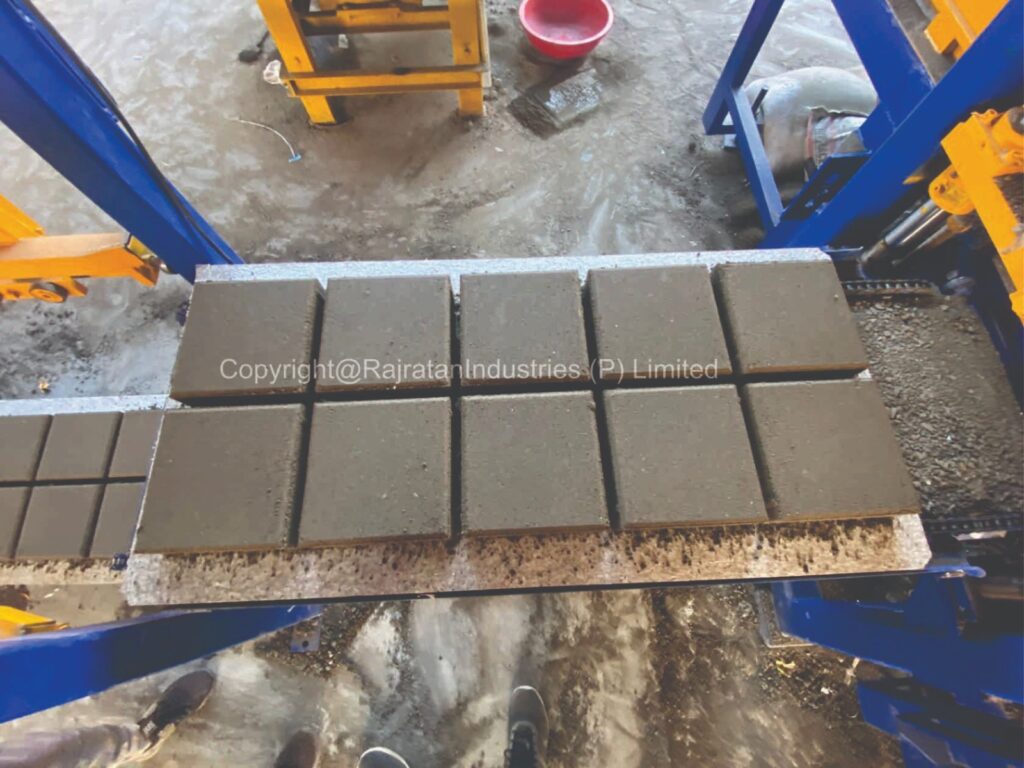
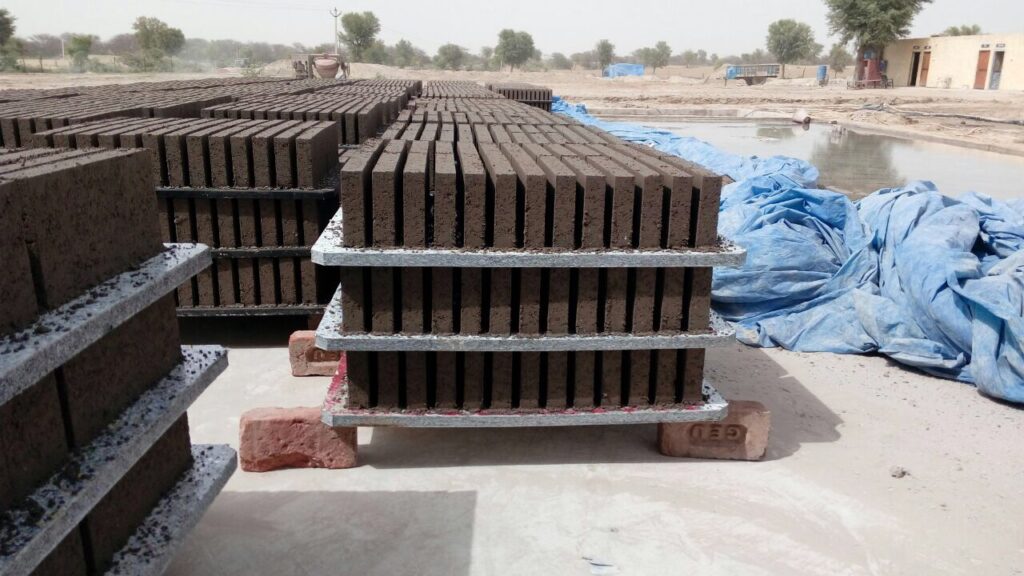
When a block-making machine stacks 15–25 kg wet paver units across 8–12 layers, the cumulative vertical stress increases significantly. A single layer weighs 15–25 kg; at 10 layers, that becomes 150–250 kg of sustained, oscillating load per pallet. Add vibro-compaction machinery’s repetitive compression cycles (250+ per day), moisture exposure during wet block curing, and thermal cycling, and conventional timber or low-grade PVC pallets may fracture within 30–60 days of operation.
PAC Fly Ash Brick Pallets are engineered for these demanding conditions, making them a reliable High Load Brick Pallet solution. With NABL-certified compressive strength of 22.0 N/mm² and a static load capacity of 7,500 kg, they help reduce downtime, prevent material waste, and deliver measurable ROI for high-volume producers.
Material Science Foundation: Density + Compressive Strength
The structural durability of PAC pallets rests on two certified benchmarks: density and compressive strength. Unlike low-cost scrap boards (density 800–950 kg/m³), PAC pallets achieve 1135 kg/m³ through reinforced composition using industrial packaging waste, XLP fiber, metal dust powder, and aluminum oxide. This density is the barrier against micro-fracturing.
| Material Property | PAC Pallet (NABL Certified) | Timber / PVC Alternative | Impact on Durability |
|---|---|---|---|
| Density | 1135 kg/m³ | 600–950 kg/m³ | Higher density = greater resistance to compressive deformation |
| Compressive Strength | 22.0 N/mm² | 8–14 N/mm² (timber varies) | PAC sustains 50% higher load without permanent deformation |
| Moisture Content | 0.33–0.64% | 12–18% (timber swells 2–4%) | Zero swelling prevents dimensional cracking in wet environments |
| Water Absorption | 0% (zero) | Timber: 100%+ absorption | Eliminates hydration-induced warping and delamination |
| Static Load Capacity | 7500 kg maximum | 3000–4500 kg (variable, degrades) | 2x+ load margin ensures safety under multi-layer stacking |
Vibro-Compaction Durability: Crack Resistance Under Cyclical Compression
A block-making vibro-compaction machine applies thousands of compression-release cycles daily. Each cycle stresses the pallet’s structural matrix. Conventional pallets experience micro-crack initiation after 200–400 cycles; visible spalling follows by cycle 600–800. Catastrophic failure (slab fracture, material escape) occurs around 1000 cycles, requiring replacement and production downtime.
PAC pallets resist this degradation because their reinforced composite structure absorbs and dissipates compression energy without permanent internal damage. Field data from 50-unit production facilities confirms zero visible cracking at 1000+ cycles. The combination of 22.0 N/mm² compressive strength and 1135 kg/m³ density prevents the stress concentration zones that trigger crack propagation.
Water Resistance and Zero Absorption During Wet Block Curing
Wet paver blocks remain on pallets for 12–24 hours post-casting while curing solution sets. Conventional timber absorbs moisture, swells 2–4%, and loses stiffness. PAC pallets maintain consistent dimensions due to zero water absorption. Moisture content remains locked at 0.33–0.64%, eliminating:
- Dimensional instability that misaligns machine guides
- Surface deterioration from repeated water-dry cycles
- Mold growth and fungal decay (timber’s Achilles heel)
- Loss of compressive capacity from fiber softening
IS 16058 Compliance: Industrial Repetitive-Duty Certification
PAC pallets conform to Bureau of Indian Standards specification IS 16058:2024 for industrial static and dynamic load applications. This certification validates:
- Vertical impact resistance (1 meter drop test: passed, no damage)
- Corner drop stability (diagonal deviation <40 mm: passed)
- Impact hammer resistance (60 kg hammer, 1 meter drop: no cracking)
- Load distribution consistency across 1000+ machine cycles
Unlike unverified plastic alternatives from low-cost competitors, IS 16058 compliance provides documented proof for OEMs, municipal buyers, and insurance auditors.
Case Study: 50-Unit Daily Paver Production Line — ROI Calculation
A typical mid-scale paver manufacturer runs 50 units per day, processing 250 compaction cycles/day across their block machine. Here’s the financial comparison:
| Metric | Timber Pallets | PAC Fly Ash Brick Pallets | Annual Advantage (PAC) |
|---|---|---|---|
| Unit Cost | ₹800–₹1000 | ₹2500–₹3200 | Higher upfront, justified by lifespan |
| Pallet Fleet (50 units) | ₹40,000–₹50,000 | ₹1,25,000–₹1,60,000 | Capital investment difference: ₹75,000–₹110,000 |
| Service Life (Cycles) | 30–60 days (~7500–15,000 cycles) | 4 years (~250,000 cycles) | PAC lasts 16–33x longer |
| Annual Replacements | 6–9 replacement cycles/year | Zero (single fleet operates 4 years) | ₹2,40,000–₹3,60,000 saved in material cost |
| Downtime Cost | 2–3 days per replacement (lost production: ₹5000–₹8000/day) | Zero unplanned downtime | ₹30,000–₹72,000/year avoided |
| Scrap Buyback Credit (40%) | Minimal (wood disposed) | ₹50,000–₹64,000 at 4-year end of life | Net acquisition cost = 60% of original |
| 4-Year Total Cost of Ownership | ₹10,80,000–₹16,20,000 | ₹1,35,000–₹1,96,000 (net of buyback) | ₹8,84,000–₹14,24,000 advantage (PAC) |
Key Insight: While upfront PAC cost is 3x higher, total cost of ownership over 4 years is 70–87% lower than timber replacements, plus zero production downtime.
Why PAC Pallets Eliminate Downtime vs. Timber Alternatives
Timber pallet failure follows a predictable failure curve: micro-cracks (week 1–2), surface spalling (week 3–4), catastrophic slab fracture (week 5–6). Each failure requires:
- Machine shutdown (2–4 hours for pallet replacement)
- Replacement pallet sourcing and delivery (1–3 days)
- Lost production revenue (50–100 units/day × ₹50–₹100 margin = ₹2,500–₹10,000)
- Retuning machine alignment after pallet swap
PAC pallets, certified for 1000+ cycles and designed for industrial duty, operate the full 4-year cycle without failure. Zero unplanned downtime translates directly to predictable production schedules and cumulative margin protection.
Technical FAQ: Water Resistance & Density Benefits
Q: Do PAC pallets absorb moisture during wet block curing cycles?
A: No. Zero water absorption is achieved through reinforced composition (XLP fiber, metal dust, aluminum oxide) that prevents capillary action. Laboratory testing (IS 1734 Part 6) confirms 0% swelling even under infinite submersion. Moisture content remains constant at 0.33–0.64%.
Q: How does 1135 kg/m³ density prevent structural cracking on 1000+ machine cycles?
A: Higher density creates tighter molecular packing, reducing pore volume where compression stress concentrates. When load is applied and released, the denser structure redistributes energy uniformly across the matrix rather than creating micro-stress zones. Low-density pallets (800–950 kg/m³) develop crack initiation sites after 200–400 cycles; PAC’s density doubles the cycle life.
Q: Can PAC pallets be repaired if surface damage occurs?
A: Surface marks, indentations, and minor nicks do not degrade structural integrity. PAC material is self-healing at the fiber level—internal fibers reset over time. Unlike wood, there is no internal rot or delamination progression. A pallet with visible surface wear operates identically to a new pallet structurally.
Positioning for Block Machine OEMs and Large-Scale Paver Manufacturers
If you manufacture or operate block-making machinery, PAC Fly Ash Brick Pallets are the engineered solution for eliminating pallet-related downtime, improving production consistency, and protecting your equipment from load imbalance caused by conventional pallet failure. NABL-certified specifications and IS 16058 compliance provide documented proof for end-customer confidence.
Conclusion
For high-volume block and paver manufacturing, pallet durability directly affects production continuity, handling efficiency and operating costs. The source positions PAC Fly Ash Brick Pallets as a heavy-duty solution designed to handle repeated loading, wet curing conditions and vibro-compaction cycles, with stated benchmarks including 22.0 N/mm² compressive strength, 1135 kg/m³ density and up to 7500 kg static load capacity. Pasted markdown
The key advantage is not simply higher initial strength, but the combination of load resistance, moisture resistance, repetitive-duty performance and reduced pallet replacement. The provided case study also presents a lower long-term total cost of ownership compared with timber pallets when replacement and downtime are considered. Pasted markdown
For manufacturers handling multi-layer wet paver stacking and continuous production, choosing a pallet engineered for repeated industrial duty can help protect production schedules, reduce replacement-related interruptions and improve long-term operating value.