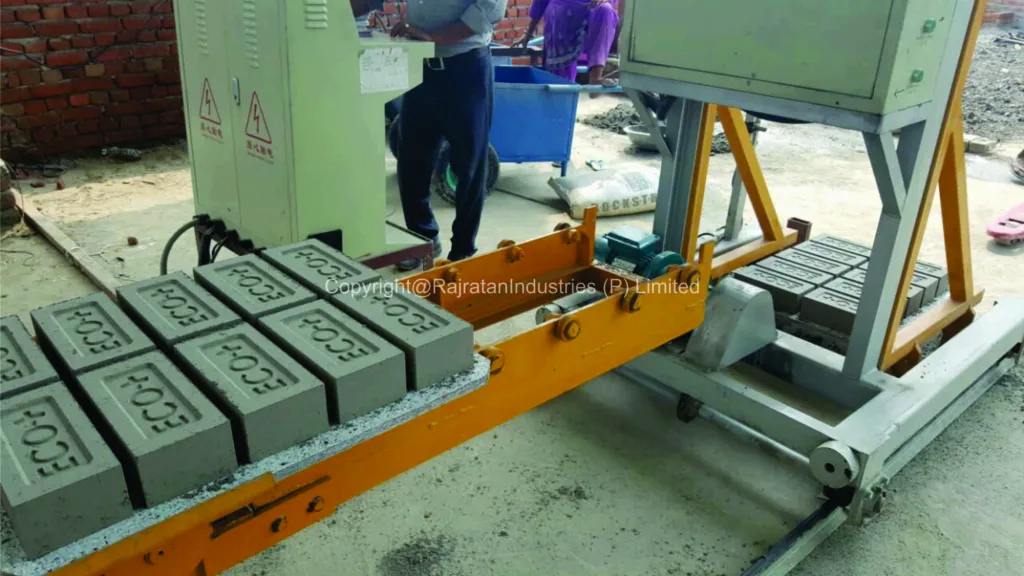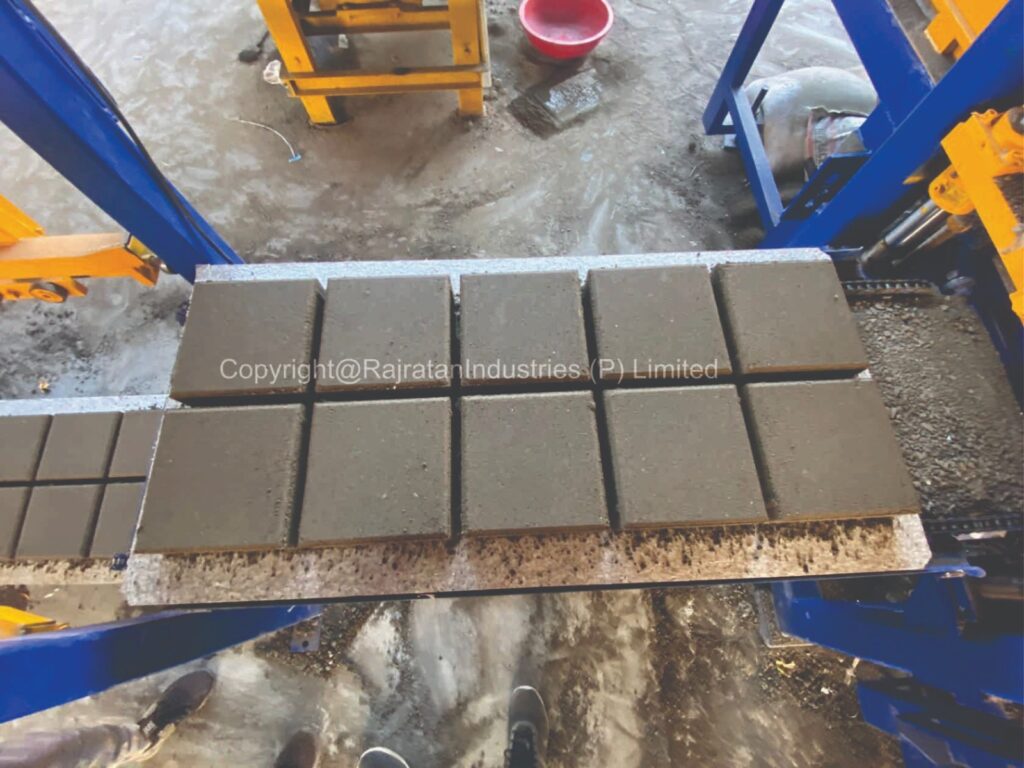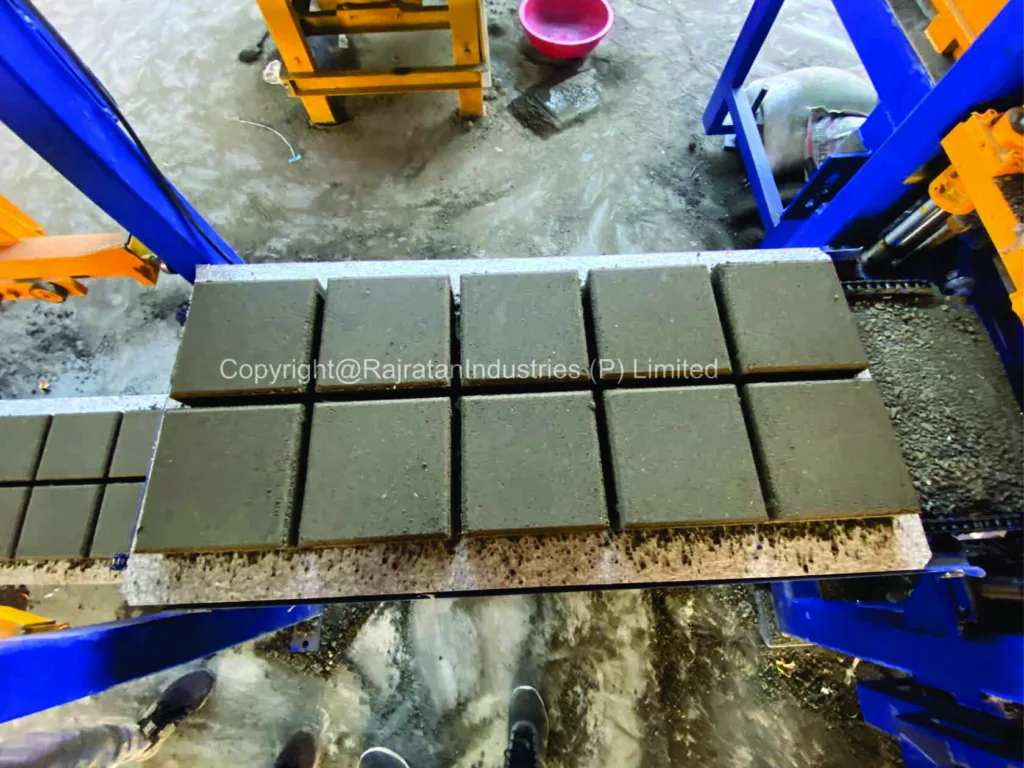
If you run a fly ash brick plant in India, you know how painful it is when a pallet cracks mid-cycle. Your hydraulic press comes down with 80 to 200 tons of force, the vibrator shakes the table, and suddenly—snap. A broken pallet does not just mean losing a single board. It means jammed conveyor belts, damaged brick moulds, wasted raw material, and unplanned downtime that stops your entire production line.
Many plant owners try to solve this by switching from cheap plywood to local PVC plastic pallets, only to find that these boards bend, warp, or crack when the winter temperature drops or when the press pressure is set too high.
There is a better way to run your plant without constant pallet failures. Let us look at why pallets break under heavy hydraulic machines and how you can prevent it.
Table of Contents
ToggleWhy Traditional Pallets Fail Under High-Tonnage Presses
Traditional wood and PVC brick pallets fail under high-tonnage hydraulic presses because they lack the structural elasticity and internal reinforcement needed to absorb heavy vibration and high clamping forces without warping or cracking.
To stop pallet damage, you first need to understand why your current boards are failing. Most brick plants use three types of traditional materials, and each has a major weakness:
-
Plywood Boards
Plywood cannot handle the wet environment of a brick plant. Water from the fly ash mix seeps into the wood layers, causing them to swell, rot, and split. Once the wood is waterlogged, the heavy downward pressure of a hydraulic press easily crushes the soft fibers, making the board useless in less than six months. -
Standard PVC Brick Pallets
While a PVC plastic pallet is waterproof, it has a major issue with temperature and brittleness. In winter, PVC becomes highly brittle. When the heavy vibrating table starts, the brittle PVC cannot absorb the shock and cracks down the middle. In summer, the opposite happens—the PVC softens and bends under pressure, leading to uneven bricks. -
Low-Quality Recycled Plastic Boards
Many local suppliers sell cheap plastic boards made of low-grade waste without any reinforcement. These boards have zero structural stiffness. Under a 100-ton press, they compress and deform, which ruins the sharp edges of your fly ash bricks.
Before buying replacements, it is highly useful to [compare PVC brick pallets with PAC pallets](https://pallets.rajratan.in/pvc-vs-pac-pallets) to see how material engineering affects your daily production costs.
How PAC Technology Prevents Pallet Deformation
Rajratan PAC (Plastic Aluminium Composite) pallets prevent deformation under heavy loads by combining a dense recycled industrial polymer base with aluminium oxide and structural reinforcement fibers that absorb high-impact energy.
Instead of using pure PVC or weak plastics, Rajratan developed PAC®—a high-performance industrial material. We mix virgin-grade industrial plastics (like PP, LDPE, and HDPE) with aluminium oxide, cotton fibers, and cross-linked polymers (XLP) metals. This creates a dense, tough material that does not crack under high impact or bend under heavy weight.
To match different types of brick-making machines, we manufacture three distinct grades of the Rajratan PAC Pallet:
-
Fibre Reinforced Board (Fibre Grade)
Composition: 65% Mix Plastic (Industrial Grade), 20% Aluminium Oxide, 15% Cotton Fibre.
Density:1.08 g/cm³.
Service Life:3 to 4 years.
Best For:Top Press Hydro Machines and standard Vibrating Table Systems making fly ash bricks or parking tiles.
-
Metal Reinforced Board
Composition: 62% Mix Plastic, 23% Aluminium Oxide, 15% XLP Metals.
Density: 1.13 g/cm³.
Service Life: 5 to 6 years.
Best For: Medium to heavy-duty Imported Vibro Machines and Hydro Vibro systems making hollow blocks.
-
Steel Reinforced Board
Composition:62% Mix Plastic, 23% Aluminium Oxide, 15% XLP Metals, reinforced internally with a 12mm diameter Steel Tube Frame (2.5 to 3mm wall thickness).
Density: 1.13 g/cm³.
Service Life: 7 to 8 years (often lasts up to 10 years).
Best For:High-tonnage Multi-product Vibro Machines making heavy concrete blocks and cement pavers.
|
Feature |
Plywood Board |
XLP Board |
Rajratan PAC® Board |
|
Primary Use |
Fly ash bricks, parking tiles |
Hollow blocks, vibro machines |
Heavy concrete blocks, pavers |
|
Thickness Options |
12mm, 18mm, 21mm |
18mm, 21mm, 25mm |
25mm, 30mm |
|
Density |
1.08 g/cm³ |
1.13 g/cm³ |
1.13 g/cm³ |
|
Internal Reinforcement |
Cotton Fibre |
XLP Metals |
12mm Steel Tube Frame |
|
Expected Lifespan |
3–4 Years |
5–6 Years |
7–10 Years |
Selecting the Right Pallet Thickness for Your Hydraulic Press
Choosing the correct Fly Ash Brick Pallet thickness depends on your machine’s pressing capacity, with 18mm to 21mm boards suited for standard hydro-vibrating systems and 25mm to 30mm steel-reinforced boards required for high-tonnage multi-product machines.
If your pallet is too thin for your machine, it will flex during the pressing cycle. Even a tiny 2mm bend under pressure can ruin your bricks. When the pallet bends, the wet brick mixture cracks the moment the mould lifts.
To avoid this, use this quick guide based on machine tonnage:
For 50 to 80-Ton Presses:An 18mm PAC Brick Pallet (Fibre or Metal Grade) works perfectly. It provides enough stiffness without adding unnecessary weight to your manual loading line.
For 80 to 120-Ton Presses:Use a 21mm or 25mm Metal Reinforced Board. This thickness resists the heavy vibrations used to settle the fly ash mix.
For 120 to 200+ Ton Automatic Plants:You must use 25mm or 30mm Steel Reinforced Boards. These boards contain an internal steel tube frame that keeps the pallet completely flat, even when the heavy hydraulic cylinder presses down with maximum force.
You can [browse our heavy-duty PAC plastic pallet sizes](https://pallets.rajratan.in/products) to find the exact dimensions and thickness that match your machine mould.
The True Cost of Pallets: Why Cheap Pallets Cost More
Cheap PVC and wood pallets cost significantly more over time than PAC pallets because they require frequent replacement and offer zero buyback value when they break.
Let us do some real site math. Suppose you buy a cheap wood pallet for ₹400. It rots and breaks in 6 months. Over 3 years, you will buy 6 pallets for that single machine slot, costing you ₹2,400. Plus, you get zero money back for the broken wood scrap.
Now, look at a premium PAC Plastic Pallet from Rajratan. It costs more upfront, but it easily lasts 5 to 8 years without cracking or swelling.
More importantly, we offer a **40% Buyback Replacement Guarantee**. When your PAC pallet finally wears out after years of hard work, we buy it back at 40% of its scrap value against your new purchase. This turns your pallet purchase from an ongoing loss into a reusable asset. You save on replacement costs, reduce plant downtime, and keep your production running smoothly.
Best Practices to Extend Pallet Life in Your Brick Plant
You can maximize the lifespan of your fly ash brick pallets by ensuring proper machine calibration, avoiding uneven mould pressure, and cleaning concrete residue regularly.
Even the toughest PAC Fly Ash Brick Pallet will last longer if your team follows basic maintenance on-site:
- Keep the Machine Level:If your vibrating table or press head is uneven, it will apply more force to one side of the pallet. This uneven stress is the number one cause of premature cracking. Check your machine alignment every week.
- Clean the Feed Drawer:Sometimes, wet concrete or fly ash paste builds up on the sides of the machine. If a hard lump of dried concrete falls under the pallet before pressing, the press will push the pallet down onto that lump, causing a localized stress point. Keep the pallet path clean.
- Adjust the Clamping Pressure: Do not use more hydraulic pressure than necessary to form a perfect brick. Extra pressure does not make the brick stronger; it only puts extra stress on your machine and your pallets.
Get in Touch with Rajratan Industries
Rajratan Industries Private Limited has over 30 years of manufacturing experience. Based in Indore, Madhya Pradesh, we have supplied over 50 Lakh pallets to more than 4,000 customers across 24 states in India.
Frequently Asked Questions
Can PAC Fly Ash Brick Pallets handle wet and humid plant conditions without swelling?
Yes, PAC Fly Ash Brick Pallets are 100% waterproof and chemical-resistant, meaning they will never absorb moisture, swell, or rot even if left submerged in water. Unlike plywood, the composite material maintains its exact size and weight throughout its entire service life.
What is the minimum order quantity for a trial run of Rajratan PAC Pallets?
We recommend starting with a trial order of 5 to 10 pallets so you can test their strength, weight, and performance directly under your own hydraulic press. For small trial orders, we arrange delivery to your nearest transport godown through our shipping partners.
How does the 40% Buyback Replacement Guarantee work?
When your Rajratan PAC pallets eventually reach the end of their service life, you can return them to our Indore factory to get a 40% value adjustment against your new purchase. We recycle the old material to make new boards, creating a cost-effective circular system for your business.
Why should I choose PAC over a standard PVC Plastic Pallet?
PAC pallets do not become brittle in winter or warp in summer like standard PVC plastic pallets, because they are reinforced with aluminium oxide and cotton or metal fibers. This composite structure gives them much higher impact strength and a longer lifespan under high-tonnage presses.