
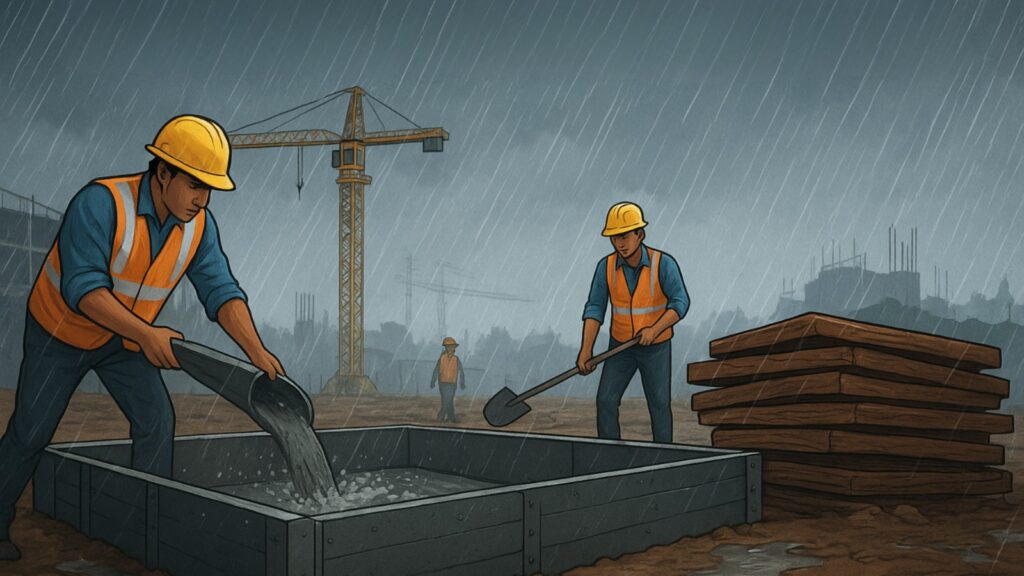
Engineered PAC® Pallets built for unbreakable performance under extreme vibro-compaction. 100+ reuse cycles. Zero waste. Built to last.
Table of Contents
ToggleStop Losing Margins to Broken Pallets
Wooden pallets crack under industrial vibration. PVC pallets fail after 10–15 cycles. Your production line stops. Margins bleed. Rajratan PAC® Pallets are engineered from reinforced industrial-grade recycled plastic—the only pallet system designed specifically for heavy-duty fly-ash brick, concrete block, and paver vibro-machines.
100+ unbreakable reuse cycles. 40% scrap buyback value. Zero water absorption. Zero downtime.
PAC® Pallets vs. Wood vs. Metal vs. Steel: Technical Comparison
| Specification | PAC® Fiber Reinforced | PAC® Metal Reinforced | PAC® Steel Reinforced | Wooden Pallet | Steel Plate Pallet |
|---|---|---|---|---|---|
| Load Capacity (Safe Working Load) | 1,200 kg | 1,500 kg | 2,000 kg | 800 kg (degrades over time) | 2,500 kg |
| Reuse Cycles (Vibro-Machine Compaction) | 80–100+ | 100–120+ | 150–200+ | 8–15 (rapid degradation) | 500+ (but heavy, slow) |
| Water Absorption | 0% | 0% | 0% | 15–20% (swelling, rot) | 0% |
| Impact Resistance (Vibration Shock) | Excellent | Superior | Maximum | Poor (splits easily) | Excellent (inert mass) |
| Weight Per Unit (kg) | 35–40 | 42–50 | 50–60 | 25–30 | 80–120 |
| Operational Durability (Monsoon Exposure) | Zero degradation | Zero degradation | Zero degradation | Rapid rot (6 months) | Rust risk without oiling |
| Scrap / Resale Value (% of Original Cost) | 40% buyback | 40% buyback | 40% buyback | 0% (landfill waste) | 70% scrap steel rate (volatile) |
| Cost Per Reuse Cycle (₹) | ₹25–30 | ₹20–25 | ₹15–18 | ₹350+ (frequent replacement) | ₹40–50 |
| Environmental Impact (Circular Economy) | 100% recycled plastic waste converted to asset | 100% recycled plastic waste converted to asset | 100% recycled plastic waste converted to asset | Timber extraction, deforestation, landfill | Virgin mining, energy-intensive production |
| Transport & Logistics Cost | Low (lightweight, indestructible in transit) | Low (lightweight, indestructible in transit) | Low (lightweight, indestructible in transit) | Moderate (bulky, fragile) | High (heavy weight, overload surcharges) |
Note: PAC® Steel Reinforced pallets deliver 150–200+ reuse cycles under continuous vibro-compaction, reducing cost per cycle to ₹15–18—the lowest operational expense in the industry. Wooden pallets require replacement every 8–15 uses, making true lifetime cost 10–15x higher than PAC® systems.
Find Your Ideal PAC® Pallet Type
Answer three quick questions to discover which PAC® reinforcement variant is engineered for your production environment.
Interactive Selector Tool
Question 1: What is your annual pallet turnover rate?
- Low (0–50 pallets/month): → PAC® Fiber Reinforced
- Medium (50–200 pallets/month): → PAC® Metal Reinforced
- High (200+ pallets/month, continuous 24/7 vibro-operation): → PAC® Steel Reinforced
Question 2: What is your typical brick/block weight per load?
- Standard (400–900 kg/load, fly-ash bricks): → PAC® Fiber or Metal
- Heavy (900–1,500 kg/load, dense concrete blocks): → PAC® Metal or Steel
- Extra Heavy (1,500+ kg/load, interlocking pavers): → PAC® Steel Reinforced (mandatory)
Question 3: What is your production environment?
- Dry/covered facility (low monsoon exposure): → PAC® Fiber or Metal
- Outdoor/semi-exposed (moderate monsoon risk): → PAC® Metal or Steel
- Outdoor, extreme vibration, continuous 24/7 operation: → PAC® Steel Reinforced
Your Result: Each selector path leads to a specific PAC® variant engineered for your exact load, cycle count, and environmental condition. No guessing. No trial-and-error failures.
Technical Specifications & Material Composition
PAC® Fiber-Reinforced Pallet
| Specification | Value |
| Base Material | Multi-layer Plastic (MLP) industrial packaging waste, sourced directly from production lines (Patanjali, Nestlé, major CPG manufacturers) |
| Reinforcement | High-tensile fiber (glass fiber, aramid fiber matrix) |
| Density | 0.95–1.05 g/cm³ |
| Load Capacity (Safe Working Load) | 1,200 kg (distributed across pallet footprint) |
| Reuse Cycles (Heavy Vibro-Compaction) | 80–100+ cycles under continuous industrial operation |
| Weight | 35–40 kg per pallet unit (standard 1200×1000mm footprint) |
| Water Absorption | 0% (no swelling, no rot) |
| Impact Resistance (Vibration Shock) | Excellent; absorbs compaction forces without micro-cracking |
| Environmental Compliance | CPCB authorized, MPPCB approved. IS 2062 Grade B structural durability standards. |
| Scrap Buyback Value | 40% of original purchase price (after 80–100 cycles) |
| Cost Per Reuse Cycle | ₹25–30 (including initial cost amortization + buyback credit) |
PAC® Metal-Reinforced Pallet
| Specification | Value |
| Base Material | Multi-layer Plastic (MLP) industrial packaging waste with embedded metal dust particle matrix |
| Reinforcement | Industrial-grade metal dust powder (aluminum oxide, ferrous particles) distributed through compression molding |
| Density | 1.10–1.25 g/cm³ (increased density = higher compaction resistance) |
| Load Capacity (Safe Working Load) | 1,500 kg (20% increase over Fiber variant) |
| Reuse Cycles (Heavy Vibro-Compaction) | 100–120+ cycles under continuous industrial operation |
| Weight | 42–50 kg per pallet unit (standard 1200×1000mm footprint) |
| Water Absorption | 0% (metal reinforcement blocks moisture penetration) |
| Impact Resistance (Vibration Shock) | Superior; metal particle matrix dissipates compaction forces across broader cross-section |
| Edge Durability | Metal particles on edge borders eliminate chipping and micro-frac |