At most sites, pallets are treated like bulk material. Get thecheapest, replace when damaged, move on.
But in a high-output plant — producing concrete blocks, pavers, or tiles — pallets aren’t just platforms. They’re part of the production system. And that’s exactly how plant engineers see them.
1. Load-Bearing Is Not Optional
Every board handlesdry weight + wet load + vibration impact. A block pallet might carry 900–1,200 kg per cycle.
If the pallet flexes under that load even slightly:
The block doesn’t set properly
Compaction is uneven
Surface finish is inconsistent
An engineer doesn’t ask “Is it strong enough to hold blocks?” They ask “Does it maintain flatness under dynamic load after 300 cycles?”
2. Curing Line Resistance: The Real Test
Inside curing chambers, temperatures rise. Humidity saturates the board.
Plywood absorbs moisture. Composite boards without reinforcement start to deform.
An engineer tracks:
Dimensional stability after 6+ hours in 90% humidity
Whether the pallet creates air gaps or uneven curing due to warping
If edge swelling causes jamming in automated de-stacking
3. Repetition Value Isn’t a Spec — It’s a Data Point
Buyers hear “50+ repetitions” and assume cost-efficiency. Engineers do this math:
Total Cost / Avg Real-World Cycles = Cost per Use
If a low-cost pallet gives 10 usable runs, it’s costlier than a high-performance board with 80+.
They also track:
Forklift edge wear
Corner integrity during loading
Loss from cracked/damaged products due to unstable base
4. Surface & Finish Consistency
A flexing or waterlogged board leaves a mark:
Micro cracks on block edges
Slight rounding on sharp corners
Visible lines on product face
This might not show up immediately, but in QC rejection rates and customer complaints later.
Engineers correlate:
Material consistency of board
Friction and finish behavior under vibration
Surface stability after repeated wash/dry cycles
Pallets don’t just carry the product. They shape the product.
If you’re still choosing based on price per piece, you’re missing the real numbers: cost per cycle, rejection rate, and plant downtime.
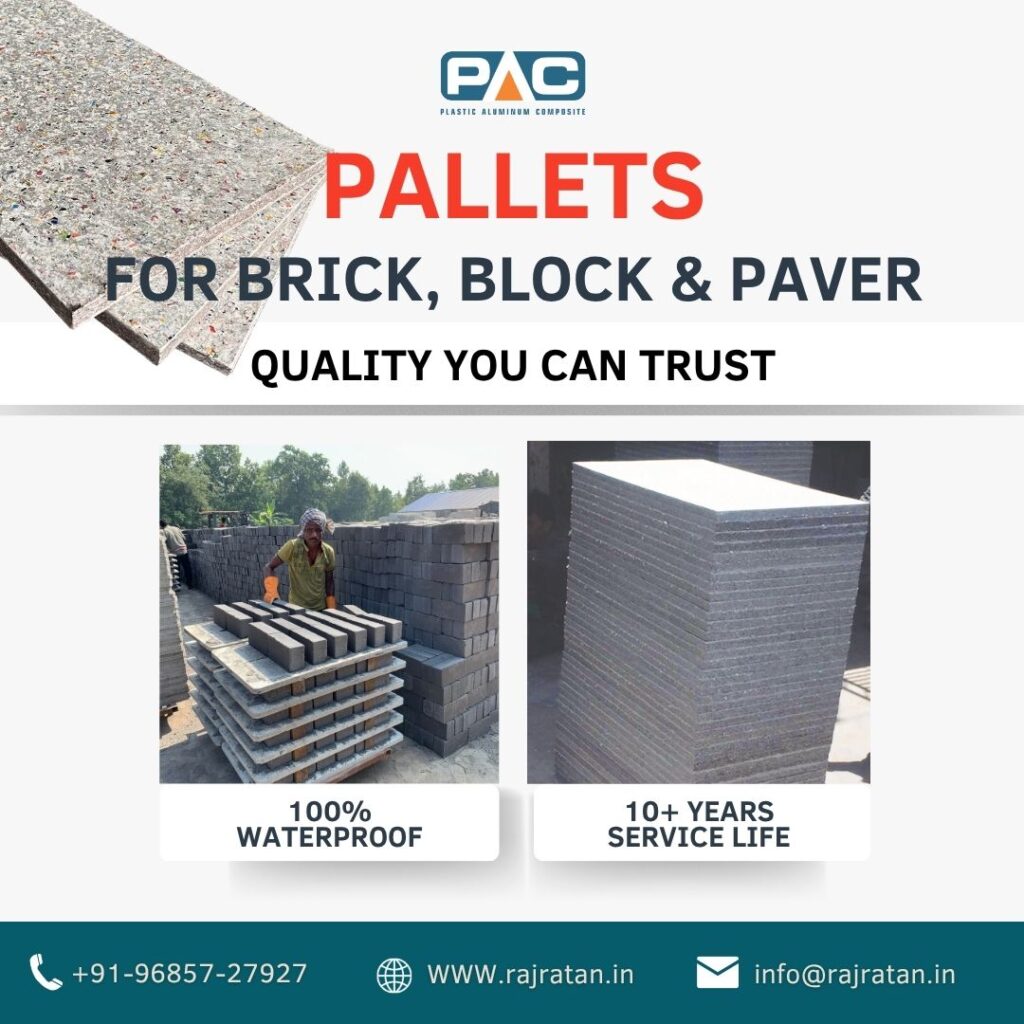
👉See how PAC® Pallets are engineered for plant stress →
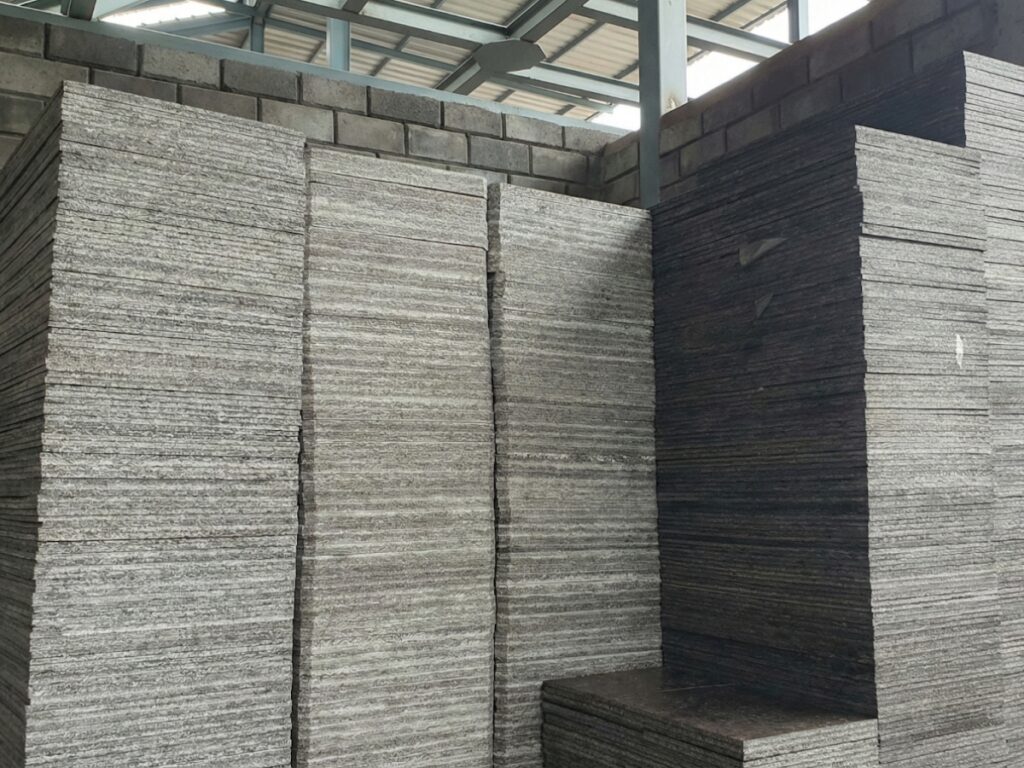
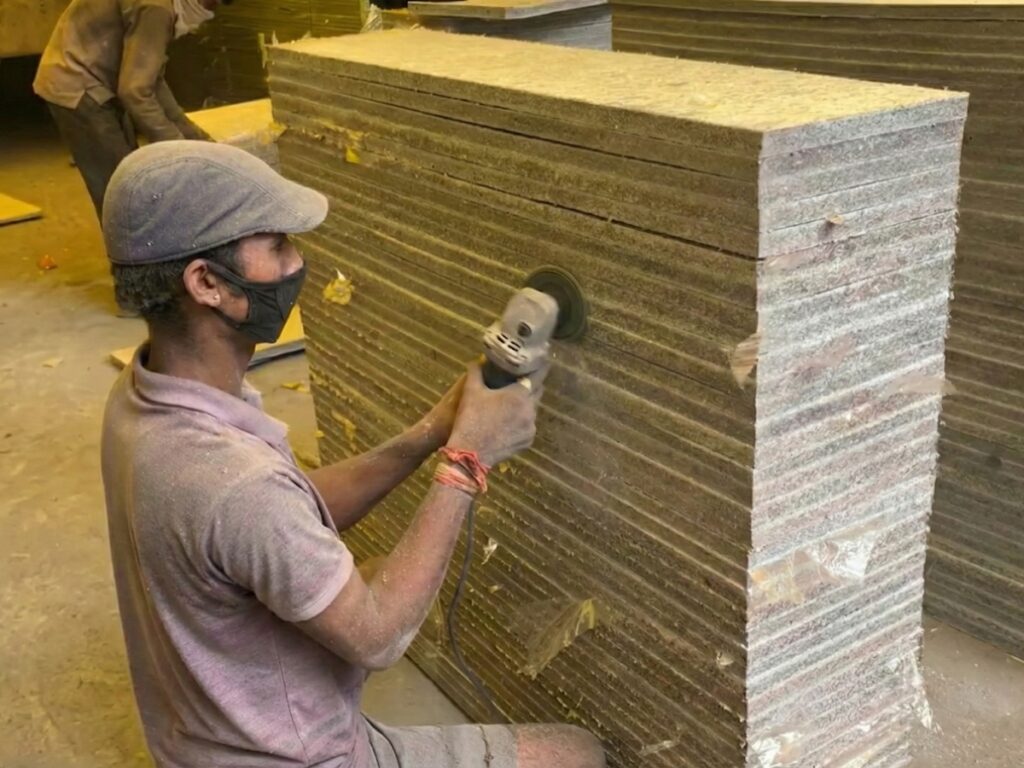
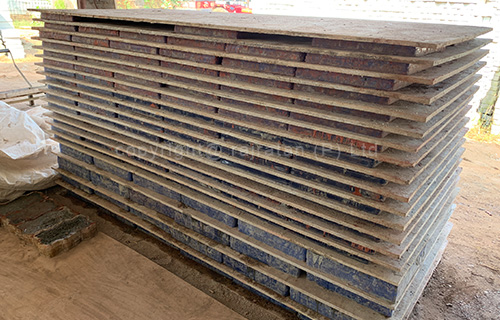
PAC® paver boards keep your paver blocks neatly stacked during production. Their rigid design ensures molds stay stable, giving your pavers a smooth finish and perfect shape every time.
FLY ASH BRICK PALLET
PAC® Brick Pallet
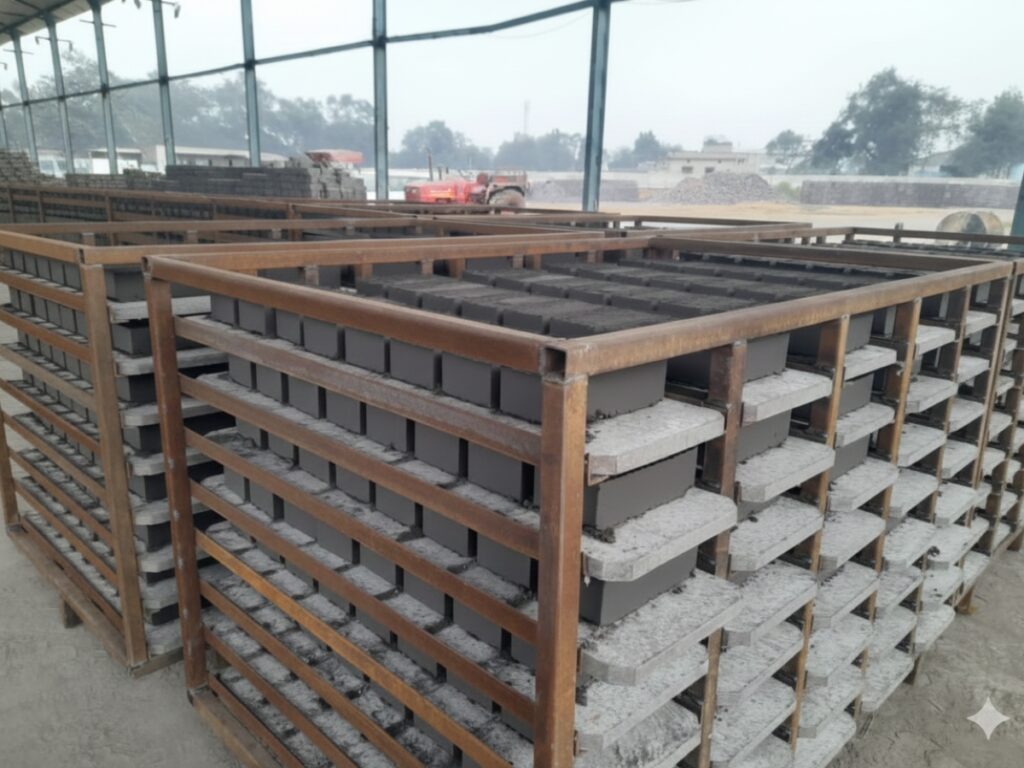
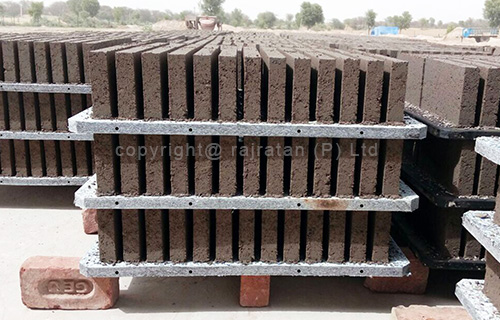
A strong Fly Ash Brick Pallet is key to making sturdy bricks. PAC® pallets handle heavy hydraulic pressure, ensuring your bricks have high strength and a clean look.
FLYASH/CEMENT BLOCK PALLETS
PAC® Cement Block Pallet
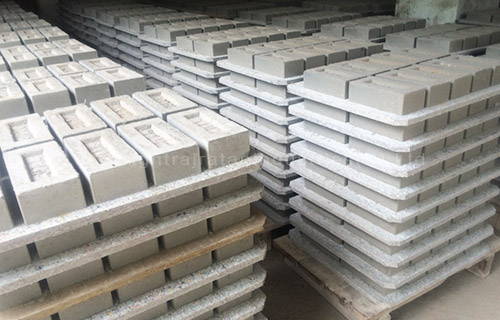
For cement blocks (like solid or anchor blocks), PAC® pallets are built tough. They work perfectly with vibration machines, giving your blocks the right density and shape.