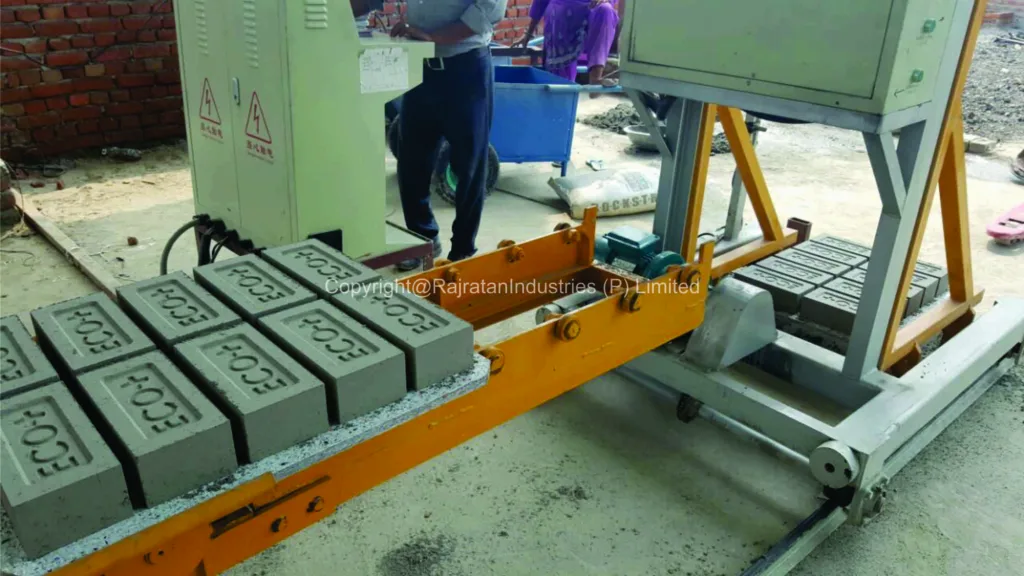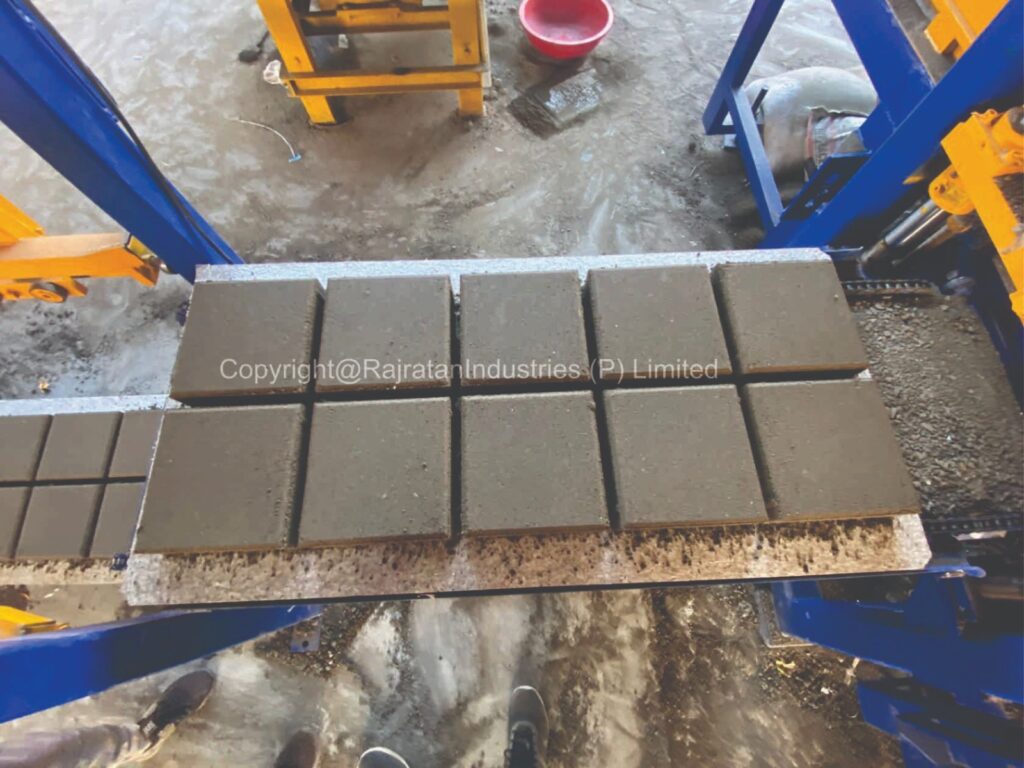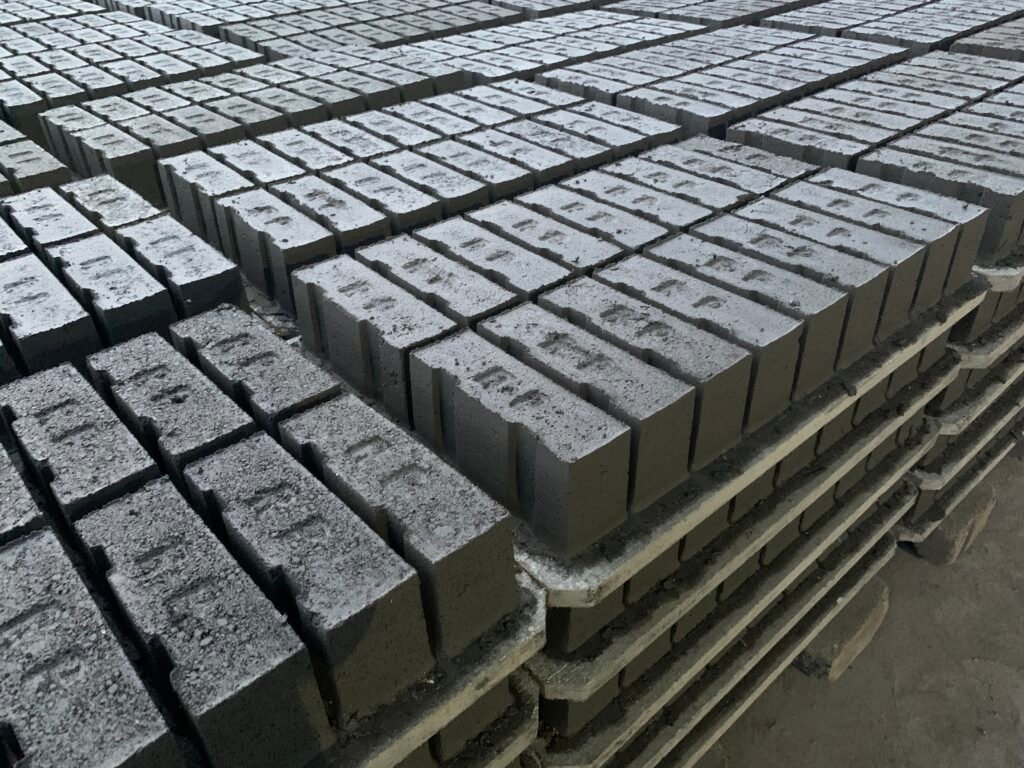
Choosing the correct pallet size and thickness is an important decision for paver block manufacturers. The pallet must be compatible with your block-making machine and suitable for the weight, dimensions, and production requirements of the blocks being manufactured.
Whether you produce 60 mm, 80 mm, or 100 mm paver blocks, selecting an unsuitable pallet can lead to bending, cracking, handling problems, and frequent replacements.
Traditional plywood pallets may deteriorate due to repeated exposure to moisture, while low-grade plastic boards may not provide the required stiffness for demanding production conditions.
To address these challenges, manufacturers are exploring PAC® (Plastic Aluminium Composite) Pallets by Rajratan. Available in different thicknesses and reinforcement options, these composite pallets are designed for various brick, block, and paver manufacturing applications.
In this guide, we explain how to select the right pallet thickness, understand the available reinforcement grades, and evaluate the long-term cost of your pallet investment.
Table of Contents
ToggleWhy Plywood and Low-Grade Plastic Pallets Can Create Problems
Pallets used in paver manufacturing experience repeated vibration, handling, moisture exposure, and loading during production.
The material must maintain its shape and provide suitable support throughout the manufacturing process.
Common Problems with Traditional Pallets
- Moisture-Related Damage
Plywood can absorb moisture during production and curing. Repeated exposure may cause swelling, delamination, and deterioration.
- Warping
Pallets that lose their flatness can create difficulties during machine feeding, product handling, and transportation.
- Cracking and Breakage
Low-quality materials may develop cracks under repeated vibration or improper handling.
- Frequent Replacement
When pallets require frequent replacement, manufacturers face additional purchasing, handling, and maintenance expenses.
Why Consider PAC® Composite Pallets?
Rajratan PAC® Pallets are manufactured using industrial polymers such as PP, LDPE, and HDPE, along with aluminium oxide and reinforcement components.
Their composite construction is designed to provide moisture resistance, durability, and dimensional stability for suitable manufacturing applications.
Recommended PAC® Pallet Thickness for Paver Blocks
The appropriate pallet thickness depends on several factors, including block dimensions, machine configuration, vibration intensity, and pallet support arrangements.
The following table presents the indicative grade recommendations from Rajratan’s product range.
Paver Block Thickness | PAC® Pallet Options | Suggested Grade | Machine Application |
60 mm | 12 mm or 18 mm | Fibre Reinforced | Top Press / Vibrating Table |
80 mm | 18 mm or 21 mm | Metal Reinforced | Hydro Vibro |
100 mm | 25 mm or 30 mm | Steel Reinforced | Heavy-Duty Multi-Product Machines |
These are indicative product options, not universal engineering specifications. Confirm the final pallet thickness and suitability with the machine manufacturer and Rajratan team.
1. PAC® Pallets for 60 mm Paver Blocks
For manufacturers producing standard 60 mm paver blocks, the Fibre Reinforced PAC® Pallet is one of the available options.
This grade is designed for suitable vibrating-table and top-press production setups.
Fibre Reinforced Grade specifications:
- Available thicknesses: 12 mm, 18 mm, and 21 mm.
- Density: 1.08 g/cm³.
- Material composition: 65% industrial plastic, 20% aluminium oxide, and 15% cotton fibre.
- Indicative service life: 3–4 years.
The fibre reinforcement is incorporated into the composite structure to support the board’s durability and handling characteristics.
2. PAC® Pallets for 80 mm Paver Blocks
Manufacturing thicker paver blocks may involve different machine settings and production requirements.
For suitable hydro-vibro applications, Rajratan offers the Metal Reinforced PAC® Pallet in 18 mm and 21 mm thickness options.
Metal Reinforced Grade specifications:
- Available thicknesses: 18 mm, 21 mm, and 25 mm.
- Density: 1.13 g/cm³.
- Material composition: 62% industrial plastic, 23% aluminium oxide, and 15% XLP metals.
- Indicative service life: 5–6 years.
The XLP reinforcement is incorporated into the composite structure for applications requiring a reinforced pallet option.
3. PAC® Pallets for 100 mm Paver Blocks
For selected heavy-duty and multi-product manufacturing applications, Rajratan offers the Steel Reinforced PAC® Pallet.
This grade combines a composite board with an internal steel tube frame.
Steel Reinforced Grade specifications:
- Available thicknesses: 25 mm and 30 mm.
- Density: 1.13 g/cm³.
- Reinforcement: Internal 12 mm steel tube frame.
- Indicative service life: 7–10 years.
The steel frame provides additional structural reinforcement. Final suitability should be confirmed according to the machine design, pallet dimensions, and operating conditions.
Understanding the Three PAC® Pallet Grades
Selecting the correct thickness is only one part of the decision. The reinforcement grade also matters.
Here is a quick comparison of Rajratan’s available options.
Parameter | Fibre Reinforced | Metal Reinforced | Steel Reinforced |
Density | 1.08 g/cm³ | 1.13 g/cm³ | 1.13 g/cm³ |
Thickness options | 12–21 mm | 18–25 mm | 25–30 mm |
Reinforcement | Cotton fibre | XLP metals | Internal steel tube frame |
Indicative service life | 3–4 years | 5–6 years | 7–10 years |
Typical application | Suitable vibrating-table systems | Selected hydro-vibro systems | Selected heavy-duty machines |
The final selection should be based on the actual production setup rather than paver block thickness alone.
PAC® Composite Pallets vs Traditional Plywood
When comparing pallet materials, manufacturers should consider more than the initial purchase price.
The material’s expected service life, moisture resistance, maintenance requirements, and replacement frequency can influence the overall production cost.
Parameter | Traditional Plywood | Rajratan PAC® Composite Pallet |
Material | Wood-based | Plastic Aluminium Composite |
Moisture resistance | Can swell and deteriorate | Designed to resist moisture |
Structural options | Depends on board construction | Fibre, metal, and steel reinforced |
Cleaning | Requires regular care | Easier routine cleaning |
Reusability | Depends on condition and handling | Grade-dependent |
Buyback programme | Not applicable | 40% credit for eligible returned pallets |
Cost Per Use: Why the Initial Pallet Price Is Not Everything
Many manufacturers compare pallets only on the basis of their purchase price. However, the actual cost of using a pallet depends on how long it remains suitable for production.
For example, a lower-priced plywood pallet may need more frequent replacement than a composite pallet designed for repeated use.
When evaluating the cost of a PAC® pallet, consider:
- Initial purchase price.
- Pallet dimensions and thickness.
- Expected production cycles.
- Replacement frequency.
- Handling and maintenance expenses.
- Transportation costs.
- Applicable buyback credit.
A longer service life can help reduce replacement frequency, but actual savings should be calculated using your factory’s production data.
Understanding Rajratan’s 40% Buyback Credit Programme
Rajratan offers a 40% buyback credit programme for eligible used PAC® pallets.
When your pallets reach the applicable return stage, you can contact the company to arrange the return process.
The eligible credit is assessed and adjusted against your next purchase of new PAC® pallets.
This programme provides an additional way to manage replacement expenses while supporting material recovery and recycling.
Buyback eligibility, valuation, and applicable terms should be confirmed with the Rajratan team.
How to Order the Right Paver Block Pallet
Before placing an order, share your production requirements with the manufacturer. This helps identify suitable dimensions, thickness, and reinforcement options.
Follow these steps:
Step 1: Confirm Your Paver Block Dimensions
Identify whether you manufacture:
- 60 mm paver blocks.
- 80 mm paver blocks.
- 100 mm paver blocks.
Also share the shape and dimensions of the paver being manufactured.
Step 2: Share Your Machine Details
Provide information about your machine type, model, production process, and operating requirements.
Mention whether you use a vibrating table, top-press machine, hydro-vibro machine, or multi-product machine.
Step 3: Confirm Pallet Dimensions
Measure your existing pallet’s length, width, and thickness.
Accurate dimensions are important for compatibility with the machine’s feeding and handling systems.
Step 4: Select the Reinforcement Grade
Discuss whether the Fibre Reinforced, Metal Reinforced, or Steel Reinforced grade is suitable for your application.
Step 5: Request a Trial Order
You can discuss a trial order of approximately 5–10 boards to evaluate the product with your existing machinery before purchasing larger quantities.
Ordering, Payment and Transportation
Rajratan manufactures PAC® Pallets at its facility in Indore, Madhya Pradesh, and accepts supply enquiries from manufacturers across India.
Trial Orders
Small trial quantities can be arranged through regional transport services, with collection from the nearest transport warehouse depending on the destination.
Payment Terms
The standard payment arrangement is:
- 30% advance: At the time of order confirmation.
- 70% balance: Before dispatch from the Indore facility.
Cash on Delivery (COD) is not available under the stated third-party transport arrangements.
Bulk Orders and Delivery
Larger orders can be arranged through transport partners such as VRL Logistics, BRL, and TCI, depending on the delivery location and shipment requirements.
Door delivery and freight charges are confirmed according to order quantity and destination.
Manufacturers and dealers planning large purchases can also visit Rajratan’s facility in Indore to discuss their machine requirements and product specifications.
Frequently Asked Questions (FAQs)
1. Which pallet thickness is suitable for 60 mm paver blocks?
Rajratan offers Fibre Reinforced PAC® Pallets in 12 mm and 18 mm thickness options for suitable top-press and vibrating-table applications. Final selection depends on the machine configuration and support arrangement.
2. Which PAC® pallet is suitable for 80 mm paver blocks?
The Metal Reinforced Grade is available in 18 mm and 21 mm options for selected hydro-vibro applications. Confirm the required specifications with the manufacturer before ordering.
3. Which pallet should I choose for 100 mm paver blocks?
Rajratan offers Steel Reinforced PAC® Pallets in 25 mm and 30 mm thickness options for selected heavy-duty manufacturing applications.
4. What is the difference between Fibre Reinforced and Metal Reinforced pallets?
Fibre Reinforced pallets use cotton fibre as a reinforcement component, while Metal Reinforced pallets incorporate XLP metals into the composite structure. Their specifications and intended applications differ.
5. Are PAC® pallets suitable for wet curing environments?
PAC® pallets are designed to resist moisture. Their composite construction makes them an alternative to wood-based pallets that can deteriorate due to repeated moisture exposure.
6. What is the expected service life of PAC® paver pallets?
The indicative service-life ranges are:
- Fibre Reinforced: 3–4 years.
- Metal Reinforced: 5–6 years.
- Steel Reinforced: 7–10 years.
Actual performance depends on production conditions, handling, storage, and maintenance.
7. Does Rajratan provide a buyback facility?
Yes. Rajratan offers a 40% buyback credit programme for eligible used PAC® pallets, subject to inspection and applicable terms.
8. Can I order a sample before placing a bulk order?
Yes. You can discuss a trial order of approximately 5–10 boards with the Rajratan team to evaluate the pallets on your production line.
9. Can PAC® pallets be customised according to machine dimensions?
Custom dimensions can be discussed with the Rajratan team. Share your existing pallet measurements and machine details to confirm the available options.
Get the Right PAC® Paver Block Pallet for Your Machine
Choosing a pallet is not just about selecting a thickness. Material composition, reinforcement, machine compatibility, and expected service life all play an important role in the decision.
Whether you manufacture 60 mm, 80 mm, or 100 mm paver blocks, Rajratan offers different PAC® pallet grades to help you explore a suitable option for your production requirements.
Contact the team for technical specifications, custom-size enquiries, trial orders, and bulk pricing.
Rajratan Industries Private Limited
- Address: 123–124, First Floor, Shastri Market, Opp. Gandhi Hall, Indore – 452007, Madhya Pradesh.
- Direct Sales: +91 9685927927 / +91 9685727927
- Email: info@rajratan.in
PAC® by Rajratan – Composite pallets designed for modern paver and block manufacturing.