Table of Contents
ToggleIntroduction
Plastic materials are often considered a disposal challenge, but with the right processing methods, they can become valuable resources for industrial applications.
At the same time, fly ash brick and concrete paver manufacturers need pallets that can withstand repeated handling, vibration, pressure, and exposure to water during production.
This creates an opportunity to rethink how industrial plastic materials can be used.
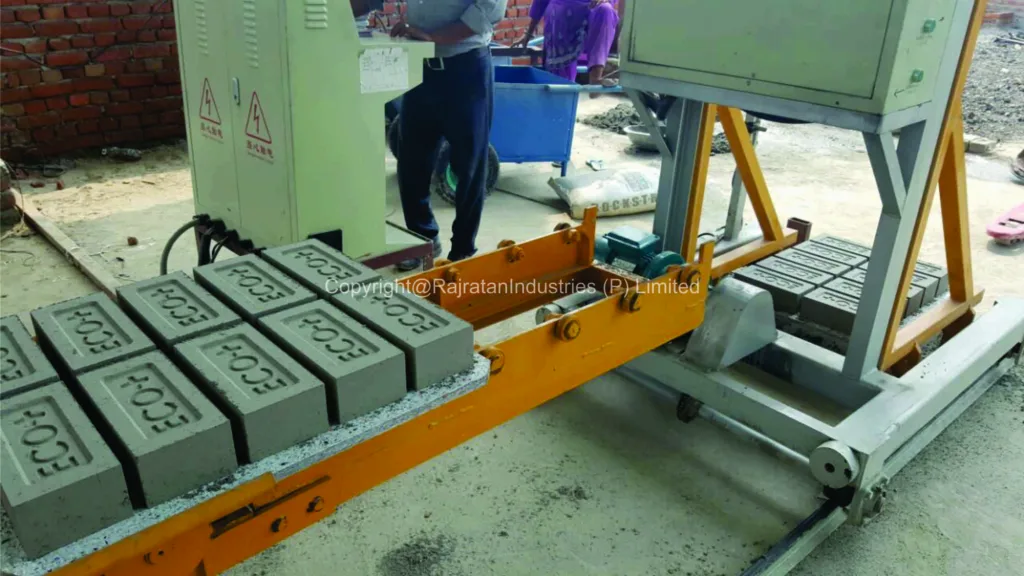
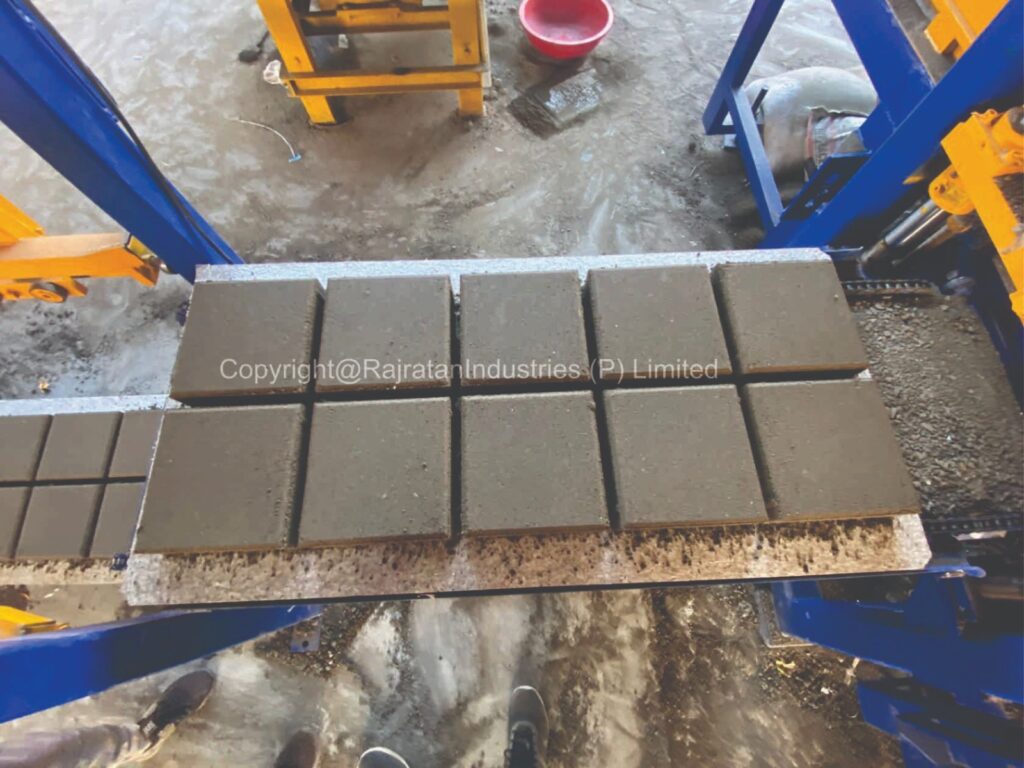
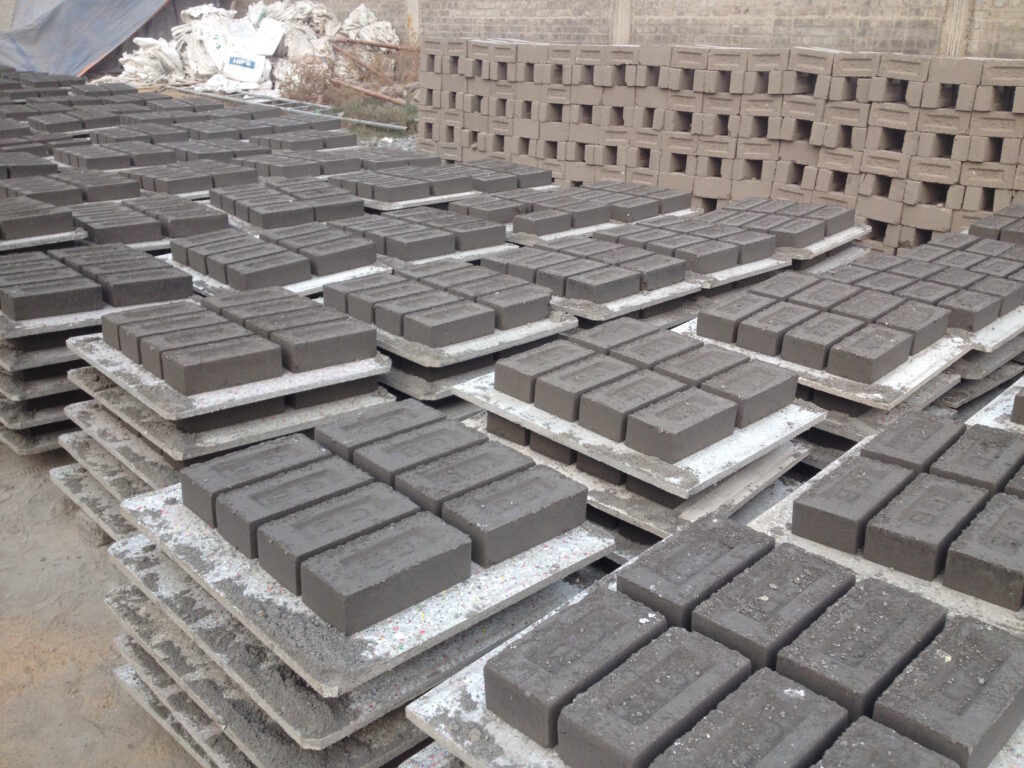
At Rajratan Industries Private Limited, Indore, PAC® (Plastic Aluminium Composite) technology is used to manufacture composite boards for applications such as fly ash brick pallets. These products combine industrial polymer-based materials with reinforcement components to create boards designed for demanding manufacturing environments.
But how does plastic material become a durable industrial pallet?
In this blog, we explore the PAC® Pallet manufacturing process, its different grades, its advantages over conventional alternatives, and the role of recycling in extending material value.
What Is a PAC® Plastic Pallet?
A PAC® Plastic Pallet is a composite board developed for industrial applications, including fly ash brick manufacturing.
PAC® stands for Plastic Aluminium Composite. The material formulation described for Rajratan PAC® products includes industrial polymers such as polypropylene (PP), low-density polyethylene (LDPE), and high-density polyethylene (HDPE), combined with reinforcement materials such as aluminium oxide, cotton fibres, XLP metals, or steel frames, depending on the grade.
The objective is to create a board with suitable structural stability, water resistance, and durability for repeated use.
Unlike conventional plywood pallets, which can absorb moisture and deteriorate under certain working conditions, PAC® Pallets are designed for water-resistant industrial applications.
Their performance depends on the selected grade, thickness, machine configuration, and operating conditions.
From Industrial Plastic to PAC® Pallets: The Manufacturing Process
Transforming industrial plastic materials into a finished composite board involves multiple stages. Each stage contributes to the consistency, dimensions, and intended performance of the final product.
Step 1: Material Collection and Sorting
The process begins with sourcing industrial polymer materials.
Different polymer types, including PP, LDPE, and HDPE, may have different processing characteristics. Sorting helps establish a suitable material stream for the intended manufacturing process.
The materials are inspected and prepared before further processing.
Effective sorting is important because the quality and consistency of the input materials influence the properties of the finished composite board.
Step 2: Shredding and Material Preparation
After sorting, the plastic materials are processed into smaller pieces to make handling and blending easier.
The prepared polymer material is combined with the reinforcement components specified for the selected PAC® grade.
These may include aluminium oxide, cotton fibres, or XLP metal reinforcement, depending on the product formulation.
The purpose of this stage is to prepare a consistent material mixture for subsequent processing.
Step 3: Thermal Processing and Pressure Moulding
The prepared material undergoes controlled thermal processing and forming.
Heat allows the polymer component to become workable, while the forming process helps create the required composite board structure.
Processing parameters must be appropriate for the material formulation and manufacturing equipment. Temperature, pressure, and material distribution can influence the consistency of the finished board.
Step 4: Thickness Calibration and Cooling
After forming, the board is calibrated to achieve the required thickness and dimensions.
Controlled cooling helps the material stabilise before finishing. Appropriate processing and cooling conditions are important for minimising dimensional variations and unwanted deformation.
Rajratan PAC® Pallet grades are available in different thicknesses to suit various machine requirements.
Step 5: Cutting and Finishing
The finished board is cut to the dimensions required for the intended application.
Edges and surfaces are finished so that the product can be inspected before dispatch.
At this stage, manufacturers can check important parameters such as dimensions, thickness, surface condition, and consistency against the relevant product specifications.
The result is a composite board designed for use in compatible fly ash brick and concrete product manufacturing systems.
Understanding the Three Grades of Rajratan PAC® Pallets
Different brick-making machines operate under different conditions. The appropriate pallet depends on machine design, vibration intensity, loading requirements, and production applications.
Rajratan’s documented PAC® Pallet range includes three reinforcement grades.
|
Feature |
Fibre-Reinforced |
Metal-Reinforced |
Steel-Reinforced |
|
Reinforcement |
Cotton fibre |
XLP metals |
Internal steel tube frame |
|
Density specified in the source |
1.08 g/cm³ |
1.13 g/cm³ |
1.13 g/cm³ |
|
Available thickness |
12, 18, 21 mm |
18, 21, 25 mm |
25, 30 mm |
|
Indicative service life |
3–4 years |
5–6 years |
7–10 years |
|
Intended application |
Suitable top-press hydro machines and vibrating tables |
Compatible vibro and hydro-vibro machines |
Compatible heavy-duty, multi-product vibro-press machines |
Service life figures are indicative and depend on actual operating conditions, machine compatibility, and maintenance practices.
1. Fibre-Reinforced PAC® Pallet
The fibre-reinforced grade combines industrial plastic, aluminium oxide, and cotton fibre reinforcement.
It is intended for suitable top-press hydraulic machines and standard vibrating table systems.
This grade may be considered by manufacturers producing fly ash bricks, pavers, and parking tiles, subject to their machine requirements.
2. Metal-Reinforced PAC® Pallet
The metal-reinforced grade combines industrial plastic and aluminium oxide with XLP metal reinforcement.
It is designed for compatible imported vibro machines and hydro-vibro systems used to produce products such as hollow blocks, solid bricks, and pavers.
The correct thickness and specifications should be confirmed according to the machine’s operating conditions.
3. Steel-Reinforced PAC® Pallet
The steel-reinforced grade incorporates an internal steel tube frame within the composite board.
This construction is intended for compatible heavy-duty production applications involving demanding vibration and loading conditions.
It may be suitable for manufacturers producing heavy solid blocks, kerb stones, and high-density pavers on compatible multi-product vibro-press machines.
PAC® Pallets vs Plywood and Standard PVC Boards
Selecting a pallet involves more than comparing the initial purchase price. Manufacturers should also consider water exposure, structural stability, replacement frequency, and the conditions in which the pallet will be used.
|
Parameter |
Plywood Pallet |
Standard PVC Board |
PAC® Pallet |
|
Moisture performance |
Can absorb water |
Depends on material formulation |
Designed for water-resistant applications |
|
Swelling and deterioration |
May swell or delaminate |
Depends on product quality |
Designed to resist swelling and delamination |
|
Structural performance |
Depends on construction and condition |
Varies by formulation and reinforcement |
Grade-specific composite reinforcement |
|
Service life |
Depends on moisture exposure and usage |
Depends on product quality and usage |
Grade-dependent |
|
Replacement planning |
Based on condition and wear |
Based on condition and wear |
Eligible products may qualify for a buyback programme |
Why Does Material Selection Matter?
Pallets are exposed to repeated handling and mechanical stress throughout the brick manufacturing process.
When a pallet deteriorates, manufacturers may need to replace it more frequently. This can add to material expenses, handling requirements, and production interruptions.
A suitable PAC® Pallet can help manufacturers address these challenges by selecting a composite board designed for their specific production conditions.
However, actual performance should always be evaluated against the product specifications and the manufacturer’s machine requirements.
How the 40% Buyback Programme Supports Material Recovery
Recycling does not end when a new product leaves the factory. The end-of-life stage is also important when evaluating the long-term value of industrial materials.
Rajratan offers a 40% buyback replacement programme for eligible PAC® Pallets, subject to the applicable terms and conditions.
Under the programme, qualifying used pallets can be returned for a specified value adjustment against a new pallet purchase.
This approach supports a more circular material-use model by creating a defined route for eligible products to return to the manufacturer.
Instead of treating an old pallet only as a disposal challenge, the buyback arrangement can help manufacturers plan future replacement purchases.
Before ordering, customers should request written confirmation of the applicable buyback value, eligibility requirements, and return procedure.
Why Recycled Industrial Materials Matter for Manufacturing
Industrial plastic recycling is one way to make better use of materials that might otherwise require disposal or further processing.
When suitable industrial polymer materials are incorporated into durable products, their useful life can potentially be extended through additional applications.
The benefits of this approach include:
- Material recovery: Suitable industrial plastic materials can be used as inputs for new products.
- Resource efficiency: Recovered material can serve a practical industrial purpose.
- Product longevity: Durable products can remain in service over multiple production cycles, depending on their application.
- Circular material use: Defined return and recovery programmes can help materials re-enter appropriate processing streams.
The environmental benefits of any recycled product depend on factors such as material sourcing, manufacturing energy, transportation, actual service life, and end-of-life processing.
The broader objective is to move towards more responsible material use while producing products that meet practical industrial requirements.
How to Choose the Right PAC® Pallet for Your Plant
Before purchasing a new pallet, consider the following steps.
- Identify your machine type.
Determine whether your production line uses a top-press hydraulic machine, vibrating table, hydro-vibro system, or heavy-duty vibro-press.
- Confirm the required specifications.
Discuss the required dimensions, thickness, reinforcement, and operating conditions with the manufacturer.
- Request product documentation.
Check the technical specifications and confirm the applicable service and buyback terms.
- Evaluate a trial batch.
Where available, test a small batch under actual production conditions to assess handling, dimensional consistency, and compatibility.
- Compare long-term costs.
Consider the purchase price alongside replacement frequency, downtime, transport, and any applicable buyback benefits.
Following these steps can help you choose a pallet that aligns with your plant’s requirements.
Explore Rajratan PAC® Industrial Products
Rajratan Industries Private Limited develops PAC® composite products for industrial and construction applications.
For fly ash brick manufacturers, selecting the appropriate pallet grade is an important part of planning reliable production operations.
Explore the product range and contact the Rajratan team to discuss your machine requirements, suitable board specifications, and applicable replacement programme terms.
- PAC® Fly Ash Brick Pallets: pallets.rajratan.in
- PAC® Shuttering Boards: shutteringboard.rajratan.in
- Email: info@rajratan.in
Frequently Asked Questions
1. What is a PAC® Fly Ash Brick Pallet?
A PAC® Fly Ash Brick Pallet is a composite board designed for use in compatible brick manufacturing systems. Its formulation and reinforcement depend on the selected product grade.
2. How are PAC® Pallets manufactured?
The manufacturing process generally involves material sorting, preparation, blending, thermal processing, forming, calibration, cooling, cutting, and finishing.
3. What materials are used in PAC® Pallets?
The documented formulations include industrial polymers such as PP, LDPE, and HDPE, combined with reinforcement materials such as aluminium oxide, cotton fibres, XLP metals, or an internal steel frame, depending on the grade.
4. Which PAC® Pallet grade should I choose?
The appropriate grade depends on your machine type, loading conditions, required thickness, and intended production application. Consult the manufacturer before selecting a grade.
5. Are PAC® Pallets suitable for wet production environments?
PAC® Pallets are designed for water-resistant industrial applications. Confirm the specifications of the selected grade and evaluate its suitability for your actual working conditions.
6. What is the 40% buyback replacement programme?
Rajratan offers a 40% buyback replacement programme for eligible PAC® Pallets, subject to applicable terms and conditions. Contact the company for written confirmation of eligibility and the replacement process.
7. Where can I enquire about Rajratan PAC® Pallets?
Visit pallets.rajratan.in or email info@rajratan.in for product information and enquiries.
Conclusion
Turning suitable industrial plastic materials into composite products demonstrates how material recovery can support practical manufacturing applications.
Through PAC® technology, Rajratan manufactures composite boards for applications such as fly ash brick production, with different reinforcement options designed for varying machine requirements.
For manufacturers, the right decision involves understanding the material, choosing the appropriate grade, checking technical specifications, and evaluating long-term value.
Looking for a suitable PAC® Pallet for your brick manufacturing plant?
Connect with Rajratan Industries Private Limited to explore the available grades, discuss your machine requirements, and learn more about the applicable 40% buyback replacement programme.
Explore the range: https://pallets.rajratan.in
Rajratan PAC® — Making industrial materials work harder