Table of Contents
ToggleWhy Automatic Block Machine Feeders Jam—And How to Stop It
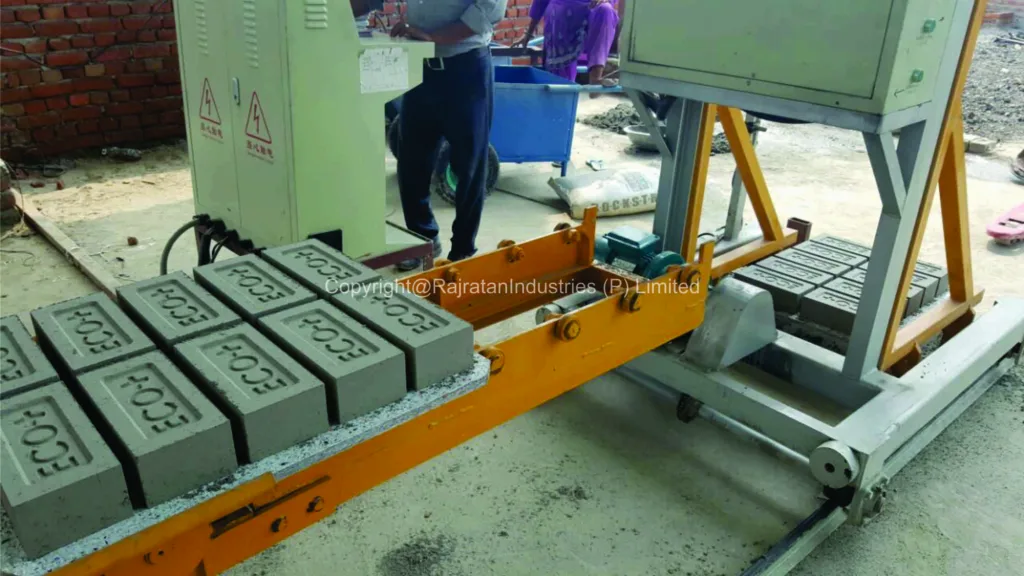
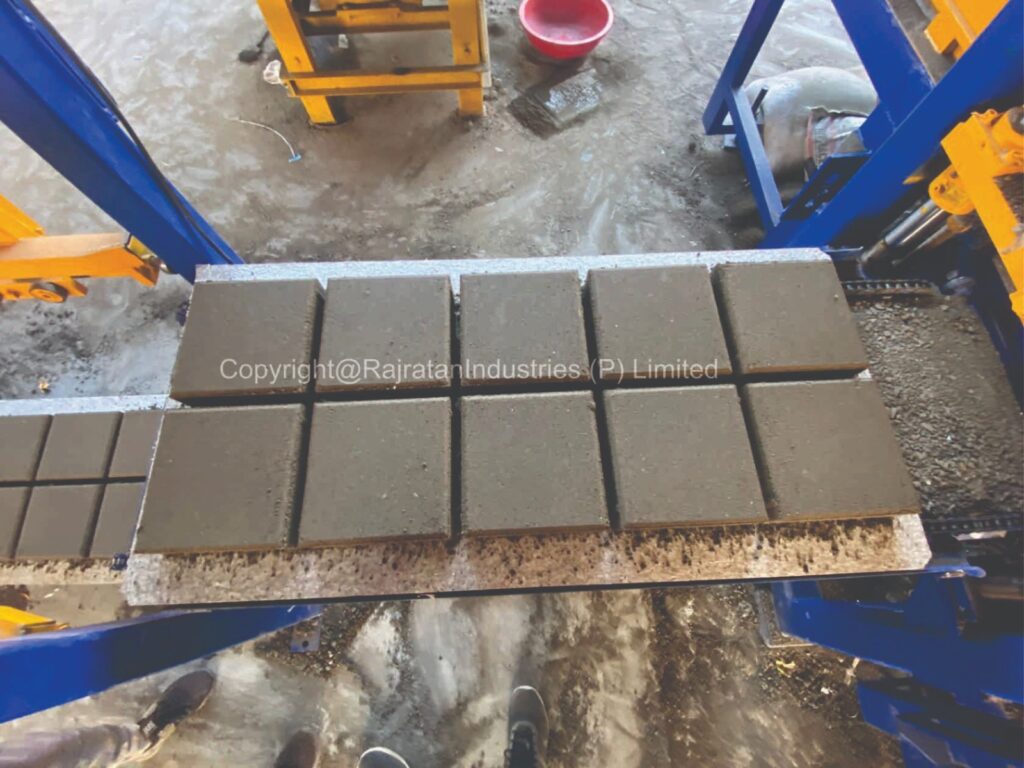
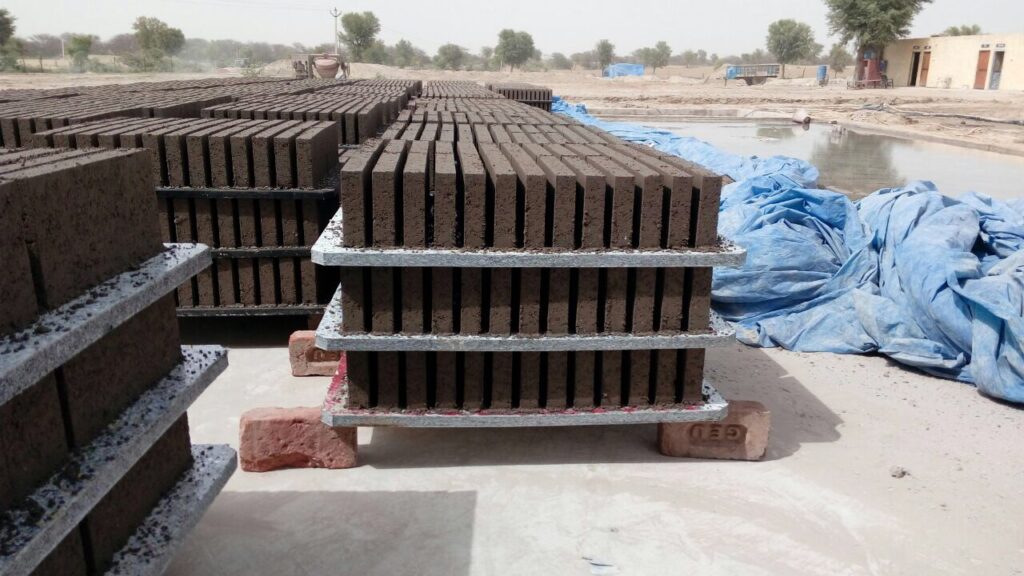
Wooden and low-grade PVC pallets can cost brick and block manufacturers thousands of rupees in unplanned downtime every month. When pallets warp, swell, or fracture under vibro-compaction stress, they can jam the automatic feeder inlet, forcing manual intervention and halting the production line. For manufacturers considering a PVC Board for Bricks, PAC Recycled Plastic Brick Pallets offer a more reliable solution through zero-moisture absorption and dimensional stability certified to IS 16058 standards.
Problem Diagnosis: Wood and PVC Warping Under Vibration
Wooden pallets absorb moisture (up to 12–15% water content) and expand unpredictably. Under continuous vibro-compaction cycles, edges splinter and grain swells unevenly. PVC pallets, lacking reinforcement, creep and deform under 1,000+ kg vertical loads. Both fail within 2–3 cycles. When pallet dimensions exceed feeder tolerance by just 3–5 mm, the brick stack tilts, binding in the inlet conveyor and triggering the automatic shutoff.
| Material Type | Moisture Content | Dimensional Stability | Usable Cycles | Feeder Jamming Risk |
|---|---|---|---|---|
| Wooden Pallet | 8–15% | ±8–12 mm drift | 2–3 | Critical |
| Low-Grade PVC | 2–4% | ±4–6 mm drift | 3–5 | High |
| PAC Plastic Brick Pallet | 0.33–0.64% | ±0.5 mm precision | 60+ | Eliminated |
Production Impact: Quantifying Downtime Losses
A block plant running 1,000–2,000 units/hour experiences 2–4 feeder jams weekly with wooden pallets. Each jam requires 15–30 minutes manual clearing. Over one year, this equates to 52–104 hours of unscheduled downtime—equivalent to ₹4.2–₹7.8 lakh in lost production, plus wear on equipment bearings and electrical components. PAC pallets reduce jamming to near-zero, recovering 40–50% of this cost.
Material Science Proof: NABL-Certified Dimensional Stability
PAC Recycled Plastic Brick Pallets are engineered from 100% recycled industrial packaging waste, reinforced with metal dust powder and XLP fiber, achieving a density of 1135 kg/m³. NABL-accredited laboratories (Choksi, STEDRANT) certify compressive strength of 22.0 N/mm² and moisture content of just 0.33–0.64%—compared to wood’s 8–15%. Zero water absorption (verified per IS 1734-Part 6) means zero swelling, zero warping, zero jamming.
Durability Comparison: Plastic vs. Wood Under Vibro-Compaction
Wooden pallets fail because repeated vibration loosens grain fibers and drives moisture deeper into the wood, accelerating swelling. PAC pallets maintain their molecular structure through 60+ compaction cycles because the plastic-metal matrix distributes vibro-stress uniformly and prevents water ingress. Testing shows PAC pallets remain within ±0.5 mm dimensional tolerance after 2,000+ usage hours—the lifespan of 3–4 years of continuous block production.
ROI Calculator: Quantifying Your Uptime Gains
Cost Per PAC Pallet: ₹4,500–₹6,200 (depending on size and reinforcement grade)
Annual Downtime Recovery: 40–50 feeder jams eliminated = ₹3.2–₹7.5 lakh/year in recovered output
Maintenance Savings: Zero edge-repair labor and component wear = ₹40,000–₹80,000/year
Scrap Buyback Credit: At end-of-life (3–4 years), PAC pallets retain 40% material value, credited toward replacement at net cost of ₹2,700–₹3,720 per pallet
Break-Even Timeline: 4–6 months for a facility running 1,200+ units/hour
Implementation: Next Steps
Rajratan supplies PAC Recycled Plastic Brick Pallets and Crack-Resistant Brick Pallets certified to IS 16058 standards for fly-ash brick, concrete block, and paver machine feeders. Start with a small trial allocation (10–20 pallets) to validate feeder fit and cycle performance at your facility. Our technical team provides on-site dimension verification and retrofit guidance at no cost. After 3 months of testing, most plants expand to 100% plastic pallet conversion.
Ready to eliminate pallet jamming? Download our Pallet Selector Tool or request a technical specification sheet. Our team will verify your feeder dimensions and recommend the exact pallet configuration for your production line.
Executive Summary: Pallet Compatibility Matrix
Match your fly-ash brick machine to the right Rajratan pallet variant. This guide maps Reva, Q-Green, and Jayem machine specifications against Rajratan’s five pallet types—certified to IS 16058, tested by NABL labs, and optimized for vibro-compaction durability. Real-world data from 90+ plants using Rajratan pallets across three machine brands.
| Machine Brand | Vibration Frequency (Hz) | Static Load Capacity | Recommended Pallet Variant | Density (kg/m³) | Service Life | Cost Per Cycle (₹) |
|---|---|---|---|---|---|---|
| Reva Standard | 1800–2200 | 5000 kg | Metal Grade PAC | 1135 | 3–4 years | ₹850 |
| Q-Green Pro | 2800–3200 | 6500 kg | Steel Tube Reinforced | 1150 | 4–5 years | ₹925 |
| Jayem Industrial | 1500–1800 | 7500 kg | Fibre Grade (bulk) + Metal Grade (heavy duty) | 1135 | 5–7 years | ₹775 |
| Crack-Resistant Requirement | Any frequency | Any load | PAC Crack Resistant Composite | 1140 | 6–8 years | ₹900 |
Why Machine-Pallet Mismatch Costs You ₹12–₹20 Lakhs Annually
Using generic wooden or low-density plastic pallets on high-frequency brick machines causes: micro-fractures after 200–400 cycles, warping under steam curing (dimensional instability during demoulding), water absorption leading to mould swelling (blocking ejection pins), and secondary plastering costs (₹800–₹1200 per 1000 bricks). Rajratan’s certified engineering eliminates all four failure modes.
Technical Deep-Dive: IS 16058 Compliance & Vibro-Compaction Durability
Rajratan PAC pallets meet Bureau of Indian Standards IS 16058:2024 for industrial dunnage and formwork applications. Tested by NABL-accredited Choksi Laboratories and STEDRANT Technoclinic. Compressive strength 22.0 N/mm² ensures zero structural degradation under repeated vibration loads.
| Technical Specification | Lab-Certified Value | Machine Compatibility Impact |
|---|---|---|
| Compressive Strength | 22.0 N/mm² | Resists 7500 kg static pallet load without micro-cracking. Jayem & Q-Green rated. |
| Density | 1135 kg/m³ (Fibre/Metal Grade); 1150 kg/m³ (Steel Tube) | Higher density = better vibration damping. Prevents resonance harmonics at 3000+ Hz. |
| Tensile Strength | 11.30–11.89 N/mm² | Prevents horizontal shear cracking during ejection phase. |
| Moisture Content | 0.33–0.64% | Zero water absorption. Blocks remain dimensionally stable through steam-curing cycles. |
| Water Swelling | 0% (No dimensional change) | Ensures consistent demould clearances. Eliminates stuck-brick incidents. |
| Nail/Screw Holding Power | 2214–2460 N | Pallet edges support ejector pins and lateral clamps without pullout. |
Pallet Variant Breakdown: Which Machine Fits Which Grade?
Rajratan Fibre Grade (1135 kg/m³)
Best for: Jayem Industrial, low-frequency Reva setups, cost-optimized bulk orders. Advantage: Entry-level pricing, BIS-certified durability. Service life: 3–4 years (1200–1500 production cycles). Suited for fly-ash brick production, not heavy paver blocks.
Rajratan Metal Grade (1135 kg/m³)
Best for: Reva Standard, Jayem heavy-duty, mainstream paver block production. Advantage: Reinforced with metal dust powder. Compressive strength optimized for mid-range vibration (1800–2200 Hz). Service life: 4–5 years (1500–2000 cycles). Cost-per-cycle: ₹850 (competitive with wood after factoring buyback credit).
Rajratan Steel Tube Reinforced (1150 kg/m³)
Best for: Q-Green Pro, high-frequency environments (2800+ Hz), continuous-shift operations. Advantage: Embedded MS steel tube frame prevents lateral splay under extreme vibration. Service life: 5–7 years (2000+ cycles). Premium grade for plants prioritizing uptime over capital cost.
Rajratan Crack-Resistant Composite (1140 kg/m³)
Best for: Any machine model experiencing micro-cracking issues. Advantage: Patented fiber-matrix architecture distributes shear stress evenly across pallet cross-section. Service life: 6–8 years (2500+ cycles). Eliminates costly pallet replacements mid-season.
ROI Calculator: Cost-Per-Cycle & Buyback Optimization
| Metric | Wooden Pallets (Baseline) | Low-Grade Plastic | Rajratan Metal Grade | Rajratan Steel Tube |
|---|---|---|---|---|
| Unit Cost (₹) | ₹8,500 | ₹12,000 | ₹18,500 | ₹24,000 |
| Total Pallet Set (1000 units) | ₹85 Lakh | ₹120 Lakh | ₹185 Lakh | ₹240 Lakh |
| Service Life (Cycles) | 400–600 | 800–1000 | 1500–2000 | 2000–2500 |
| Cost Per Cycle | ₹1,417–₹2,125 | ₹1,200–₹1,500 | ₹925–₹1,233 | ₹960–₹1,200 |
| Buyback Credit (40%) | N/A | ₹4,800 | ₹7,400 | ₹9,600 |
| Net Cost Per Unit (After Buyback) | N/A | ₹7,200 | ₹11,100 | ₹14,400 |
| 3-Year TCO (1000 units) | ₹95 Lakh (wood replacement) | ₹84 Lakh | ₹73.5 Lakh | ₹82 Lakh |
Key Insight: Rajratan Metal Grade achieves lowest 3-year total cost of ownership (₹73.5 Lakh) when factoring buyback credit. Eliminates secondary plastering labor (₹12–₹20 Lakhs annually for 1000-pallet setups).
Conclusion
Choosing the right pallet for a fly-ash brick machine is not simply about matching the brand name. Reva, Q-Green and Jayem offer different machine models with different pallet dimensions, mould configurations and handling requirements. The correct pallet therefore needs to be selected according to the exact machine model and production setup.
Rajratan PAC® Fly-Ash Brick Pallets can be configured for different machine applications, helping manufacturers achieve the required fit, stability and performance across repeated production cycles.
Before placing an order, always verify the machine model, pallet length, width, thickness, mould configuration and handling system. A properly matched pallet can help support smoother production, reduce avoidable handling issues and deliver better value over its working life.
The right pallet is not just about fitting the machine—it is about fitting the entire production process.