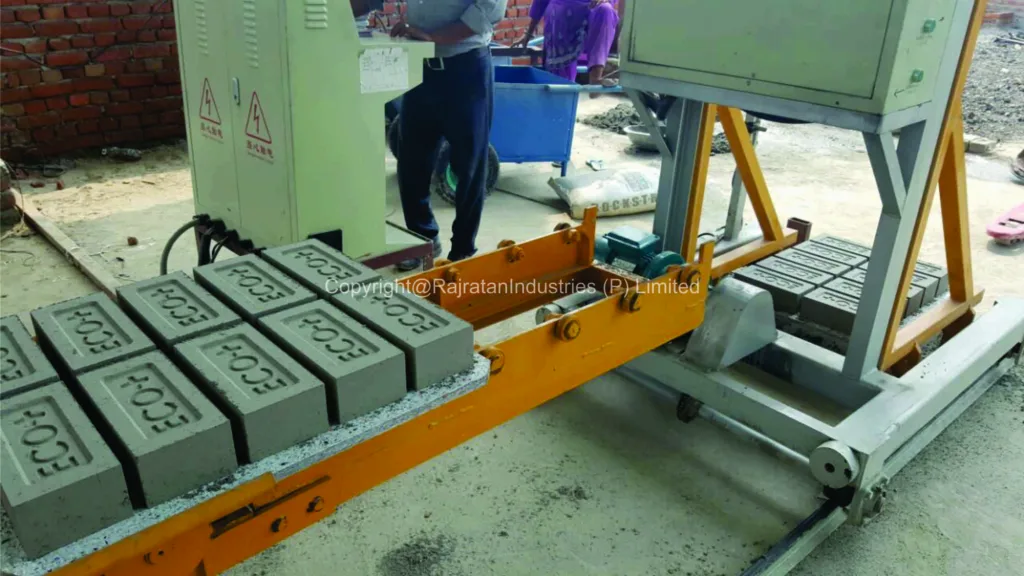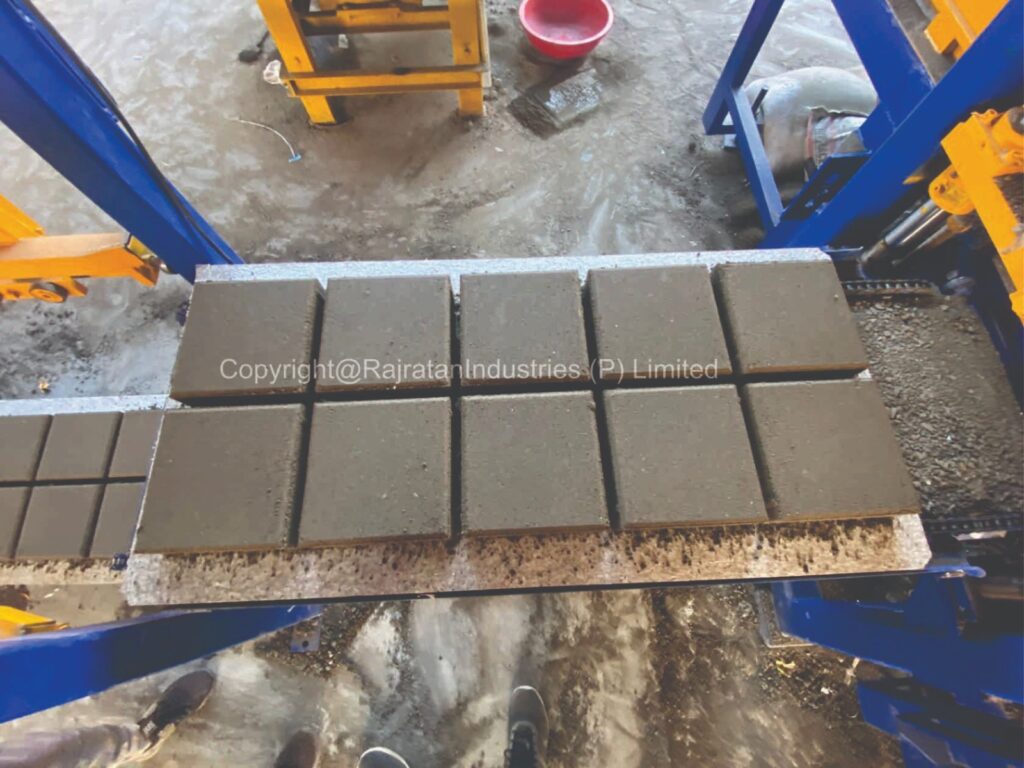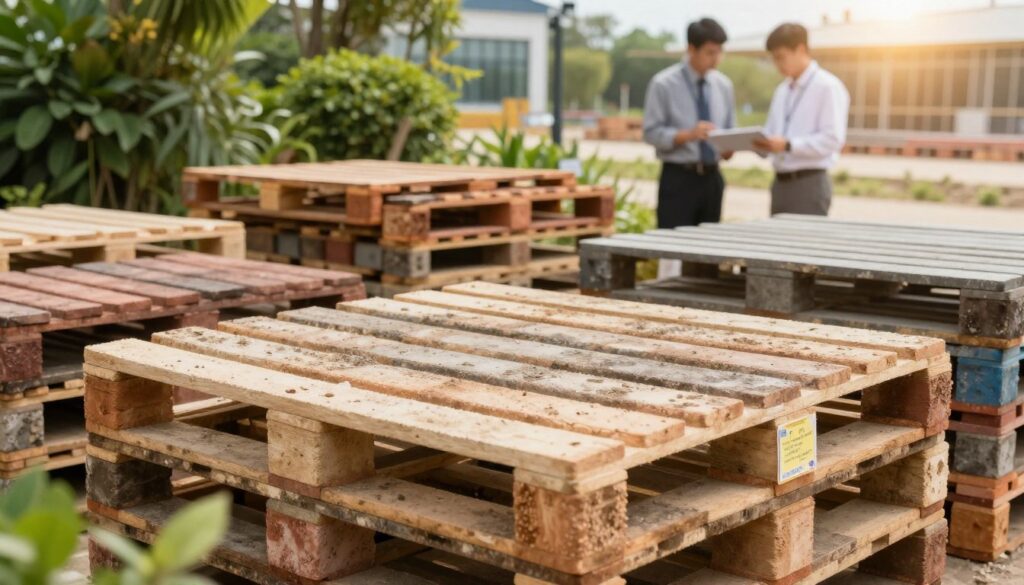
n automated and semi-automated fly-ash brick manufacturing, a Plastic Board Pallet plays an important role in the production cycle. It supports freshly pressed bricks as they leave the mould, moves through handling and stacking operations, and remains stable through repeated production cycles.
But one pallet does not fit every brick-making machine.
Reva, Q-Green and Jayem machines come in different models, production capacities and pallet configurations. Selecting a pallet only by machine brand can therefore lead to an incorrect fit.
The better approach is to match the pallet to the exact machine model, pallet dimensions, mould configuration and production requirements.
This guide explains what manufacturers should check when selecting PAC® Fly-Ash Brick Pallets for Reva, Q-Green and Jayem machines.
Table of Contents
ToggleWhy Pallet Compatibility Matters in Brick Manufacturing
A fly-ash brick machine performs several operations in a continuous sequence:
Material feeding → Mould filling → Vibration → Hydraulic pressing → Demoulding → Pallet handling → Curing
The pallet comes into use immediately after demoulding. At this stage, the freshly manufactured bricks need stable support before they develop sufficient strength.
If the pallet is not correctly matched to the machine, several operational problems can occur:
- Incorrect positioning inside the pallet chamber
- Difficulty during automatic handling
- Interference with mould or machine components
- Uneven support for freshly pressed bricks
- Problems during stacking or transportation
- Increased pallet wear
- Production interruptions
Reva Machine Pallet Compatibility
Reva offers multiple models for manufacturing fly-ash bricks, concrete blocks and related products. Because different models can use different pallet configurations, the required pallet dimensions should always be confirmed against the exact machine model.For example, Reva’s published machine specifications show different pallet requirements across its RBM range.This means a manufacturer operating a Reva machine should not simply order a pallet by saying:“We have a Reva machine.”
Instead, provide the exact model number and existing pallet dimensions.
What to check for Reva machines
Before ordering PAC® pallets, verify:
- Machine model
- Pallet length
- Pallet width
- Pallet thickness
- Mould dimensions
- Number of bricks produced per cycle
- Manual or automatic pallet handling
- Stacking arrangement
The correct dimensions allow the pallet to work smoothly with the machine’s existing production setup.
Q-Green Machine Pallet Compatibility
Q-Green Techcon manufactures a range of automatic and semi-automatic machines for fly-ash bricks, concrete blocks and pavers.
Different models can have significantly different pallet requirements.
For example, smaller machines may use compact pallets, while high-production machines require substantially larger pallet sizes to accommodate their mould configuration and output.
This is why Q-Green should be treated as a machine family, not a single pallet specification.
Before purchasing PAC® pallets for a Q-Green machine, manufacturers should share:
Machine model + pallet dimensions + thickness + application
This information helps determine the appropriate pallet configuration.
Why this matters for high-production machines
As production capacity increases, the pallet may experience:
- More frequent loading
- Higher handling frequency
- Greater number of production cycles
- More mechanical movement
- Increased stacking and transportation requirements
The pallet therefore needs to be selected according to the complete production system rather than only its purchase price.
Jayem Machine Pallet Compatibility
Jayem Manufacturing also offers different machine models for fly-ash bricks, blocks and pavers.
Like Reva and Q-Green, Jayem machines do not necessarily use one universal pallet size.
Different models can have different pallet dimensions and handling arrangements.
For example, Jayem’s machine range includes configurations with different pallet sizes depending on the model and production setup.
Therefore, a Jayem machine owner should verify the exact machine specification before ordering replacement pallets.
Check these parameters
- Machine model
- Existing pallet size
- Pallet thickness
- Mould size
- Product type
- Production capacity
- Pallet movement system
- Automatic or manual stacking
This simple verification can prevent an incorrect bulk purchase.
One Machine Brand Does Not Mean One Pallet Size
This is one of the most important points for brick manufacturers.
A common assumption is:
Reva machine = Reva pallet
or
Q-Green machine = Q-Green pallet
or
Jayem machine = Jayem pallet
But the actual requirement can vary from one machine model to another.
Two machines from the same manufacturer may have different:
- Pallet dimensions
- Mould configurations
- Production capacities
- Handling systems
- Pallet thickness requirements
Therefore, machine model compatibility is more important than brand compatibility.
What Should You Check Before Buying Fly-Ash Brick Pallets?
Before placing an order, use this checklist.
| Parameter | What You Should Verify |
|---|---|
| Machine Brand | Reva / Q-Green / Jayem / Other |
| Machine Model | Exact model number |
| Pallet Length | Match machine requirement |
| Pallet Width | Match machine requirement |
| Pallet Thickness | Based on application and machine |
| Mould Configuration | Confirm with machine setup |
| Product | Fly-ash brick / block / paver |
| Production Cycle | Number of cycles and operating intensity |
| Handling | Manual / conveyor / automatic |
| Stacking | Manual or automatic |
| Pallet Quantity | Based on production and curing cycle |
| Material | Required pallet grade |
| Customisation | Confirm whether custom dimensions are required |
PAC® Pallets: Designed for Repeated Brick Manufacturing Applications
A pallet used in a brick manufacturing plant needs to do more than simply carry the finished product.
It needs to maintain its dimensional stability through repeated production and handling.
Rajratan PAC® Fly-Ash Brick Pallets are engineered composite pallets designed for brick and block manufacturing applications.
Depending on the production requirement, pallet configurations can be selected based on factors such as:
- Machine dimensions
- Pallet size
- Thickness
- Production intensity
- Handling method
- Expected reuse
- Application requirements
For manufacturers using different machine brands, custom sizing can be considered according to the required machine configuration.
The objective is simple:
The pallet should fit the machine correctly and perform consistently throughout the production cycle.
Why Dimension Accuracy Matters
A pallet that is slightly oversized or undersized can create practical problems.
If the pallet is too large, it may not move properly through the machine or handling system.
If it is too small, the moulded products may not receive the intended support.
Even when the material itself is strong, an incorrect dimension can affect the overall production process.
That’s why pallet selection should begin with accurate measurements.
Before ordering, measure:
Length × Width × Thickness
Also check:
- Corner profile
- Edge condition
- Pallet chamber dimensions
- Mould footprint
- Conveyor or stacking arrangement
For replacement orders, keeping one existing pallet available for measurement can make the verification process easier.
Pallet Thickness: Why It Should Not Be Ignored
Thickness is another important consideration.
The appropriate thickness depends on the machine design, pallet dimensions, production cycle and application.
A thicker pallet is not automatically the right pallet.
Similarly, choosing the thinnest option simply to reduce purchase cost may not be appropriate for a demanding production environment.
The correct approach is to consider:
Machine requirement + pallet dimensions + load conditions + handling + expected service
This is particularly important for high-cycle manufacturing operations where pallets are continuously loaded, moved and stacked.
Production Cycle Should Influence Pallet Selection
A brick manufacturing plant may operate for several hours every day and complete a large number of production cycles.
Therefore, the initial pallet price is only one part of the purchasing decision.
A better evaluation considers:
Initial cost
How much does the pallet cost to purchase?
Service life
How many production cycles can it support under the intended operating conditions?
Replacement frequency
How often will pallets need to be replaced?
Downtime
What happens to production when pallets fail or require replacement?
Handling
Does the pallet work smoothly with the plant’s handling system?
End-of-life value
Is there a recovery or buyback option?
This gives manufacturers a more realistic understanding of the pallet’s total cost of ownership.
PAC® Pallets for Different Production Setups
Not every brick manufacturer operates in the same way.
One plant may produce standard fly-ash bricks.
Another may manufacture multiple brick sizes.
Another may produce concrete blocks or pavers using the same production line.
Some plants rely on manual handling, while others use conveyors and automatic stacking.
Therefore, pallet selection needs to consider the complete production setup.
Rajratan can evaluate the required PAC® pallet configuration based on the machine model, dimensions and intended application.
How to Order the Correct PAC® Pallet
If you are planning to replace your existing pallets, you don’t need to guess the required size.
Share the following information with the pallet supplier:
1. Machine brand
For example:
Reva / Q-Green / Jayem / Other
2. Exact machine model
The model number is essential because pallet requirements can differ between machines from the same manufacturer.
3. Existing pallet dimensions
Provide:
Length × Width × Thickness
4. Product being manufactured
Mention whether you manufacture:
- Fly-ash bricks
- Concrete blocks
- Pavers
- Other products
5. Handling system
Specify whether pallets are handled:
- Manually
- Through conveyors
- Through automatic stacking systems
With this information, the pallet configuration can be evaluated more accurately.
Common Mistakes When Buying Replacement Pallets
Mistake 1: Buying only by machine brand
A brand can have several machine models with different specifications.
Mistake 2: Ignoring thickness
Pallet thickness can influence handling and performance.
Mistake 3: Buying based only on price
A cheaper pallet may not necessarily provide the lowest cost over its complete service life.
Mistake 4: Not checking the mould configuration
The pallet needs to support the actual product and mould arrangement.
Mistake 5: Ordering a large quantity without verification
For a new pallet specification, it is better to confirm compatibility before committing to a large replacement quantity.
A Simple Compatibility Formula
Before ordering, think of pallet compatibility as:
**Machine Model
- Pallet Dimensions
- Thickness
- Mould Configuration
- Handling System
- Production Cycle
= Correct Pallet Selection**
This approach is more reliable than choosing a pallet based only on the manufacturer’s name.
Final Takeaway
For fly-ash brick manufacturers, the right pallet is an important part of maintaining a smooth production cycle.
Whether your plant uses a Reva, Q-Green, Jayem or another brick-making machine, the pallet should be selected according to the exact machine model and production configuration.
PAC® Fly-Ash Brick Pallets provide a reusable composite pallet option for brick and block manufacturing applications, with configurations that can be evaluated according to machine dimensions and operating requirements.
Before placing your next bulk pallet order, verify the machine model, pallet dimensions, thickness and handling system.
Because the right pallet isn’t simply the one that fits the machine—it is the one that fits the entire production process.
Frequently Asked Questions
Can PAC® pallets be used with Reva machines?
PAC® pallets can be manufactured according to the required dimensions and application. The exact Reva machine model and pallet specifications should be verified before ordering.
Can PAC® pallets be used with Q-Green machines?
Yes, the appropriate PAC® pallet configuration can be evaluated based on the specific Q-Green machine model, pallet dimensions and production setup.
Are PAC® pallets compatible with Jayem machines?
PAC® pallets can be considered for Jayem machine applications based on the exact model and required pallet dimensions. Compatibility should be confirmed before bulk production.
Is there one standard pallet size for Reva, Q-Green or Jayem machines?
No. Different machine models can have different pallet requirements. Always verify the exact machine model.
What information should I provide when ordering pallets?
Provide the machine brand, exact model, existing pallet length, width and thickness, product type and handling system.
Can pallet dimensions be customised?
Custom dimensions can be evaluated based on the machine and production requirements.