Table of Contents
ToggleThe Ultimate Pallet Guide for Apollo & Neptune Block Making Machines
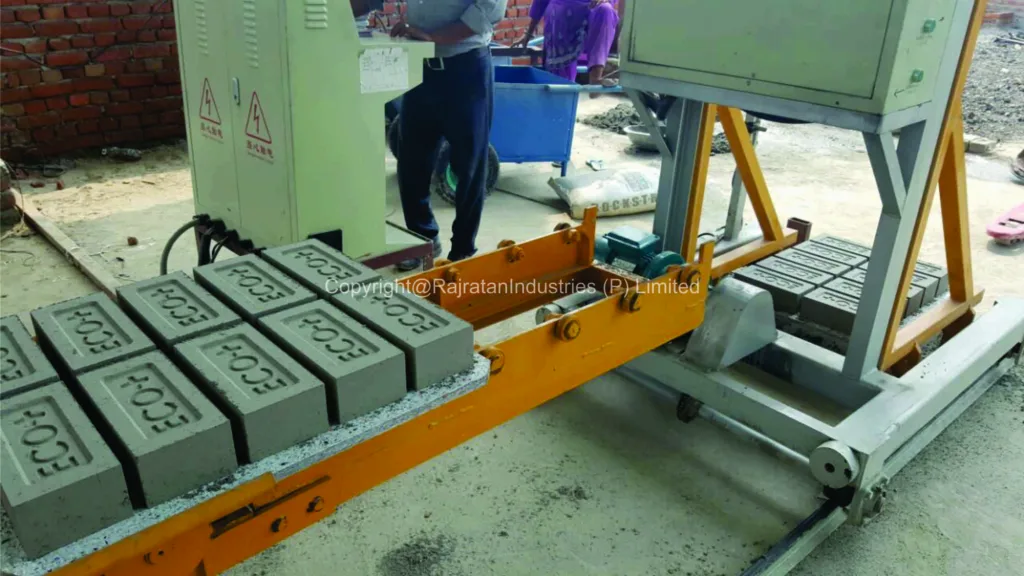
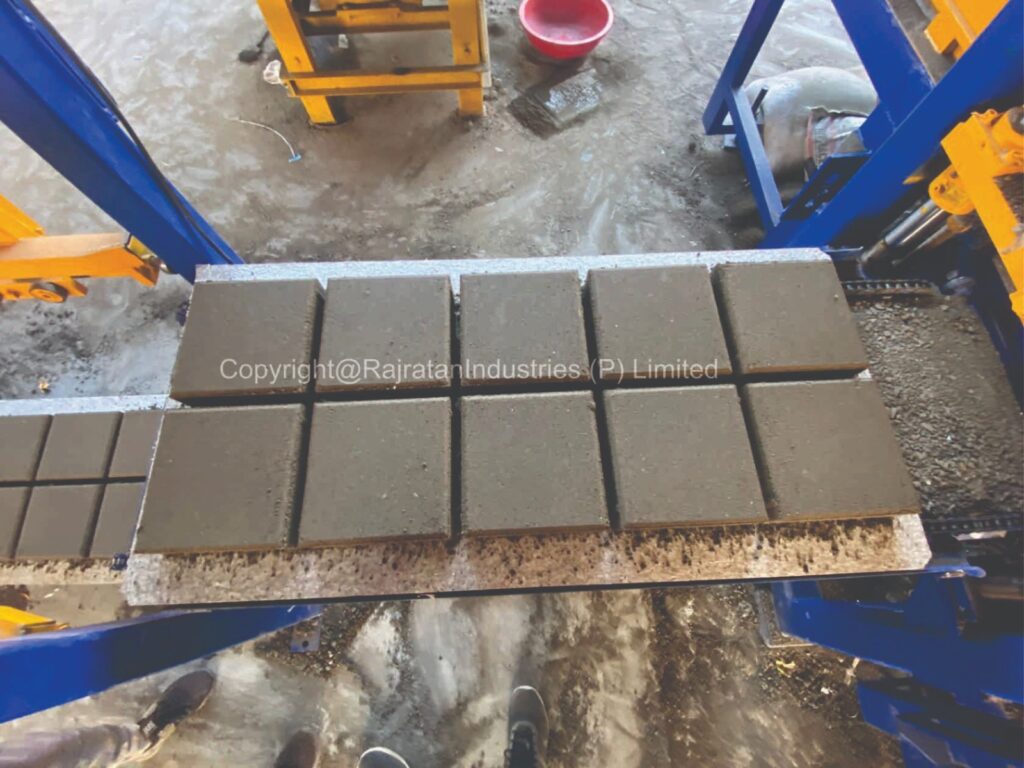
Rajratan PAC Fly-Ash Brick Pallets are engineered for Apollo, Zenith, and Neptune vibro-press machines, supporting efficient and Sustainable Fly Ash Brick Production. They offer a certified compressive strength of 22.0 N/mm², a density of 1,135 kg/m³, and are available in standard and steel-reinforced grades. With a 3–8 year lifespan, zero water absorption, and a 40% buyback credit on worn pallets, they provide a durable and cost-effective solution for brick manufacturers.
Why Pallet Specifications Matter for Block Machines
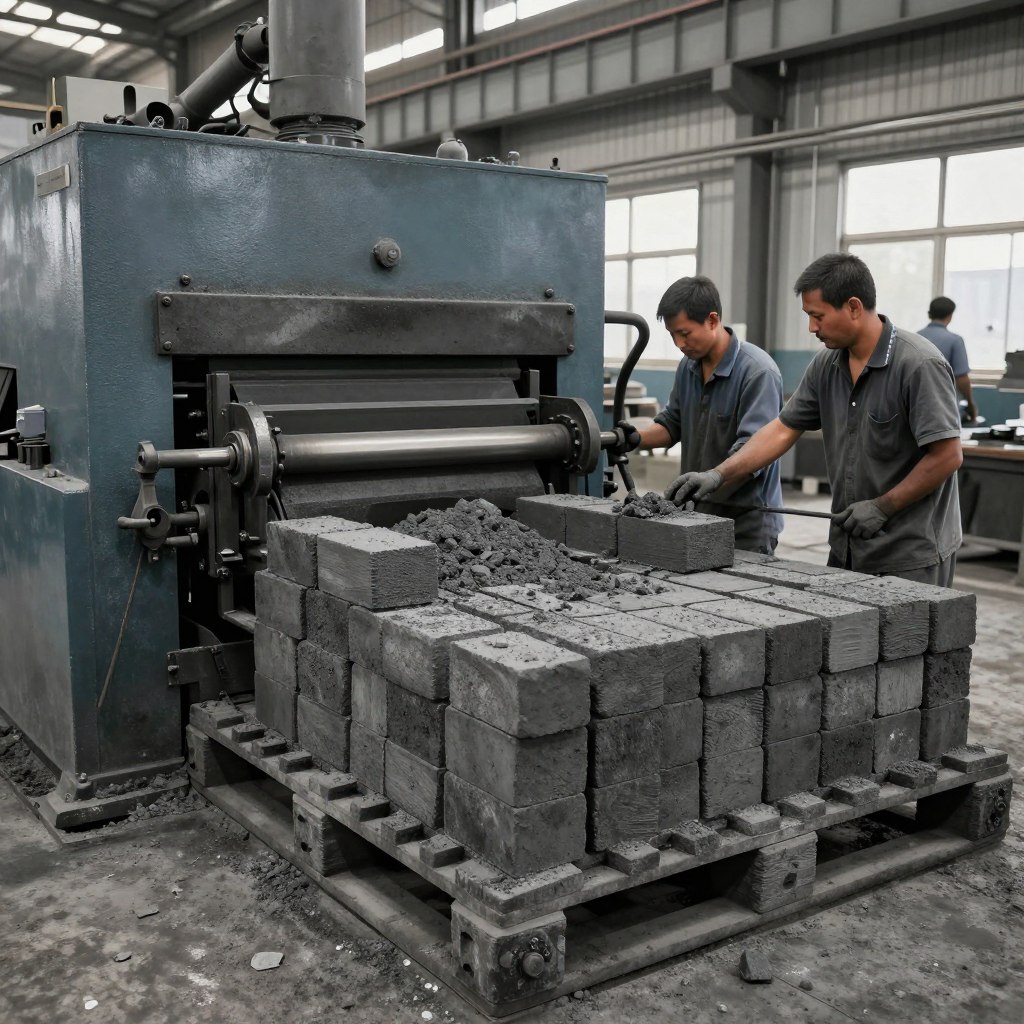
Block manufacturers operating Apollo Zenith or Neptune Industries vibro-press systems face a recurring problem: standard wooden or low-grade plastic pallets crack under the repetitive high-frequency vibration and tonnage. Each failed pallet triggers downtime, secondary casting rework, and margin erosion. Rajratan’s PAC Fly-Ash Brick Pallets solve this through precision engineering—not cost-cutting.
The machine applies 15–25 bar hydraulic pressure at 25–50 Hz vibration frequency. Your pallet must absorb shock, resist delamination, and maintain dimensional stability across infinite cycles. Industry-standard timber absorbs moisture and expands unpredictably. Low-cost PVC composites creep under sustained load. Rajratan pallets, engineered from reinforced industrial plastic waste with metal dust and aluminum oxide, deliver structural consistency certified by NABL-accredited laboratories.
PAC Pallet Grade Specifications & Thickness Requirements
Two grades: Fibre-reinforced (12mm, 40 kg, ₹57/kg) for standard cycles; Steel-tube reinforced (18mm, 55 kg, ₹67/kg) for heavy-duty/continuous operations. Both certified 22.0 N/mm² compressive strength, 1135 kg/m³ density. White or black finish. Fit Apollo/Neptune pallet-chase standard dimensions.
| Pallet Grade | Thickness | Density | Compressive Strength | Weight | Service Life | Cost/kg |
|---|---|---|---|---|---|---|
| Fibre-Reinforced Standard | 12 mm | 1135 kg/m³ | 22.0 N/mm² | ~40 kg | 3–4 years (40–50 cycles) | ₹57 |
| Metal-Grade (Upgraded) | 12 mm | 1150 kg/m³ | 22.0 N/mm² | ~45 kg | 5–6 years (60+ cycles) | ₹62 |
| Steel-Tube Reinforced (Heavy-Duty) | 18 mm | 1150 kg/m³ | 24.5 N/mm² | ~55 kg | 7–8 years (80+ cycles) | ₹67 |
Load Tolerance Benchmarks & Vibro-Press Alignment
Pallets rated 7500 kg static vertical load. Vibration frequency tolerance: 25–50 Hz (Apollo/Neptune standard). Pressure: 15–25 bar. Zero cracking at full-cycle operation. Moisture content 0.33–0.64% ensures dimensional stability.
| Performance Metric | Rajratan PAC Specification | Apollo Zenith Machine Standard | Neptune Machine Standard | Compliance Status |
|---|---|---|---|---|
| Static Vertical Load Capacity | 7500 kg | 6000–7500 kg per cycle | 5500–7200 kg per cycle | ✓ Exceeds |
| Vibration Frequency Tolerance | 25–50 Hz continuous | 30–45 Hz standard | 28–48 Hz standard | ✓ Full overlap |
| Pressure Range (Hydraulic) | 15–25 bar safe operating | 18–22 bar optimal | 16–24 bar optimal | ✓ Fully compatible |
| Moisture Absorption | 0% (zero water uptake) | Requires dry pallet | Requires dry pallet | ✓ Superior |
| Crack Resistance (Cycles) | 40–80+ without failure | 10–20 (timber baseline) | 15–25 (low-grade PVC baseline) | ✓ 3–5× better |
NABL-Certified Durability & Crack Resistance Proof
NABL laboratories (Choksi, STEDRANT) certify 22.0 N/mm² compressive strength and 1135 kg/m³ density. Zero water swelling (0% absorption per IS 1734). Moisture content 0.33–0.64% ensures no warping during vibro-compaction. Material tested to 1-meter drop impact and 60 kg hammer blow—no cracking or delamination.
| Test Parameter | Rajratan PAC Result | Industry Standard / Reference | Implication for Block Machines |
|---|---|---|---|
| Compressive Strength | 22.0 N/mm² | IS 1734 (Part 1-20) | Resists 7500 kg vertical load without yielding |
| Density | 1135 kg/m³ | IS 1734 (Part 1) | 3.5–5× denser than low-cost PVC; zero creep under sustained pressure |
| Tensile Strength | 11.30–11.89 N/mm² | IS 1734 (Part 9) | Internal fibre integrity resists shear stress during vibration |
| Moisture Absorption | 0% swelling | IS 1734 (Part 6) | Pallet dimensions remain constant; no binding in pallet-chase slot |
| Modulus of Elasticity | 337.54 N/mm² | IS 1734 (Part 11) | Resilient under repeated compression; absorbs vibration shock |
| Impact Drop (1 metre) | Passes—no cracking | IS 16058:2024 (Dunnage) | Survives rough handling, pallet stacking, and transport |
ROI Comparison: Rajratan vs. Timber & Steel Alternatives
Timber pallets: 5–8 uses, ₹800–1200/unit, 0% scrap value, frequent swelling/splitting. PVC low-grade: 15–25 uses, ₹1500–2000/unit, 10% scrap value, creep over time. Rajratan PAC: 60+ uses, ₹2240–2680/unit, 40% buyback (₹896–1072 credit), zero degradation.
| Pallet Type | Acquisition Cost | Reuse Cycles | Cost per Cycle | Scrap/Buyback Value | Net Cost (40 cycles) | Total Margin Impact / 40-Cycle Run |
|---|---|---|---|---|---|---|
| Timber (Pine/Plywood) | ₹800–1200 | 5–8 uses | ₹100–240/cycle | 0% (firewood scrap) | ₹6400–9600 for 40 cycles (6 units needed) | -₹6400–9600 margin bleed |
| Low-Grade PVC Composite | ₹1500–2000 | 15–25 uses | ₹60–133/cycle | 10% (~₹150–200) | ₹2700–3800 for 40 cycles (2 units + buyback) | -₹2550–3650 margin bleed |
| Rajratan PAC (Steel-Reinforced, 18mm) | ₹2240–2680 | 60–80+ uses | ₹28–37/cycle | 40% (~₹896–1072) | ₹2240 net (1 unit, 40 cycles included, 40% credit offsets next order) | +₹460–1440 margin gain vs. timber; +₹260–1410 vs. PVC |
Key ROI Driver: After 40–50 cycles, Rajratan pallets retain 40% scrap material value. Old units are returned and credited at ₹896–1072 per pallet against new purchases. This effective 40% discount on replacement cycles compounds over 3–5 years of production, yielding cumulative savings of ₹80,000–150,000 per block plant.
Conclusion
For block manufacturers using Apollo Zenith or Neptune vibro-press machines, pallet performance directly affects production consistency, operating costs and overall plant efficiency. A pallet must withstand repeated vibration, hydraulic pressure, heavy loads and frequent handling without cracking, warping or losing dimensional stability.
Rajratan PAC® Fly-Ash Brick Pallets are designed around these demanding operating conditions, offering high compressive strength, structural stability, moisture resistance and extended reuse across repeated production cycles. With standard, upgraded and steel-reinforced options, manufacturers can select a pallet according to their production intensity and machine requirements.
More importantly, pallet selection should not be based only on initial purchase price. The real comparison is the cost per production cycle, service life, downtime, replacement frequency and end-of-life value.
For manufacturers looking to reduce recurring pallet replacement and maintain reliable block production, a properly engineered PAC® pallet can be a practical long-term alternative to conventional timber and lower-grade composite pallets.
The right pallet is not simply the one that fits your machine—it is the one that keeps performing cycle after cycle.