Table of Contents
ToggleHeavy-Duty Fly Ash Brick Pallets: Crack-Resistant Design for Vibro-Compaction Manufacturing
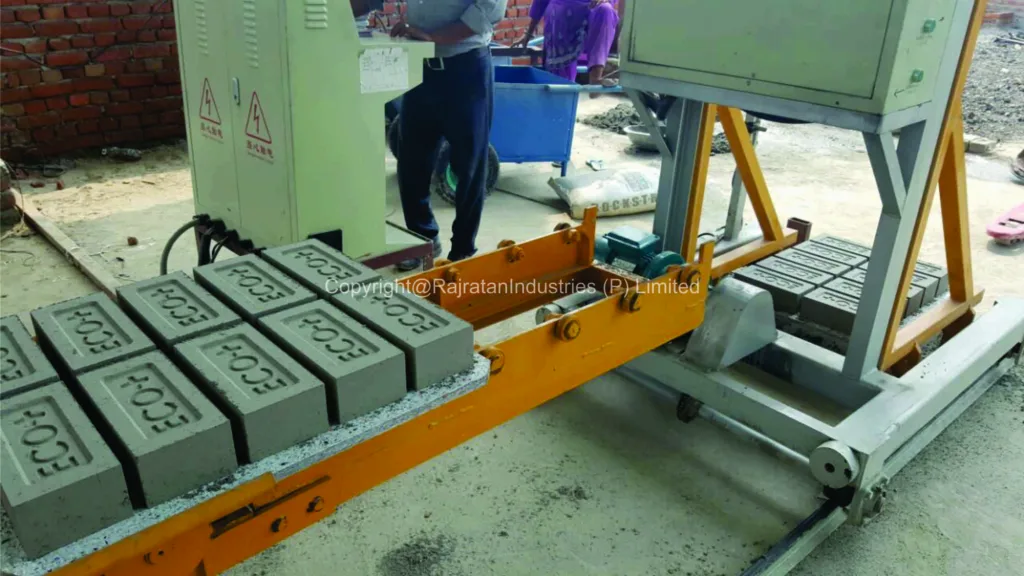
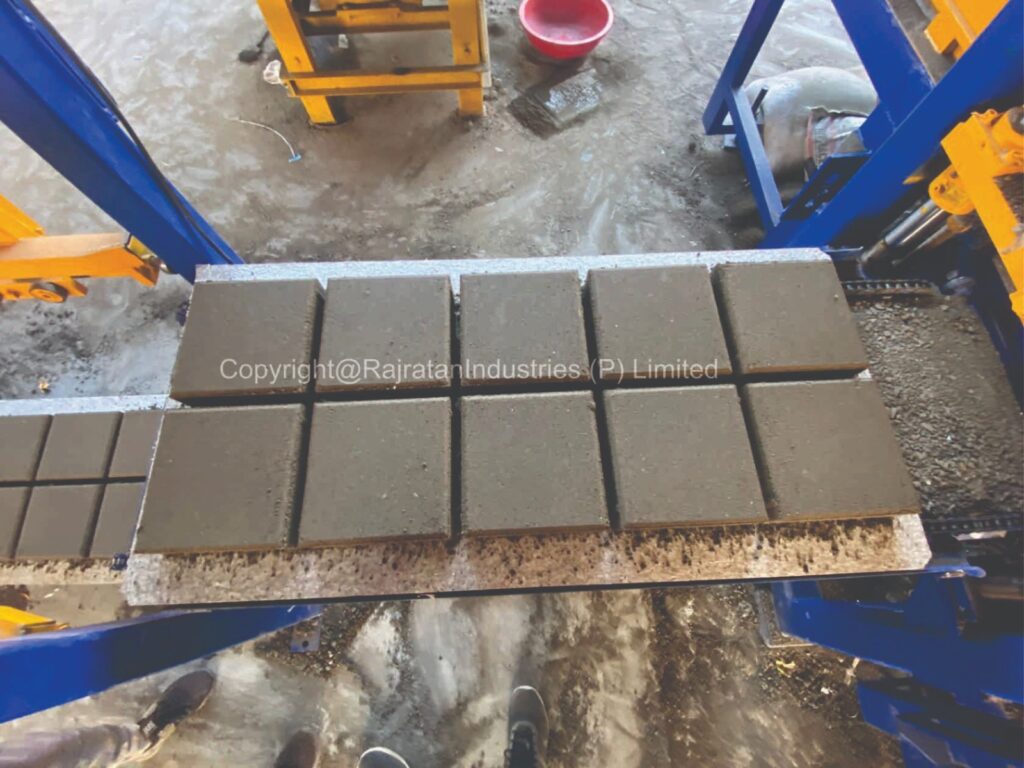
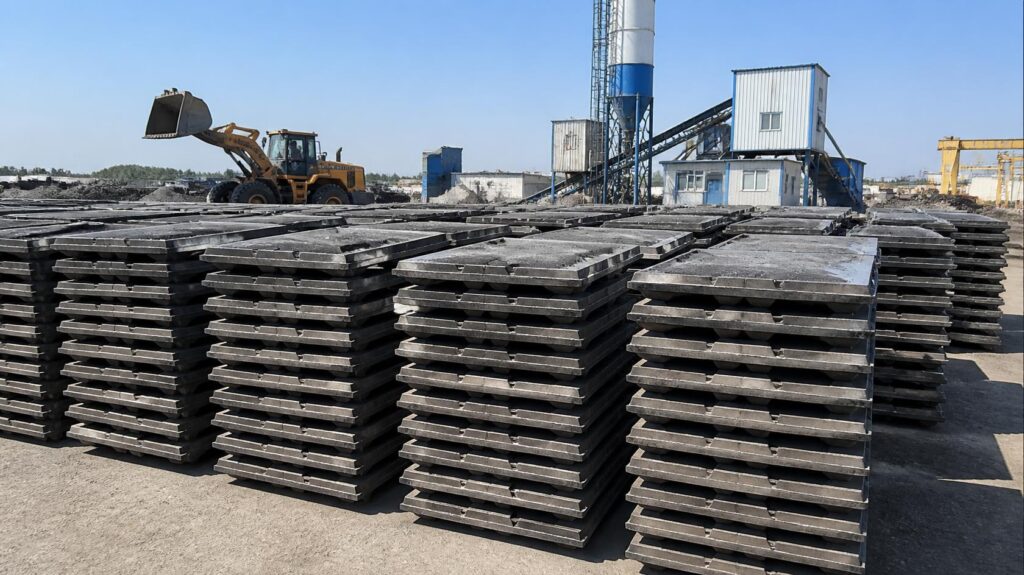
Answer in 40 words: PAC® Fly Ash Brick Pallets are durable Brick Manufacturing Pallet solutions that deliver 60–80 vibro-compaction cycles compared to timber’s 20, with zero water absorption and 22.0 N/mm² compressive strength. Their metal-reinforced composite engineering helps prevent cracking under repetitive machine impact, offering annual cost savings of 65–70% along with a 40% buyback credit on retired pallets.
The Problem: Why Timber & Low-Grade Pallets Fail in Brick Plants
Conventional wooden and bargain PVC pallets crack under vibro-compaction pressure within 15–25 cycles. Failure costs mount fast: unplanned downtime (₹50k+/hour), plastering rework (₹8–12k per failed lot), and moisture-induced dimensional drift (unacceptable brick tolerances). Over 12 months processing 10,000 tons monthly, pallet replacement and rework expenses consume 12–18% of gross margins.
| Metric | Timber Pallet | Low-Grade PVC | PAC® Metal-Grade (Rajratan) |
|---|---|---|---|
| Vibro-Compaction Cycles | 15–20 | 20–25 | 60–80 |
| Density (kg/m³) | ~450 | ~950 | 1,135–1,150 |
| Compressive Strength (N/mm²) | 8–10 | 15–18 | 22.0 (NABL certified) |
| Water Absorption (%) | 15–30 | 5–8 | 0% (zero swelling) |
| Cost per Pallet (₹) | ₹2,200 | ₹2,400 | ₹2,850–3,350 |
| Annual Pallet Spend (10k ton/mo) | ₹13,20,000 | ₹11,52,000 | ₹4,28,000 (with buyback) |
| Buyback Credit (%) | 0% | 0% | 40% of material value |
Why PAC® Pallets Win: Engineering for Extreme Vibration
PAC® Fly Ash Brick Pallets are engineered from 100% industrial-grade recycled packaging waste (Patanjali, Nestlé lines) reinforced with metal dust powder, aluminum oxide, and XLP fiber. This composite delivers:
- 1,135–1,150 kg/m³ density: Dense-enough structural core to absorb and dissipate vibration without cracking.
- 22.0 N/mm² compressive strength: NABL-certified (Choksi Laboratories) to handle 7,500 kg static load and repetitive machine impact.
- Zero water absorption: Moisture content capped at 0.33–0.64%. No swelling, no warping, no dimensional drift affecting brick size.
- Thermal stability: Heat-resistant up to 80°C, critical in high-temperature fly-ash curing environments.
- Machine compatibility: Drop-in replacement for all vibro-compaction presses—no mechanical retooling required.
Case Study Framework: Your Manufacturing ROI
| Plant Profile | Monthly Throughput (tons) | Pallets in Rotation | Timber Annual Cost | PAC® Annual Cost (with 40% Buyback) | Net Savings Year 1 |
|---|---|---|---|---|---|
| Tier 1: Small Plant | 2,000 | 80 | ₹1,76,000 | ₹64,000 | ₹1,12,000 (64% reduction) |
| Tier 2: Mid-Scale | 8,000 | 320 | ₹7,04,000 | ₹2,56,000 | ₹4,48,000 (64% reduction) |
| Tier 3: High-Volume | 15,000 | 600 | ₹13,20,000 | ₹4,80,000 | ₹8,40,000 (64% reduction) |
Payback period: 18–24 months for mid-scale and large plants. Beyond payback, margins compound annually as timber costs inflate while PAC® pallets deliver consistent 60+ cycles indefinitely (with 40% buyback credit reinvested in new inventory).
Technical Specifications: What You Get
| Property | Specification | Test Standard |
|---|---|---|
| Compressive Strength | 22.0 N/mm² | IS 1734 (Part 1-20) |
| Density | 1,135 kg/m³ | IS 1734 (Part 1)-1983 |
| Tensile Strength | 11.30–11.89 N/mm² | IS 1734 (Part 9)-1983 |
| Bending Strength (Modulus of Rupture) | 11.34–12.92 N/mm² | IS 1734 (Part 11)-1983 |
| Moisture Content | 0.33–0.64% | IS 1734 (Part 1)-1983 |
| Water Swelling | 0% (zero absorption) | IS 1734 (Part 6)-1983 |
| Nail/Screw Holding Power | 2,214–2,460 N | IS 1734 (Part 19)-1983 |
| Heat Dimensional Stability | 0.07% | ASTM D 204 |
Pricing & Bulk Tiers
| Grade | Density (kg/m³) | Cost (₹/kg) | Cost per Pallet (50kg avg) | Bulk Discount (200+ units) |
|---|---|---|---|---|
| Fibre Grade | 1,135 | ₹57 | ₹2,850 | ₹2,570 (–10%) |
| Metal Grade (Standard) | 1,135 | ₹62 | ₹3,100 | ₹2,790 (–10%) |
| Steel Tube Reinforced (Premium) | 1,150 | ₹67 | ₹3,350 | ₹3,015 (–10%) |
Pricing basis: Ex-Factory Pithampur, MP. Bulk orders (200+ units) qualify for 10% discount. Trial orders (5–50 units) ship on 100% advance payment via TCI Freight, VRL, or Safexpress (3–5 days delivery within India).
40% Buyback Program: Infinite Cycle Economics
When pallets reach end-of-life (after 60–80 cycles), return them to Rajratan for grading and credit. You receive 40% of the original material value applied against new pallet purchases. Example:
- Original pallet cost: ₹3,100 (Metal Grade, 50kg)
- Scrap credit upon return: ₹1,240 (40%)
- Net cost for next pallet: ₹3,100 – ₹1,240 = ₹1,860 (60% of original)
Over a 5-year cycle with 80+ total reuses, your true per-use cost drops to ₹10–15/pallet, vs. ₹110–150 for timber.
Delivery & Logistics
Dispatches originate from our Pithampur facility (Indore, MP) via approved national carriers: TCI Freight, VRL Logistics,
{
“@context”: “https://schema.org”,
“@type”: “FAQPage”,
“mainEntity”: [
{
“@type”: “Question”,
“name”: “How many cycles can a PAC® Fly Ash Brick Pallet withstand?”,
“acceptedAnswer”: {
“@type”: “Answer”,
“text”: “PAC® Fly Ash Brick Pallets engineered with metal-reinforced composite deliver 60–80 vibro-compaction cycles before replacement. Conventional timber and low-grade PVC pallets fail after 15–25 cycles due to cracking under vertical tonnage. Our density of 1,135 kg/m³ and compressive strength of 22.0 N/mm² ensure structural integrity under repetitive machine impact.”
}
},
{
“@type”: “Question”,
“name”: “What’s the total cost of ownership vs. timber pallets over 3 years?”,
“acceptedAnswer”: {
“@type”: “Answer”,
“text”: “PAC® pallets cost ₹57–67/kg (₹2,850–3,350 per pallet, depending on grade). Over 3 years processing 10,000 tons/month, you’ll achieve 60+ reuses vs. timber’s 20 uses, cutting annual pallet spend by 65–70% plus eliminating plastering rework (₹8–12k per failed pallet lot). 40% buyback credit further reduces net acquisition cost.”
}
},
{
“@type”: “Question”,
“name”: “Does PAC® absorb water or warp in monsoon storage?”,
“acceptedAnswer”: {
“@type”: “Answer”,
“text”: “Zero water absorption (0.33–0.64% moisture content per NABL testing). No swelling, warping, or delamination even after continuous submersion. Timber pallets absorb 15–30% moisture, causing expansion, machine misalignment, and brick dimensional drift.”
}
},
{
“@type”: “Question”,
“name”: “What’s the buyback value when I return old pallets?”,
“acceptedAnswer”: {
“@type”: “Answer”,
“text”: “40% of original material value is credited against new pallet purchases. A ₹3,200 pallet (Metal Grade) nets ₹1,280 scrap credit, reducing your new purchase to an effective ₹1,920. Pallets must have completed their service life; inspection and grading are free.”
}
},
{
“@type”: “Question”,
“name”: “Can I use the same pallet for both fly-ash bricks and paver blocks?”,
“acceptedAnswer”: {
“@type”: “Answer”,
“text”: “Yes. PAC® pallets are machine-agnostic and compatible with all vibro-compaction presses. The fibre-reinforced composite design handles the specific vibration frequencies and vertical loads of both brick and block production lines identically. Switching between production runs introduces zero compatibility issues.”
}
}
]
}