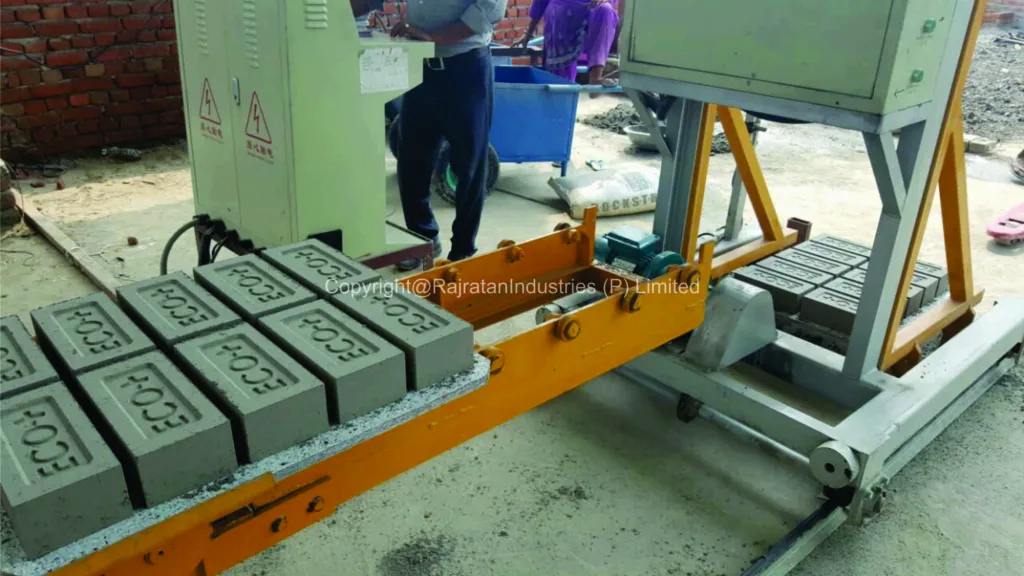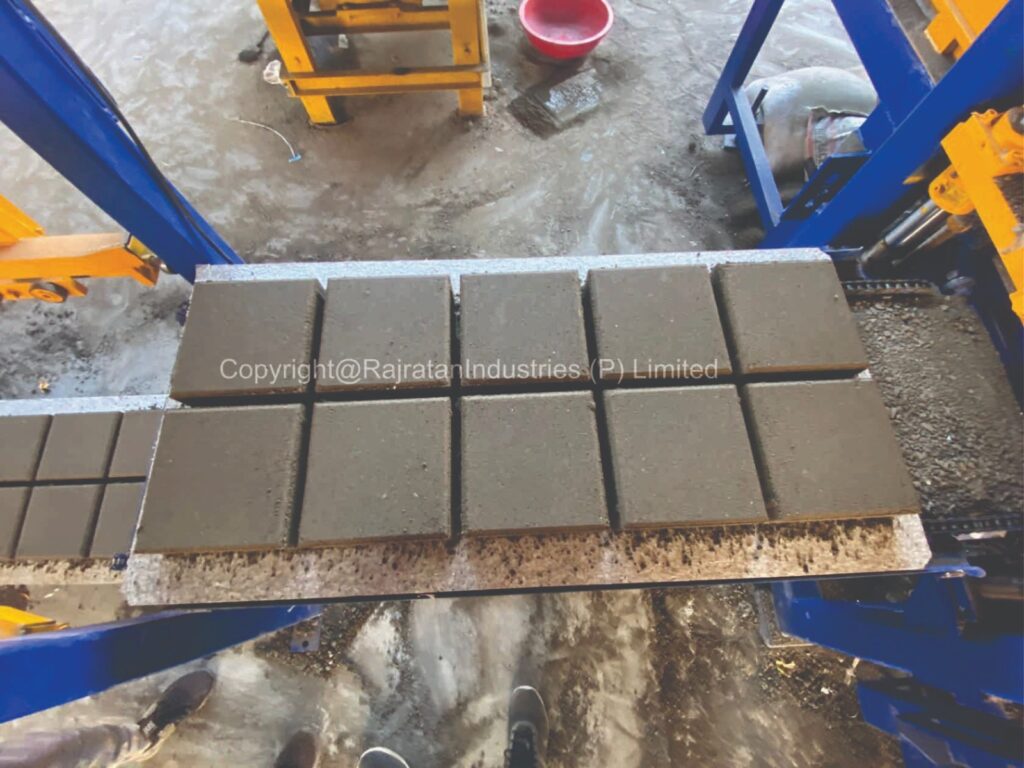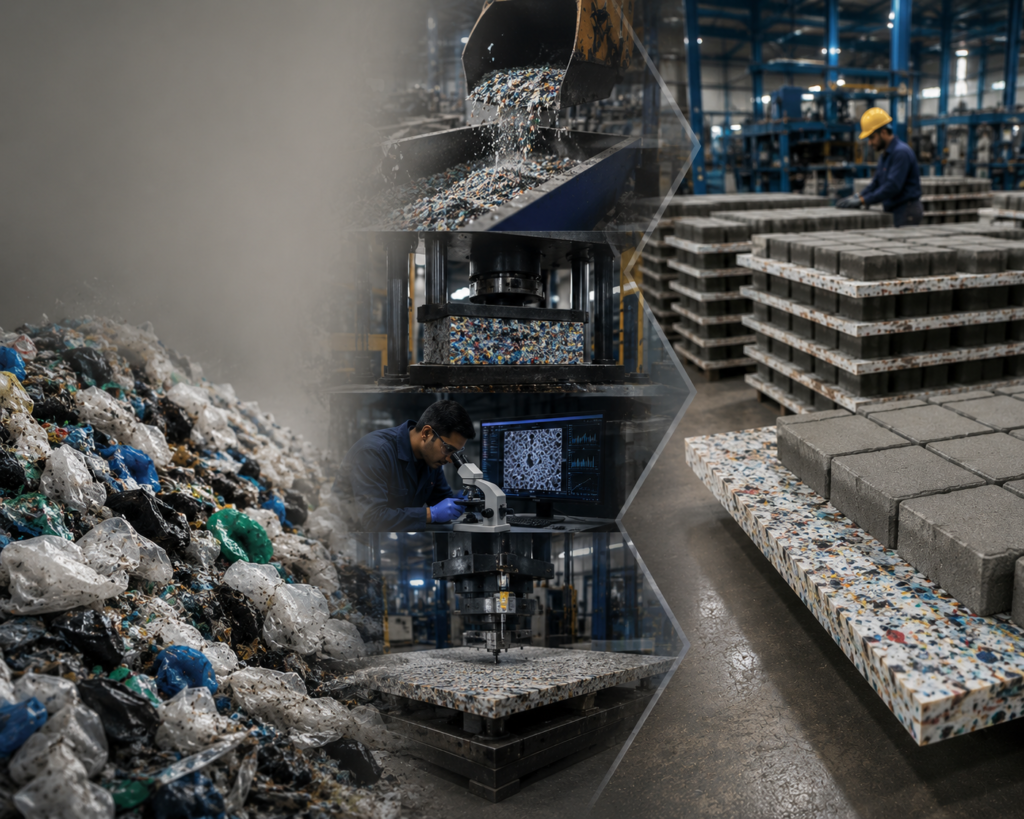
Fly ash brick production hinges on the synergy between cement chemistry and the industrial pallets that carry them through curing. This guide dissects cement types, their reactivity with fly ash, and how pallet material selection, including the use of a durable Cement Brick Pallet, directly impacts your production efficiency, product quality, and unit economics.
Section 1: Cement Types & Fly Ash Reactivity
Fly ash bricks achieve their compressive strength through pozzolanicity—the chemical reaction between silica (SiO₂) in fly ash and calcium hydroxide (Ca(OH)₂) released by hydrating cement. Your choice of cement fundamentally determines brick quality, cure time, and machine output.
Ordinary Portland Cement (OPC)
OPC is the most common binder for fly ash brick production. It releases high initial heat and Ca(OH)₂, accelerating pozzolanicity. However, OPC demands careful water control and longer initial cure times (7–10 days post-demold) to avoid cracking. Early water loss in OPC-heavy mixes can reduce final strength by 12–18% if not managed.
Pozzolanic Portland Cement (PPC)
PPC is formulated with 15–35% fly ash content, pre-blended at the mill. It reacts more gradually with water, generating less heat and requiring less supplementary curing time. PPC reduces your demold-to-stack interval by 2–3 days and cuts energy consumption in steam-curing cycles. Downside: higher material cost (~₹50–₹80/tonne premium) and slightly lower early strength (day 3–7), though 28-day strength matches OPC.
Sulphate-Resisting Cement (SRC)
SRC limits C₃A (tricalcium aluminate) to prevent ettringite formation in high-sulphate fly ash sources. Use SRC only if your fly ash supplier reports SO₃ > 3%; otherwise, PPC or OPC suffices.
Section 2: Pallet Material Compatibility During Curing Cycles
Your choice of cement affects steam-curing temperature, duration, and ramp rates—all of which stress pallet materials differently. Mismatched pallets lead to warping, cracking, and unplanned replacement cycles.
PAC® (Plastic Aluminium Composite) Pallets vs. Wooden & PVC Pallets
| Pallet Type | Curing Temp Tolerance | Crack Resistance | Service Life | Total Cost per Cycle* |
|---|---|---|---|---|
| PAC® Metal Grade | Up to 80°C steam (sustained) | Zero water absorption; thermal expansion 0.07% (ASTM D204) | 7–8 years (2,500–3,000 cycles) | ₹1,240 (40% scrap buyback included) |
| Wooden Pallets (Teak/Sal) | Max 65°C (warping risk above 60°C) | Swells 8–12% with moisture; cracks at thermal shock | 2–3 years (300–400 cycles) | ₹4,800 (no residual value) |
| PVC Composite Pallets | Max 70°C (softens >72°C) | Creeps under vibro-compaction; water absorption 0.8–2% | 3–4 years (600–800 cycles) | ₹2,100 (zero scrap value) |
| Steel-Tube Reinforced PAC® | Up to 95°C steam (peak ramp) | Composite + MS tube prevents deflection; zero absorption | 10+ years (5,000+ cycles) | ₹1,680 (40% buyback) |
*Cost per cycle assumes 100-brick batches, steam-cure 6–8 hours daily. PAC® buyback reduces net acquisition cost to 60% of list price on replacement orders.
Why Thermal Stability Matters
PPC and OPC mixes cure via steam at 70–85°C (ramp rate 10–15°C/hour). Wooden pallets expand heterogeneously—top surface heats faster than bottom—creating internal stress and radial cracking. PVC composite creeps under the 15–20 tonne vibro-press load at elevated temperature, allowing brick edges to sag and machine misalignment over 50–100 cycles. PAC® pallets, reinforced with aluminum oxide and metal dust powder (density 1,130 kg/m³), exhibit linear thermal expansion of 0.07% and zero creep under sustained load. This means consistent demold quality, reduced secondary sorting, and 6–8 year service life vs. wooden’s 2–3 years.
Section 3: Cost-Per-Cycle Economics
Scenario: 5,000 Bricks/Month Production
Wooden Pallets (200 units required):
- Capital: ₹200 × ₹4,000 = ₹8,00,000
- Replacement cycles/year: 6 (service life 2 years)
- Annual replacement cost: ₹8,00,000 (buy 200 new pallets every 2 years)
- Cost per brick: ₹1.60
PAC® Metal Grade Pallets (140 units required; fewer due to faster turnover and zero absorption):
- Capital: 140 × ₹3,100 = ₹4,34,000
- Replacement cycles/year: 1 (service life 7–8 years; only 40% of units replaced annually due to staggered wear)
- Scrap buyback value: 40 units/year × ₹1,240 × 40% = ₹19,840 (credited against new purchases)
- Net annual cost: ₹3,100 × 20 new units − ₹19,840 = ₹43,160
- Cost per brick: ₹0.72
5-Year TCO Comparison:
- Wooden: ₹40,00,000 (capital + 2 full replacements)
- PAC® Metal Grade: ₹6,50,000 (capital + 10 replacement units + net scrap credits)
- Savings: ₹33,50,000 (83.75% reduction)
Why PAC® Pallets Outperform in Fly Ash Brick Production
PAC® pallets are engineered from 100% recycled industrial packaging waste (sourced from Patanjali, Nestlé lines) and reinforced with XLP fibers, aluminum oxide, and metal dust powder. Independent testing by NABL-accredited Choksi Laboratories confirms these properties:
| Test Property | PAC® Metal Grade Result | Performance Implication |
|---|---|---|
| Compressive Strength | 22.0 N/mm² | Exceeds vibro-press load (15–20 tonnes) with 40% safety margin; zero deformation under impact |
| Water Absorption | 0% (zero swelling) | Eliminates demold misalignment from moisture ingress; consistent machine setup across 100-brick batches |
| Thermal Expansion | 0.07% (ASTM D204) | Linear thermal response to 85°C steam curing; no internal cracking or edge warping; clean demold every cycle |
| Tensile Strength | 11.30–11.89 N/mm² | Nail/screw holding power 2,214–2,460 N; pallets remain structurally sound after 500+ demold/stack cycles |
| Flammability | Passed IS 1734 (5 min flame exposure; no burn, only blackish discoloration) | Safe for indoor brick plants; meets Indian construction standards |
Real-World Impact on Production Workflow
Wooden Pallets: Machine setup drift due to pallet warping = 8–12 minute downtime every 40 cycles for re-leveling. Monthly downtime: 16–24 hours. Sorting/QC rework on mis-demolded bricks: 2–5% reject rate. Annual labor cost for corrections: ₹1,20,000+.
PAC® Pallets: Dimensional stability ensures zero setup drift. Monthly downtime: <1 hour (routine maintenance only). Reject rate: <0.5%. No secondary QC rework. Annual labor savings: ₹1,15,000+.
Pallet Material Selection Matrix
Choose OPC Cement + PAC® Metal Grade Pallets if: You prioritize lowest total cost of ownership, operate 2–3 shifts/day, or aim for export-grade brick quality. OPC’s high early heat pairs well with PAC®’s thermal stability, reducing steam-cure time to 6–7 hours and enabling 3-cycle/day production.
Choose PPC + PAC® Steel-Tube Reinforced Pallets if: Your fly ash source is variable, you need minimal downtime tolerance, or you operate in high-humidity coastal regions. PPC’s gradual hydration and lower early heat reduce thermal shock on pallets; steel-tube reinforcement absorbs occasional mechanical impact from rough handling.
Avoid Wooden/PVC if: Your target production is >3,000 bricks/month. The cumulative cost of replacements, downtime, and rework will exceed PAC® acquisition costs within 18–24 months.
Section 4: Estimate Your Annual Pallet Replacement Cost
Interactive Calculator Logic:
Input your monthly brick production volume and current pallet type. The calculator estimates:
- Required pallet fleet size (based on average cycle time)
- Annual replacement rate (based on material fatigue curves and thermal stress)
- Projected material cost (list price − scrap buyback credit)
- Projected labor cost (setup drift downtime + QC rework)
- 40% scrap buyback savings (PAC® only)
- 3-year TCO comparison vs. competitors
Example Inputs & Outputs:
Input: 8,000 bricks/month | Current pallet type: Wooden
Output:
- Required fleet: 280 wooden pallets
- Annual replacement cost: ₹14,00,000 (full fleet every 2 years)
- Projected downtime cost: ₹2,40,000 (setup drift, 20 hours/month)
- QC rework labor: ₹1,80,000 (2–3% reject rate)
- Total annual cost: ₹18,20,000
- Recommended switch: PAC® Metal Grade (200 units) = ₹6,20,000/year all-in
- Projected annual savings: ₹12,00,000 (66% reduction)
- Payback period: 4–5 months
Input: 5,000 bricks/month | Current pallet type: PVC Composite
Output:
- Required fleet: 160 PVC pallets
- Annual replacement cost: ₹3,36,000 (every 3–4 years)
- Projected downtime cost: ₹1,20,000 (creep-induced misalignment, 10 hours/month)
- QC rework labor: ₹90,000 (1–2% reject rate)
- Total annual cost: ₹5,46,000
- Recommended switch: PAC® Metal Grade (110 units) = ₹2,20,000/year all-in
- Projected annual savings: ₹3,26,000 (60% reduction)
- Payback period: 3–4 months
Key Formula
Annual Pallet Cost = (Fleet Size × Unit Cost) / Service Life + (Annual Downtime Hours × Labor Rate) + (QC Rework %) − (Scrap Buyback Credit)
PAC® buyback reduces net cost because returned material retains 40% of original value, which is credited as an account credit against future purchases (no cash rebate). This mechanism transforms replacement cycles from pure expense into partial capital recovery.
Call to Action
Stop losing margins to pallet replacements and machine downtime. Schedule a free 30-minute consultation call with a Rajratan production engineer to analyze your fly ash brick plant’s specific cement-pallet ecosystem. We’ll map your current material costs, quantify hidden downtime, and design a customized PAC® pallet specification using the right Cement Brick Pallet solution to help cut your total cost of ownership by 60–80% within 12 months. No obligation.
Book Your Free Consultation: Click the button below or WhatsApp +91-9876-543-210 with your monthly production volume and current pallet type. Our engineer will call you within 24 hours with a detailed cost-per-cycle analysis and a no-pressure quotation.