
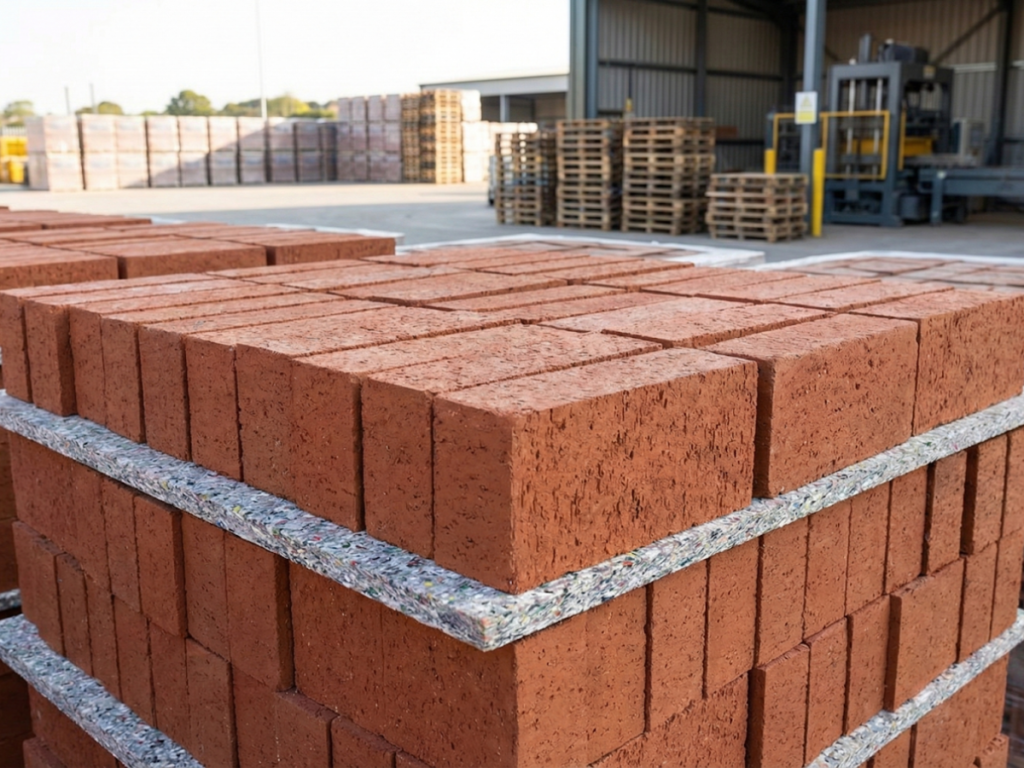
A Practical Guide to Brick Count, Weight, and Choosing the Right Pallet for Heavy Construction Loads
In the construction world, precision matters. Whether you’re managing site logistics or sourcing supplies, understanding how many bricks fit on a pallet isn’t just a warehouse detail — it’s the difference between streamlined delivery and costly delays.
This guide breaks down brick dimensions, pallet sizing, weight estimates, and smart stacking practices. It also highlights why the right pallet material can make or break long-term performance .
Common Brick Types and Their Dimensions
Before estimating brick-per-pallet counts, it’s essential to know what type of bricks you’re dealing with. Different bricks vary not only in material, but also in dimensions and weight:
|
Brick Type |
Typical Size (mm) |
Approx. Weight (kg) |
|
Clay Brick (Standard, India) |
190 × 90 × 90 |
2.5 – 3.0 |
|
Modular Clay Brick (UK) |
215 × 102.5 × 65 |
2.1 – 2.3 |
|
Engineering Brick (Dense) |
215 × 102.5 × 65 |
3.2 – 3.5 |
|
Fly Ash Brick |
230 × 110 × 75 |
2.6 – 3.0 |
|
Concrete Block (400 series) |
400 × 200 × 100–200 |
17 – 34 |
|
Paver Brick / Tile |
Variable |
3 – 6+ |
Larger bricks or hollow blocks reduce unit counts per pallet but dramatically increase total load weight.
How Pallet Size Affects Brick Count
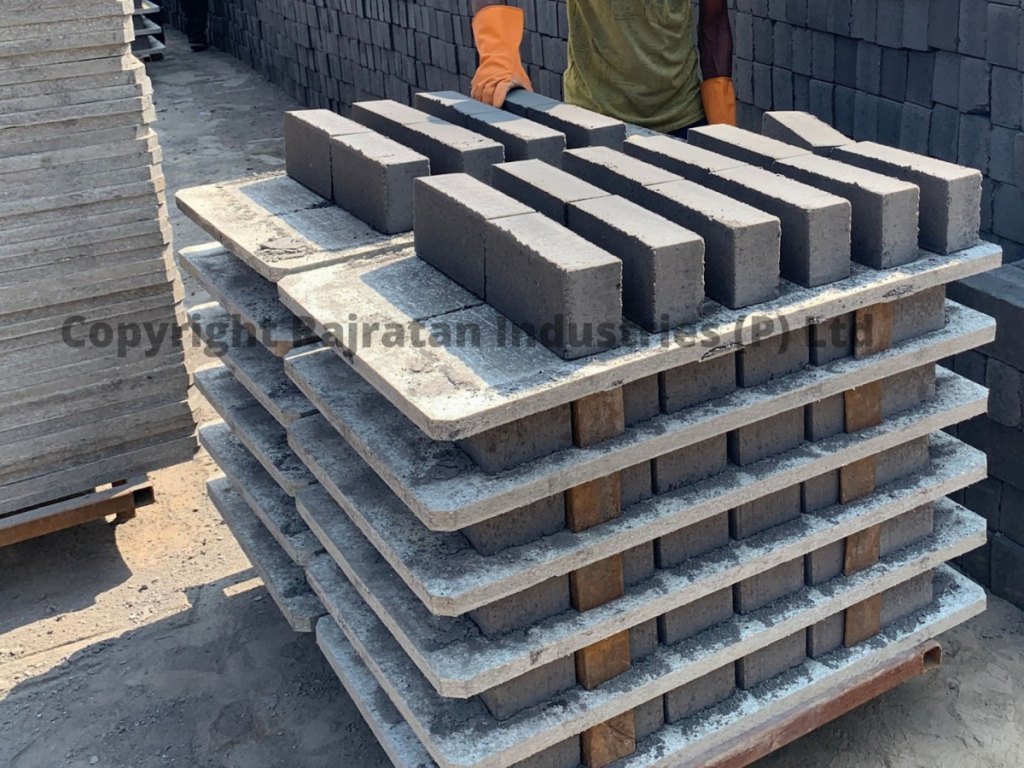
Pallet dimensions vary by region, but two formats dominate the Indian construction supply chain:
- 1100 × 1100 mm (Square)
- 1200 × 1000 mm (Rectangular)
These are ideal for stacking most standard and fly ash bricks. The number of bricks that fit depends on both the pallet footprint and brick layout pattern. For example:
- 190 × 90 × 90 mm bricks on a 1100 × 1100 mm pallet (5×10 grid per layer) can yield ~500–550 bricks per pallet at 10–11 layers.
- Larger 230 mm bricks may allow ~350–400 units per pallet due to space constraints.
It’s not just about the footprint — stacking height also plays a role. Most safe brick pallets stay under 1.2 metres high to meet transport safety norms.
How Much Does a Full Brick Pallet Weigh?
Weight scales fast. A standard full pallet of fly ash or clay bricks typically weighs between 1.2 to 1.5 tonnes. Larger blocks push that number to 2 tonnes or more. The pallet itself adds another 15–25 kg depending on material.
- 500 bricks × 2.6 kg = 1300 kg + 20 kg pallet = 1320 kg
- 350 blocks × 5.0 kg = 1750 kg + 25 kg pallet = 1775 kg
This is where pallet strength becomes non-negotiable.
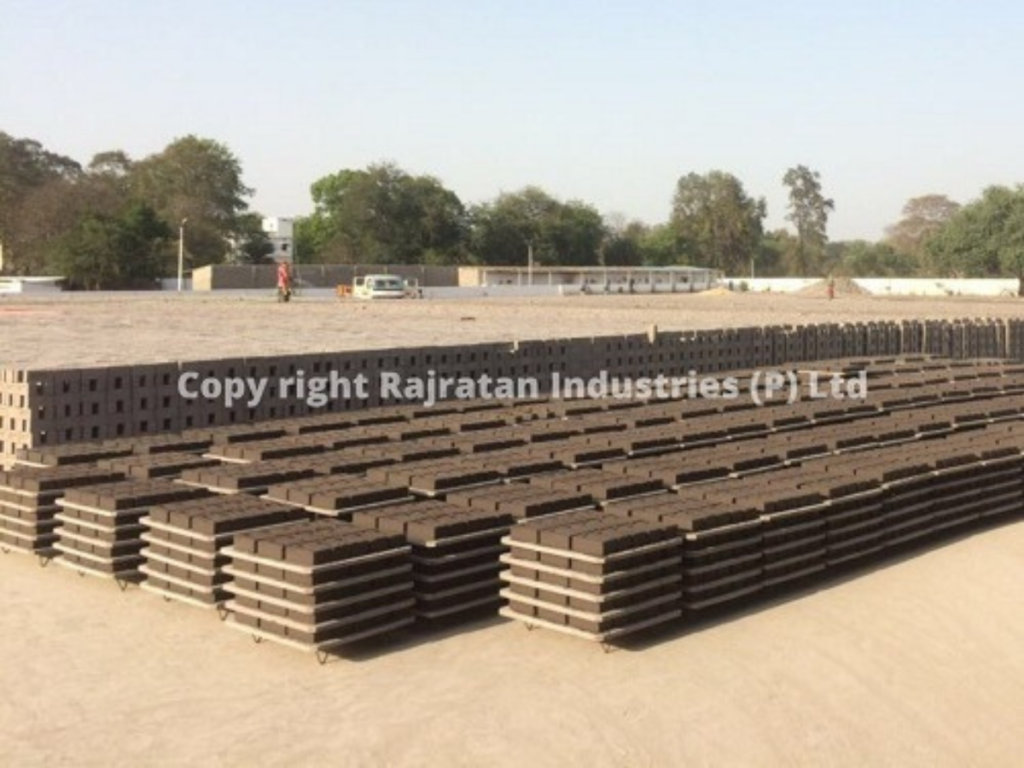
Why Pallet Material Matters — Especially in Construction ?
When bricks are stacked and left curing for days — or when pallets face wet weather, uneven terrain, and forklift abuse — material quality isn’t optional. It’s critical.
Common issues with wooden pallets:
- Moisture absorption → swelling, warping, fungus
- Cracks and splinters under vibration
- Short lifespan and irregular durability
A Smarter Alternative: PAC® Composite Pallets
PAC® pallets are made from a carefully engineered mix of industrial plastics, aluminium oxide, and fibres, offering:
- Waterproofing: Won’t absorb rain, wash water, or brick slurry
- UV and weather resistance: Withstands prolonged outdoor storage
- High load capacity: Handles brick loads up to 2 tonnes with minimal flex
- Longer lifespan: Up to 10 years of service depending on the variant
Rajratan’s PAC® boards are tailored for different brick/block formats:
- Fibre Reinforced Boards (3–4 year life) for fly ash bricks and tiles
- Metal Reinforced Boards (5–6 years) for pavers and hollow blocks
- Steel Tube Boards (7–8 years) for heavy, multi-product plants
Each variant is moulded individually per machine type, not cut from mass stock, which improves uniformity and durability
Best Practices for Stacking Bricks on Pallets
Whether you’re using PAC® pallets, smart stacking helps avoid breakage:
- Grid-based interlocking (alternating brick orientation) improves structural stability
- Don’t overhang edges — this damages bricks and weakens the pallet deck
- Use strapping or shrink wrap to bind stacks during transport
Brick Pallets Aren’t Just a Base They’re an Engineering Choice
Every brick load is different — and so is every site. Whether you’re supplying fly ash bricks in humid zones, pavers in coastal regions, or heavy blocks for industrial projects, the right pallet improves safety, lifespan, and logistics performance.
PAC® pallets, with their proven resistance to water, load deformation, and handling wear, offer a long-term solution that aligns with India’s evolving infrastructure demands and environmental priorities